
Book guide and evaluation
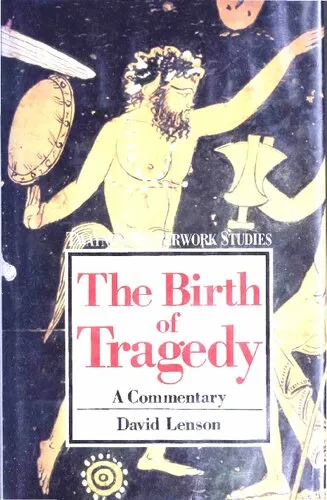
The Birth of Tragedy: A Commentary
David Lenson
English
Beginner
Psychiatry & Psychology
4.8 / 5
0 reviews
1987
Published
139
pages
586
views
Introduction to "The Birth of Tragedy: A Commentary" Welcome to an insightful exploration of Friedrich Nietzsche's seminal work, "The Birth of Tragedy," with a detailed analysis and commentary that seeks to unearth the deep philosophical underpinnings and cultural reflec
Before you read
What will you get from this book?
Introduction to "The Birth of Tragedy: A Commentary"
Welcome to an insightful exploration of Friedrich Nietzsche's seminal work, "The Birth of Tragedy," with a detailed analysis and commentary that seeks to unearth the deep philosophical underpinnings and cultural reflections contained within. This commentary is aimed at providing readers with a robust understanding of Nietzsche's exploration of art, culture, and the dual aspects of the human experience.
Detailed Summary of the Book
In "The Birth of Tragedy: A Commentary," the narrative revolves around the pivotal themes of Nietzsche's original text, focusing on the Apollonian and Dionysian dichotomy. Nietzsche introduces these two artistic forces as central to the understanding of the ancient Greek tragedy. The Apollonian aspect represents order, rationality, and individuality, akin to the attributes of the god Apollo. On the other hand, the Dionysian aspect symbolizes chaos, emotion, and collectivism, reflecting the essence of Dionysus, the god of wine and festivity.
My commentary delves into how these two opposing forces are reconciled in the realm of Greek tragedy, providing a space where rationality and emotional depth coexist. This synthesis delivers profound insights into the human condition, illustrating Nietzsche's belief that embracing both aspects leads to a more comprehensive understanding of life and art.
Furthermore, the book elaborates on Nietzsche's critique of modern culture and his assertion that contemporary art forms had lost the balance found in classical Greek tragedy, culminating in what he perceives as a cultural decline.
Key Takeaways
- Apollonian vs. Dionysian: Understanding the dual nature of existence and its impact on art and culture.
- Tragedy as a Cultural Phenomenon: Insights into how ancient Greek tragedy synthesized opposing forces to produce profound cultural narratives.
- Cultural Critique: Nietzsche's perspective on the state of modern art and culture, advocating for a return to the profound synthesis found in Greek tragedies.
- Existential Reflection: Exploring the philosophical questions of existence, individuality, and collective experience through Nietzsche's lens.
Famous Quotes from the Book
Here are some impactful statements from "The Birth of Tragedy" that resonate through the commentary:
"Life without music would be a mistake."
"We possess art lest we perish of the truth."
These quotes underscore Nietzsche's belief in the transformative power of art and the delicate balance between truth and beauty.
Why This Book Matters
"The Birth of Tragedy: A Commentary" stands as a crucial guide to one of Nietzsche's earliest and most influential works. It serves as a gateway to understanding his broader philosophy and his critique of contemporary culture. By examining the balance between the Apollonian and Dionysian elements in art, this commentary provides valuable insights into achieving a more holistic understanding of humanity's creative impulse.
Moreover, it invites readers to reflect on the cultural and aesthetic forms that shape society, encouraging a return to the powerful synthesis of rationality and emotion found in ancient art forms. In doing so, the commentary not only sheds light on Nietzsche's philosophy but also offers a timeless reflection on the role of art in human life.
Ask this book
Your question is answered in the context of this title and author. Each answer uses 2 points.
Sign in to ask the book assistant.
Reader reviews
0 reviews, 4.8 average out of 5
No reviews yet
If you have read this book, help the next reader with your experience.
Write a review
Sign in to publish a review.
Reader questions and answers
Ask a focused question and learn from the community.
Sign in to ask or answer a question.
No questions yet
Be the first to ask a clear, useful question.
What to read next
Related references that continue this learning path.
An Analysis of Clifford Geertz’s The Interpretation of Cultures: Selected Essays
Abena Dadze-Arthur
2017
View book
The Road Less Traveled: Reflections on the Literatures of the Horn of Africa
Ali Jimale Ahmed,Taddesse Adera
2008
View book
Nietzsche's 'The Birth of Tragedy': A Reader's Guide
Douglas Burnham,Martin Jesinghausen
2010
View book