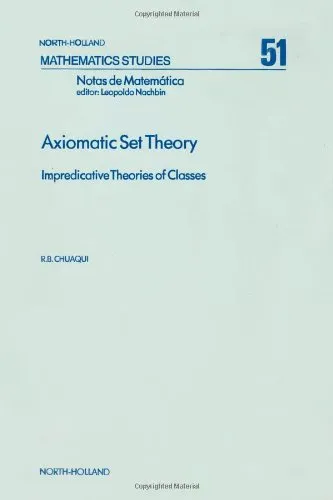
Axiomatic Set Theory: Theory Impredicative Theories of Classes
Leopoldo Nachbin (Eds.)
1981
View book
Book guide and evaluation
Nigel Cutland
0 reviews
Published
pages
views
Welcome to an insightful journey into the realm of recursive function theory with "Computability: An Introduction to Recursive Function Theory". This book serves as a comprehensive guide to the foundations and advancements in the field of computability, offering readers a str
Before you read
Welcome to an insightful journey into the realm of recursive function theory with "Computability: An Introduction to Recursive Function Theory". This book serves as a comprehensive guide to the foundations and advancements in the field of computability, offering readers a structured approach to understanding the fundamental concepts that govern the discipline.
The book lays down a systematic exploration of recursive function theory, a pivotal aspect of mathematical logic and computer science. It delves into the abstract concepts and theoretical frameworks that define what it means for a function to be computable. Beginning with a historical context, the book examines the roots of recursive functions and their significance in the development of modern computing.
Starting with basic definitions and notations, readers are gradually introduced to more complex topics such as Turing machines, Church's thesis, and the limits of computability. Through detailed explanations and illustrative examples, the book bridges the gap between abstract theory and practical understanding. Key chapters focus on the undecidability and incompleteness of formal systems, a crucial theme which echoes throughout the narrative of computability theory.
Additionally, the book incorporates rich discussions on the implications of recursive function theory in various domains, including mathematics, logic, and computer science. Each chapter builds upon the previous, facilitating a clear and progressive learning pathway.
"In the realm of mathematics and logic, understanding the boundaries of computability enlightens us about the potential and limitations of the algorithms that power our world."
"Recursive function theory is not just a subject of academic study, it is the language with which we converse about the existential limits of computation."
"Computability: An Introduction to Recursive Function Theory" stands out as a crucial educational resource for anyone looking to deepen their understanding of the intrinsic principles that define algorithmic computation. By blending theoretical rigor with practical insights, the book adds substantial value to the academic study of computability and recursive functions. It equips students, educators, and practitioners with the knowledge to navigate the complexities of computational theory.
This text is particularly important in the current era, where rapid technological advancements and a growing reliance on computational systems necessitate a profound grasp of the concepts governing their operation. Recursive function theory, at its core, provides the framework needed to explore new frontiers in technology and innovation.
In a world increasingly driven by digital processes, understanding the foundation of these processes is indispensable. This book offers the resources necessary to meet that challenge, making it an essential component of any mathematician, logician, or computer scientist’s library.
Your question is answered in the context of this title and author. Each answer uses 2 points.
0 reviews, 4.6 average out of 5
Sign in to publish a review.
Ask a focused question and learn from the community.
Related references that continue this learning path.
Leopoldo Nachbin (Eds.)
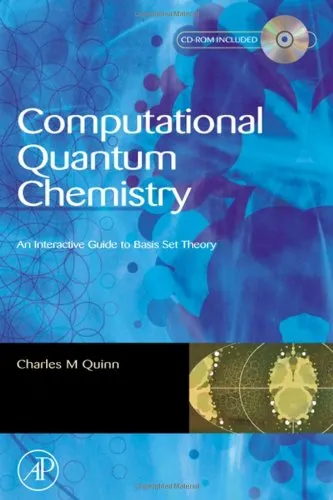
Charles M. Quinn
Domenico Cantone,Pietro Ursino