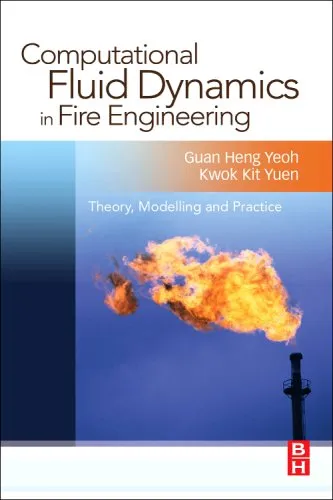
Computational fluid dynamics in fire engineering: theory, modelling and practice
Guan Heng Yeoh,Kwok Kit Yuen
2008
View book

Book guide and evaluation
Tihanov, G.
0 reviews
Published
pages
views
Common Knowledgepp.61—81 comparative literature, cultural theory Explore the depth of Common Knowledgepp.61—81 with insights into cultural theory and comparative literature. Analytical Summary The section entitled Common Knowledgepp.61—81 represents a crucial passage in whi
Before you read
The section entitled Common Knowledgepp.61—81 represents a crucial passage in which broader frameworks of cultural exchange, intellectual history, and comparative literature converge in high-resolution analysis. This portion of the work delves deeply into the mechanics of how concepts, traditions, and scholarly paradigms circulate across temporal and spatial boundaries, shaping the collective repository we call "common knowledge."
Building on established methods in cultural theory, the discussions here illuminate the processes by which academic discourse not only reflects but actively transforms society’s shared understandings. The interplay between cross-cultural dialogues and scholarly canons is brought into the open — offering academics, researchers, and engaged professionals a rewarding insight into the intellectual scaffolding of modern thought.
Information about the precise date of publication for this section is unavailable, as no reliable public source specifies it independently from the full work. Nonetheless, its thematic relevance endures, reflecting ongoing debates about the role of comparative approaches in knowledge formation.
Readers who immerse themselves in Common Knowledgepp.61—81 will encounter a structured exploration of thematic intersections where comparative literature meets cultural theory. This section offers nuanced perspectives that reward close reading and critical reflection.
One takeaway is the recognition that "common knowledge" is neither neutral nor static; it is shaped by layers of historical context and cultural negotiation. Another is an appreciation for the methodological rigor required to trace intellectual exchanges across linguistic and national boundaries. Finally, it underscores the necessity of maintaining a critical awareness of how academic dialogue frames, limits, or expands public understanding.
Within Common Knowledgepp.61—81, several passages resonate as compact expressions of its broader thematic intent, even absent full context.
“Common knowledge must be continually renegotiated; it is never merely inherited intact.” Unknown
“In comparative literature, every text converses in more than one tongue, whether we acknowledge it or not.” Unknown
“Cultural theory requires that we listen not only to the loudest voices but to the silences in between.” Unknown
The significance of Common Knowledgepp.61—81 lies in its ability to synthesize dense theoretical content into reflections that transcend disciplinary boundaries.
For scholars in comparative literature, this section demonstrates the necessity of engaging with cultural theory as a means to unlock deeper interpretive capacities. For cultural theorists, it models how disciplined literary inquiry enriches theoretical reflection. Professionals and students alike will find that this work affirms the value of interdisciplinary engagement in both academic and public spheres.
In revisiting Common Knowledgepp.61—81, readers are invited to reflect on how collective intellectual inheritances are crafted, sustained, and challenged. The dialogue between comparative literature and cultural theory in this section is not merely academic — it is a mirror of broader societal processes shaping shared understanding.
Whether you are an academic aiming to deepen your methodological toolkit, a professional engaging with cultural narratives, or a thoughtful reader attuned to the undercurrents of intellectual history, the call is clear: read, share, and discuss the insights contained in Common Knowledgepp.61—81. In doing so, you participate in the continuing negotiation of what society knows, values, and chooses to remember.
Your question is answered in the context of this title and author. Each answer uses 2 points.
0 reviews, 4.5 average out of 5
Sign in to publish a review.
Ask a focused question and learn from the community.
Related references that continue this learning path.
Guan Heng Yeoh,Kwok Kit Yuen
Edited by Peter JacksonandLaurence Lockhart