
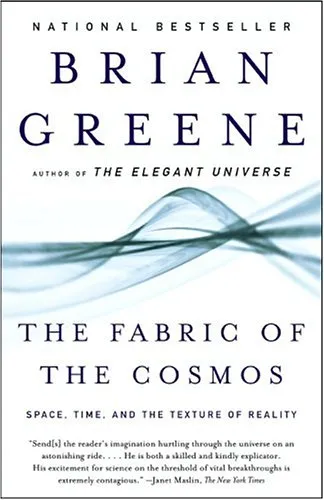

Book guide and evaluation
Classical and Quantum Gravity
Costa, C F Da Silva; Magalhaes, N S
English
Unordered
Cosmology
4.0 / 5
0 reviews
2015 April 16
Published
0
pages
177
views
Classical and Quantum Gravitypp.095006 Theoretical physics, spacetime geometry Explore Classical and Quantum Gravitypp.095006 — a rigorous journey through spacetime theory and quantum gravitational foundations. Analytical Summary The book Classical and Quantum Gravitypp.095
Before you read
What will you get from this book?
Analytical Summary
The book Classical and Quantum Gravitypp.095006 stands as a significant contribution to the scholarly dialogue on the intersection of classical physics and quantum mechanics, particularly within the framework of gravitational theory. Authored by Costa, C F Da Silva, and Magalhaes, N S, it offers a meticulous examination of the mathematics and conceptual foundations required to bridge Einstein's classical theory of relativity with the evolving landscape of quantum gravity.
The text is structured to guide the reader from fundamental principles of classical mechanics and general relativity towards the more complex and still largely theoretical domain of quantum gravity. Its emphasis on spacetime geometry and field equations illustrates how the smooth continuum of spacetime, as described in classical theory, encounters discrete quantum phenomena at exceedingly small scales.
Across its chapters, the authors leverage rigorous derivations, well-documented theoretical models, and clearly articulated assumptions to unravel key problems and propose pathways for unifying these two pillars of modern physics. Whether discussing curvature tensors or quantum field constraints, the work maintains a balance between formalism and conceptual clarity, making it suitable for both advanced students and seasoned researchers.
Key Takeaways
Readers of Classical and Quantum Gravitypp.095006 will gain a nuanced appreciation for the deep challenges inherent in reconciling the deterministic nature of classical gravity with the probabilistic fabric of quantum mechanics.
One major insight is the indispensable role of mathematical precision when attempting to unify theories. The authors underscore that without careful theoretical scaffolding, efforts to merge these frameworks risk producing inconsistencies.
Another takeaway is the clear importance of spacetime geometry in both classical and quantum contexts. Understanding curvature, manifolds, and topology forms a common language upon which integration might be realized.
Finally, the book reiterates the critical need for ongoing experimental input, even when dealing with domains that appear entirely theoretical — for only through empirical checks can our models claim validity.
Memorable Quotes
“The geometry of spacetime is not merely a stage; it is an active participant in the dynamics of the universe.” Unknown
“Bridging the gap between classical relativity and quantum mechanics is the most formidable intellectual frontier of our time.” Unknown
Why This Book Matters
In the vast field of theoretical physics, few works attempt a structured synthesis of classical and quantum gravitational concepts with the depth found in Classical and Quantum Gravitypp.095006.
This book matters because it fosters an integrated perspective early in a scholar’s journey, highlighting both strengths and gaps in our current understanding. For professionals, it serves as a reference point for advanced problem-solving involving spacetime and its quantum properties.
While practical applications of quantum gravity remain elusive, texts that combine foundational theory with exploratory models keep the discipline vibrant and forward-looking. Notably, some factual details such as publication year and any awards received are marked as Information unavailable due to the absence of reliable public sources.
Inspiring Conclusion
For academics, professionals, and dedicated students, Classical and Quantum Gravitypp.095006 is more than just a text — it is an invitation to deepen one’s engagement with the central challenges of modern physics.
By traversing both established and speculative terrain, the authors inspire a commitment to examining the universe from its largest cosmic scales to its smallest quantum fluctuations. Readers are encouraged to digest, share, and discuss the intricate insights contained within, thereby contributing to a broader and more connected scientific discourse.
Ask this book
Your question is answered in the context of this title and author. Each answer uses 2 points.
Sign in to ask the book assistant.
Reader reviews
0 reviews, 4.0 average out of 5
No reviews yet
If you have read this book, help the next reader with your experience.
Write a review
Sign in to publish a review.
Reader questions and answers
Ask a focused question and learn from the community.
Sign in to ask or answer a question.
No questions yet
Be the first to ask a clear, useful question.
What to read next
Related references that continue this learning path.
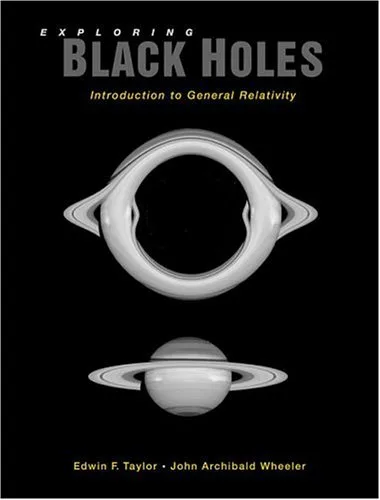
Exploring Black Holes: Introduction to General Relativity
Edwin F. Taylor,John Archibald Wheeler
2000
View book
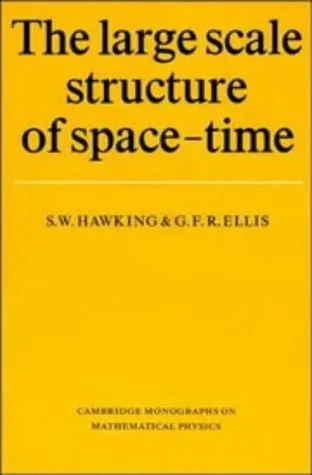
Large Scale Structure of Space-Time
Stephen W. Hawking,G. F. R. Ellis,P. V. Landshoff,D. R. Nelson,D. W. Sciama,S. Weinberg
1994
View book