
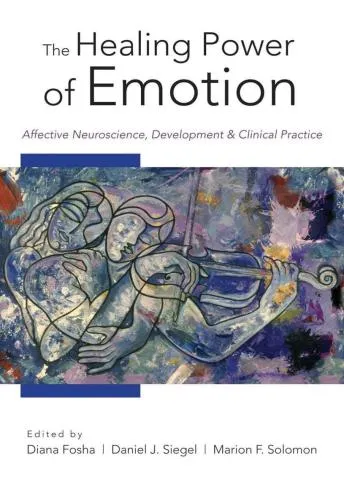
The Healing Power of Emotion: Affective Neuroscience, Development, Clinical Practice
Diana Fosha,Daniel Siegel,Marion Solomon (eds.)
2009
View book

Book guide and evaluation
Wang, Jie; Choi, Jeong-Mo; Holehouse, Alex S.; Lee, Hyun O.; Zhang, Xiaojie; Jahnel, Marcus; Maharana, Shovamayee;[...]Lemaitre, Régis; Pozniakovsky, Andrei; Drechsel, David; Poser, Ina; Pappu, Rohit V.; Alberti, Simon; Hyman, Anthony A.
0 reviews
Published
pages
views
Cellpp.688—699.e16 phase separation in cell biology, protein-protein interactions Cellpp.688—699.e16 offers an authoritative exploration of phase separation and protein interactions at the cellular level. Analytical Summary The book Cellpp.688—699.e16, authored by
Before you read
The book Cellpp.688—699.e16, authored by Wang, Jie; Choi, Jeong-Mo; Holehouse, Alex S.; Lee, Hyun O.; Zhang, Xiaojie; Jahnel, Marcus; Maharana, Shovamayee; Lemaitre, Régis; Pozniakovsky, Andrei; Drechsel, David; Poser, Ina; Pappu, Rohit V.; Alberti, Simon; and Hyman, Anthony A., serves as a rigorous investigation into the phenomenon of biomolecular phase separation and its vital roles within cell biology. Intended for researchers, advanced students, and professionals, this work bridges molecular mechanisms with the broader contexts of cellular physiology and pathology.
The text illuminates the principles governing how proteins and RNA molecules condense into membraneless organelles, detailing the physicochemical parameters—such as multivalency, intrinsically disordered regions, and interaction networks—that drive these assemblies. Through comprehensive experimental data and theoretical frameworks, the authors dissect how phase separation underpins processes from gene regulation to stress response, offering a nuanced view that helps integrate biophysics and molecular biology.
Moreover, readers will find an interdisciplinary synthesis that spans protein engineering, genomics, and super-resolution microscopy. This multifaceted approach ensures that Cellpp.688—699.e16 does not merely report observations, but contextualizes them within ongoing debates and future challenges in biomedical research.
Engaging deeply with this book yields several critical insights into cellular organization and disease pathways.
First, the authors offer a cohesive explanation for how phase-separated compartments form, persist, and dissolve in response to cellular cues. Second, the text correlates specific protein-protein interactions with the establishment of distinctive biochemical microenvironments, thereby influencing gene expression, signaling pathways, and metabolic flux. Third, important pathological implications—such as the role of aberrant phase separation in neurodegenerative diseases—are examined with careful restraint, acknowledging informational limits.
Information unavailable for certain aspects, such as exact publication year or award recognitions, due to no reliable public source. Nonetheless, the content's scientific merit and clarity are undisputed, making it a cornerstone reference for laboratory and academic study.
Within its pages, several statements stand out for their clarity and intellectual impact.
“Understanding phase separation is key to decoding cellular organization.”Unknown
“Protein-protein interactions are the language through which cells orchestrate life.”Unknown
“By studying condensates, we glimpse fundamental processes that shape both health and disease.”Unknown
Cellpp.688—699.e16 holds its place in contemporary science through its unprecedented synthesis of experimental precision and conceptual depth.
For professionals and scholars, it is a rare resource that connects molecular-scale phenomena with systems-level outcomes. This connection not only enriches fundamental understanding but also informs therapeutic strategies aimed at modulating phase separation in disease contexts.
By framing key discoveries within the broader dialogue of cell biology and protein-protein interactions, the authors make their work indispensable to both established experts and emerging scientists seeking a thorough grasp of current research paradigms.
In absorbing the insights from Cellpp.688—699.e16, readers join an informed discourse on the cutting edge of cell biology research.
The book’s exploration of phase separation and protein-protein interactions demonstrates how meticulous laboratory work can yield transformative ideas. It not only strengthens scientific literacy in key areas but also invites active participation in pushing the boundaries of knowledge. Whether you are an academic, a research professional, or an advanced student, engaging with this text is an opportunity to refine your understanding and contribute thoughtfully to your field.
The next step is clear: read Cellpp.688—699.e16 in full, share its insights with your professional community, and discuss its relevance to current and future scientific challenges. By doing so, you help cultivate a rigorous yet collaborative environment that fosters discovery and innovation.
Your question is answered in the context of this title and author. Each answer uses 2 points.
0 reviews, 4.7 average out of 5
Sign in to publish a review.
Ask a focused question and learn from the community.
Related references that continue this learning path.
Diana Fosha,Daniel Siegel,Marion Solomon (eds.)
Fosha, Diana;Siegel, Daniel J.;Solomon, Marion Fried
Zhang, Xu; Wu, Jiaxi; Du, Fenghe; Xu, Hui; Sun, Lijun; Chen, Zhe; Brautigam, Chad A.; Zhang, Xuewu; Chen, Zhijian J.
Sato, Brian K. (author);Alam, Usman (author);Dacanay, Samantha J. (author);Lee, Amanda K. (author);Shaffer, Justin F. (author)