
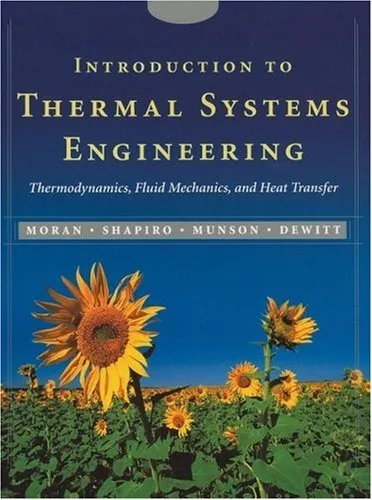
Introduction to thermal systems engineering: thermodynamics, fluid mechanics, and heat transfer
Michael J. Moran,Howard N. Shapiro,Bruce R. Munson,David P. DeWitt
2002
View book
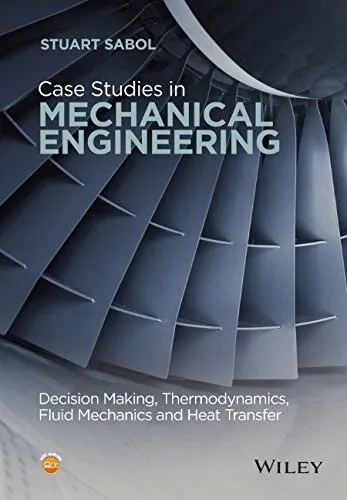
Book guide and evaluation
Stuart Sabol
0 reviews
Published
pages
views
Introduction to "Case Studies in Mechanical Engineering: Decision Making, Thermodynamics, Fluid Mechanics and Heat Transfer" Welcome to "Case Studies in Mechanical Engineering: Decision Making, Thermodynamics, Fluid Mechanics and Heat Transfer," a comprehensive and expertly
Before you read
Welcome to "Case Studies in Mechanical Engineering: Decision Making, Thermodynamics, Fluid Mechanics and Heat Transfer," a comprehensive and expertly crafted guide aimed at bridging the gap between theoretical concepts and real-world engineering applications. This book is carefully tailored to help students, educators, and professionals alike navigate the multifaceted world of mechanical engineering with clarity and precision. By leveraging case studies as a core educational tool, I seek to provide readers with practical insights into decision-making, design principles, and interdisciplinary problem-solving techniques spanning thermodynamics, fluid mechanics, and heat transfer.
Mechanical engineering as a field demands not just technical expertise but also a keen ability to analyze and solve complex problems using logical and practical methodologies. This book places a strong emphasis on hands-on learning, illustrating how fundamental engineering concepts are applied to address real challenges faced in modern industries, from power generation to aerospace systems. Whether you are preparing for your career or looking to enhance your existing knowledge, this book serves as a valuable resource to sharpen your analytical skills and expand your understanding of mechanical engineering.
At its core, this book is organized into individual case studies that delve deeply into several key topics within mechanical engineering. Each chapter is structured to begin with a brief overview of fundamental theories, laying the groundwork for the practical application of these ideas. From there, the reader is guided through case studies that simulate real-world engineering problems, allowing a hands-on approach to theoretical application.
The book covers four primary domains essential to mechanical engineers:
Each case study in the book includes detailed problem statements, guided solutions, and step-by-step analyses. Readers are encouraged to engage with the content by attempting to solve the scenarios themselves before delving into the explanations. The book also incorporates practical tips, software recommendations, and industry-standard practices wherever applicable.
"Mechanical engineering is not merely a field of study; it is the art of harnessing nature’s forces for the benefit of society."
"Design is where knowledge meets creativity, and success is measured by the ability to anticipate and solve problems you don’t yet see."
"The essence of engineering lies in decisions—each one shaping the safety, function, and legacy of what you create."
Today, the ever-changing demands of industries and technological advancements have placed greater emphasis on practical problem-solving skills in engineering education. This book stands out as a critical resource for anyone seeking to connect academic knowledge with real-life applications. By presenting intricately detailed case studies, I aim to challenge readers to think beyond textbook equations and imagine the holistic impact of their engineering solutions.
What makes this book truly unique is its interdisciplinary approach. By blending elements of decision-making with the core technical subjects of thermodynamics, fluid mechanics, and heat transfer, this book prepares future engineers to tackle diverse challenges. It emphasizes understanding the entire ecosystem around engineering problems, including economic constraints, environmental considerations, and innovation opportunities.
In summary, "Case Studies in Mechanical Engineering" is more than a book—it's a roadmap for developing the mindset and skills necessary for a successful and rewarding career in the engineering discipline. Whether you are a student, a teacher, or an industry professional, this book will serve as a trusted companion in your journey to mastering the art and science of mechanical engineering.
Your question is answered in the context of this title and author. Each answer uses 2 points.
0 reviews, 4.5 average out of 5
Sign in to publish a review.
Ask a focused question and learn from the community.
Related references that continue this learning path.
Michael J. Moran,Howard N. Shapiro,Bruce R. Munson,David P. DeWitt

Mahmoud Massoud

Stephen Blundell,Katherine Blundell