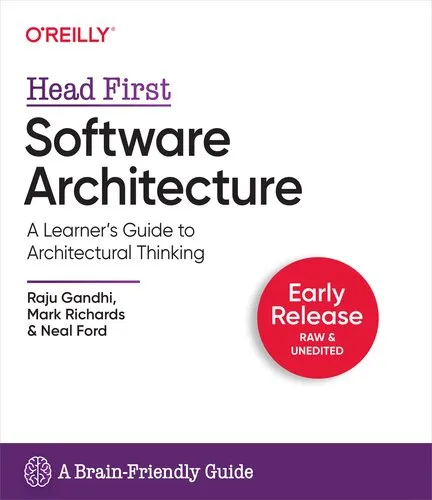
Head First Software Architecture A Learner's Guide to Architectural Thinking (3rd Early Release)
Raju Gandhi, Mark Richards,andNeal Ford
2023
View book
Book guide and evaluation
Neal Ford,Rebecca Parsons,Patrick Kua,Pramod Sadalage
0 reviews
Published
pages
views
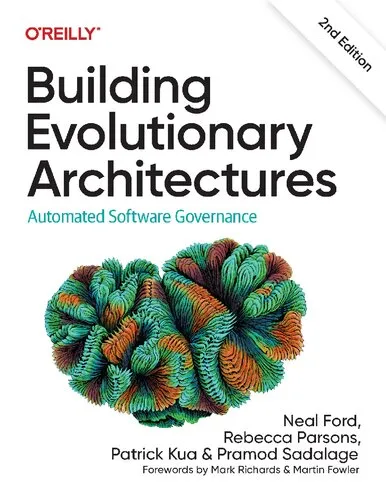
Welcome to the dynamic world of software architecture as described in Building Evolutionary Architectures: Automated Software Governance. This book offers a revolutionary perspective on how to adaptively design systems that support continuous change, equipping you with the tool
Before you read
Welcome to the dynamic world of software architecture as described in Building Evolutionary Architectures: Automated Software Governance. This book offers a revolutionary perspective on how to adaptively design systems that support continuous change, equipping you with the tools to thrive in a fast-paced technology landscape.
In an era where rapid technological advancements and ever-evolving business needs dictate the pace of change, the ability to create adaptable and resilient software architectures is crucial. This book introduces the concept of evolutionary architecture, a framework that supports guided, incremental change across multiple dimensions.
We begin by exploring the principles of architecture that support evolution. Highlighting crucial components like feedback loops and fitness functions, the authors Neal Ford, Rebecca Parsons, Patrick Kua, and Pramod Sadalage guide you through the practices that ensure your architectural designs can evolve naturally and sustainably over time.
Automated Software Governance forms the backbone of this evolutionary process. The book illustrates how automation can enforce architectural standards, facilitate integration, and streamline compliance without stifling the creative flow of software development. Through real-world examples and in-depth explorations, you learn the significance of integrating automation directly into the developmental pipeline.
"Evolutionary architectures provide the flexibility to cater to ever-changing needs without necessitating a complete redesign."
"Automated governance is not the enemy of creativity. Rather, it's the best ally in ensuring the integrity and longevity of your systems."
The landscape of software development is in constant flux, influenced by emerging technologies, competitive pressures, and shifting consumer expectations. Traditional architectural practices often fall short in such a dynamic environment. This is where Building Evolutionary Architectures shines, providing you with an actionable framework that brings together automated governance and architectural adaptability.
By adopting the evolutionary strategies outlined in this book, organizations can ensure their systems remain robust, adaptable, and future-proof. The blend of theory and practice makes it an indispensable resource for software architects, developers, and IT leaders alike. Whether you're dealing with legacy systems or building greenfield projects, this book empowers you to navigate complexity with agility and foresight, transforming potential challenges into opportunities for growth.
Persian Summary
Your question is answered in the context of this title and author. Each answer uses 2 points.
0 reviews, 3.8 average out of 5
Sign in to publish a review.
Ask a focused question and learn from the community.
Related references that continue this learning path.
Raju Gandhi, Mark Richards,andNeal Ford