Book guide and evaluation
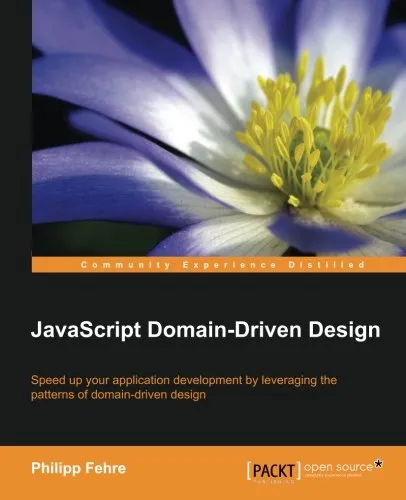
JavaScript Domain-Driven Design
Philipp Fehre
English
Advanced
Software Architecture
4.0 / 5
0 reviews
2015
Published
207
pages
767
views
Introduction to JavaScript Domain-Driven Design Welcome to a comprehensive guide that blends the art of software engineering with the nuanced practices of domain-driven design, all within the flexible and ubiquitous world of JavaScript. This book provides a meticulous pathway
Before you read
What will you get from this book?
Introduction to JavaScript Domain-Driven Design
Welcome to a comprehensive guide that blends the art of software engineering with the nuanced practices of domain-driven design, all within the flexible and ubiquitous world of JavaScript. This book provides a meticulous pathway for developers and software architects aiming to excel in designing robust and scalable software solutions.
Detailed Summary of the Book
JavaScript Domain-Driven Design offers an elaborate exploration into the principles of domain-driven design (DDD) specifically tailored for JavaScript developers. The book starts by setting a strong foundation on DDD concepts such as ubiquitous language, bounded contexts, and strategic design. By providing a structured approach to problem-solving, it allows developers to align their software projects closely with business objectives.
As you delve deeper, you will navigate through the practical aspects of implementing DDD concepts in JavaScript projects. With JavaScript’s dynamic and versatile nature, the book addresses common challenges faced in modeling complex domains and emphasizes the importance of modular design and maintainability. Special attention is given to integrating JavaScript with modern frameworks and emerging technologies, aligning software development closely with evolving business needs.
Key Takeaways
- Comprehensive understanding of domain-driven design principles, meticulously applied within JavaScript environments.
- Strategies to enhance collaboration between technical teams and business stakeholders through a shared language.
- Guidelines for creating clean, modular, and maintainable code that aligns with business objectives.
- Insights into handling complexity in software systems by dividing them into well-defined bounded contexts.
- Real-world examples and case studies that showcase successful implementations of DDD in JavaScript.
Famous Quotes from the Book
"In domain-driven design, complexity is managed not by simplifying the domain, but by organizing it into a coherent, evolving model."
"JavaScript, with its blend of simplicity and depth, is uniquely positioned to adapt DDD principles, enhancing the adaptability of software solutions."
Why This Book Matters
Amidst the fast-paced evolution of technology, businesses demand software that is not only agile but also scalable and maintainable. JavaScript, being one of the most widely used languages in the world, becomes an ideal candidate for implementing complex software designs. This book matters because it bridges the gap between high-level design principles and their practical application in JavaScript.
JavaScript Domain-Driven Design empowers developers to transform abstract business ideas into tangible software architectures. It equips teams with the knowledge to foster better communication, design systems that encapsulate business logic, and ultimately deliver value-driven software.
By offering a detailed analysis of how DDD can revolutionize JavaScript projects, this book addresses the need for developers to quickly adapt to changing business requirements while maintaining code quality and integrity. Whether you are a seasoned software architect or a burgeoning developer, this book provides invaluable insights into creating software that meets both current and future demands.
Ask this book
Your question is answered in the context of this title and author. Each answer uses 2 points.
Sign in to ask the book assistant.
Reader reviews
0 reviews, 4.0 average out of 5
No reviews yet
If you have read this book, help the next reader with your experience.
Write a review
Sign in to publish a review.
Reader questions and answers
Ask a focused question and learn from the community.
Sign in to ask or answer a question.
No questions yet
Be the first to ask a clear, useful question.
What to read next
Related references that continue this learning path.
Clean Architecture: A Craftsman’s Guide to Software Structure and Design
Robert C. Martin
2017
View book