
Book guide and evaluation
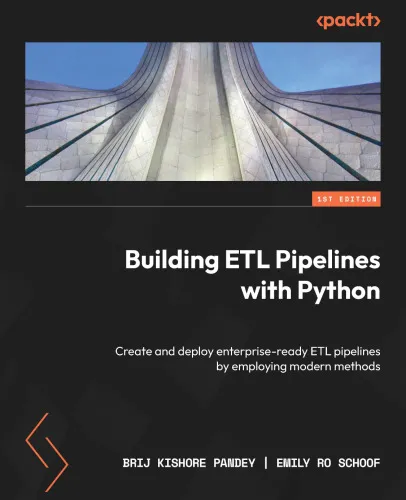
Building ETL Pipelines with Python
Kishore, Brij Pandey(Author)
English
Unordered
Data Science
4.0 / 5
0 reviews
2023
Published
246
pages
302
views
Building ETL Pipelines with Python Data engineering, Python-based ETL workflows Building ETL Pipelines with Python empowers data professionals to design, optimize, and maintain scalable extraction, transformation, loading systems. Analytical Summary The book Build
Before you read
What will you get from this book?
Analytical Summary
The book Building ETL Pipelines with Python offers a deep and methodical exploration of how to design, implement, and optimize extraction, transformation, and loading processes in modern data engineering. Written with precision, it bridges the gap between conceptual frameworks of ETL and the hands-on coding practices that bring them to life. This journey is both technical and strategic, ensuring that readers form a comprehensive view of the end-to-end pipeline landscape.
ETL workflows represent a critical backbone for data-driven organizations, enabling reliable migration of data from multiple sources into well-structured destinations. In this guide, secondary keywords such as “data engineering” and “Python-based ETL workflows” are woven organically into discussions, underscoring their relevance and synergy with the primary theme. Through illustrative examples and clear explanations, the content enables academics, analysts, and infrastructure architects alike to apply theoretical knowledge to practical problems.
Information about the publication year and any formal awards associated with the book is currently unavailable due to the absence of a reliable public source. Nevertheless, its value is derived from its clarity, methodical coverage, and actionable insights rather than accolades or marketing claims.
Key Takeaways
Readers will leave with a thorough grasp of how Python can serve as a powerful tool for ETL pipeline construction, from data ingestion to complex transformations and efficient loading into target systems.
They will learn to identify appropriate libraries and modules that streamline ETL implementations, design pipelines that are both scalable and maintainable, and apply patterns that accommodate evolving data landscapes.
Equally important is the focus on operational excellence—ensuring data quality, monitoring performance metrics, and deploying strategies for automated fault handling in production environments.
The integrated approach fuses theory with practice, making Building ETL Pipelines with Python a reference that grows in utility as projects scale and diversify.
Memorable Quotes
“A pipeline is more than the sum of its parts; it is a living system that evolves with the data it moves.”Unknown
“Python’s versatility allows data engineers to weave together diverse tools into cohesive, resilient ETL processes.”Unknown
“Building ETL pipelines requires both technical rigor and operational empathy.”Unknown
Why This Book Matters
Building ETL Pipelines with Python stands at the intersection of programming proficiency and strategic data management, making it indispensable for professionals aiming to master ETL workflows.
In an age where data volumes are skyrocketing and formats are fragmenting, the toolkit and methodologies covered in this guide offer resilience against change. The combination of Python’s rich ecosystem with disciplined engineering practices enables practitioners to solve complex integration challenges systematically.
Beyond just “how-to” recipes, this book cultivates a mindset for continuous improvement, proactive monitoring, and adaptive architecture—qualities crucial to any sustainable data infrastructure.
Inspiring Conclusion
By the time you close the pages of Building ETL Pipelines with Python, you will have expanded your technical skill set and strategic thinking about ETL systems.
This is not merely a handbook—it is an invitation to build, refine, and share your own robust pipelines that serve real-world needs. Whether you are a data engineer, academic researcher, or technology leader, the principles discussed provide a foundation for both immediate application and long-term growth.
Your next step is clear: take these insights, experiment with them in your own environment, engage in discussions with peers, and contribute to the evolving practice of modern ETL. The journey of transforming data into value continues, and now you have a solid roadmap to guide you.
Ask this book
Your question is answered in the context of this title and author. Each answer uses 2 points.
Sign in to ask the book assistant.
Reader reviews
0 reviews, 4.0 average out of 5
No reviews yet
If you have read this book, help the next reader with your experience.
Write a review
Sign in to publish a review.
Reader questions and answers
Ask a focused question and learn from the community.
Sign in to ask or answer a question.
No questions yet
Be the first to ask a clear, useful question.
What to read next
Related references that continue this learning path.
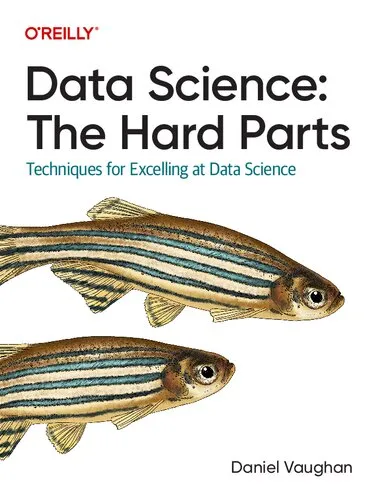
Data Science: The Hard Parts: Techniques for Excelling at Data Science
Daniel Vaughan
2023
View book
Learning Data Science: Data Wrangling, Exploration, Visualization, and Modeling with Python
Sam Lau,Joseph Gonzalez,Deborah Nolan
2023
View book