Loading
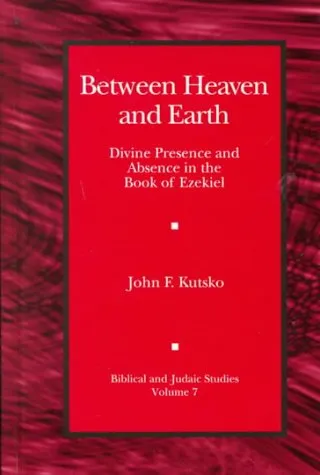
Cover of Between Heaven and Earth: Divine Presence and Absence in the Book of Ezekiel

Book guide and evaluation

Between Heaven and Earth: Divine Presence and Absence in the Book of Ezekiel

John F. Kutsko

English Advanced Art
4.5 / 5

0 reviews

2000

Published

200

pages

362

views

With the destruction of the Jerusalem Temple and the exile of members of the Israelite community to the land of its enemies, whose gods were represented as divine statues, the prophet Ezekiel faced a challenge: how to respond to the enemies' taunts that Israel's God was absent, w

Before you read

What will you get from this book?

With the destruction of the Jerusalem Temple and the exile of members of the Israelite community to the land of its enemies, whose gods were represented as divine statues, the prophet Ezekiel faced a challenge: how to respond to the enemies' taunts that Israel's God was absent, whereas the foreigners' gods self-evidently were present. Thus, to ask the question, "Where is God" was to face several complex and tangled problems. How is God to be represented? How is Yahweh to be differentiated from other deities? What is Yahweh's relationship to Israel in exile?Kutsko sets out to answer these questions within the theme of divine presence and absence, particularly as it relates to the kabod theology in Ezekiel. He shows that God's absence becomes, for Ezekiel, an argument for his presence and power, while the presence of idols indicated their absence and impotence. Ezekiel extends this proposition into a corollary: God's presence is not consigned to sanctuary, for God is a sanctuary. In this regard, absence from the Temple is a message of judgment and the precursor to a message of restoration. If God can become a sanctuary, his presence in exile becomes a message of victory even over imperial powers. This conceptualization of Yahweh, then, ends up defining the power and position of Israel's God in distinctively universal terms. In this contribution, the book of Ezekiel plays a central and previously unappreciated role in the development of Israelite theology, and monotheism in particular.

Ask this book

Your question is answered in the context of this title and author. Each answer uses 2 points.

Sign in to ask the book assistant.

Reader reviews

0 reviews, 4.5 average out of 5

No reviews yet

If you have read this book, help the next reader with your experience.

Write a review

Sign in to publish a review.

Reader questions and answers

Ask a focused question and learn from the community.

Sign in to ask or answer a question.

No questions yet

Be the first to ask a clear, useful question.