Book guide and evaluation
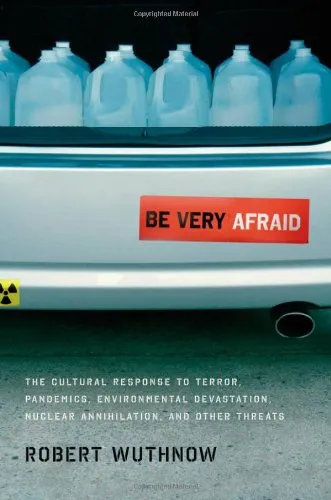
Be Very Afraid: The Cultural Response to Terror, Pandemics, Environmental Devastation, Nuclear Annihilation, and Other Threats
Robert Wuthnow
English
Intermediate
novel
4.2 / 5
0 reviews
2010
Published
305
pages
252
views
Robert Wuthnow has been praised as one of ''the country's best social scientists'' by columnist David Brooks, who hails his writing as ''tremendously valuable.'' The New York Times calls him ''temperate, balanced, compassionate,'' adding, ''one can't but admire Mr. Wuthnow's view
Before you read
What will you get from this book?
Robert Wuthnow has been praised as one of ''the country's best social scientists'' by columnist David Brooks, who hails his writing as ''tremendously valuable.'' The New York Times calls him ''temperate, balanced, compassionate,'' adding, ''one can't but admire Mr. Wuthnow's views.'' A leading authority on religion, he now addresses one of the most profound subjects: the end of the world. In Be Very Afraid, Wuthnow examines the human response to existential threats--once a matter for theology, but now looming before us in multiple forms. Nuclear weapons, pandemics, global warming: each threatens to destroy the planet, or at least to annihilate our species. Freud, he notes, famously taught that the standard psychological response to an overwhelming danger is denial. In fact, Wuthnow writes, the opposite is true: we seek ways of positively meeting the threat, of doing something--anything--even if it's wasteful and time-consuming. The atomic era that began with the bombing of Hiroshima sparked a flurry of activity, ranging from duck-and-cover drills, basement bomb shelters, and marches for a nuclear freeze. All were arguably ineffectual, yet each sprang from an innate desire to take action. It would be one thing if our responses were merely pointless, Wuthnow observes, but they can actually be harmful. Both the public and policymakers tend to model reactions to grave threats on how we met previous ones. The response to the terrorist attacks of 9/11, for example, echoed the Cold War--citizens went out to buy duct tape, mimicking 1950s-era civil defense measures, and the administration launched two costly conflicts overseas. Offering insight into our responses to everything from An Inconvenient Truth to the bird and swine flu epidemics, Robert Wuthnow provides a profound new understanding of the human reaction to existential vulnerability.
Ask this book
Your question is answered in the context of this title and author. Each answer uses 2 points.
Sign in to ask the book assistant.
Reader reviews
0 reviews, 4.2 average out of 5
No reviews yet
If you have read this book, help the next reader with your experience.
Write a review
Sign in to publish a review.
Reader questions and answers
Ask a focused question and learn from the community.
Sign in to ask or answer a question.
No questions yet
Be the first to ask a clear, useful question.
What to read next
Related references that continue this learning path.
Crossing the Line: Violence, Play, and Drama in Naval Equator Traditions
Simon J. Bronner
2007
View book