Data Driven e-Science: Use Cases and Successful Applications of Distributed Computing Infrastructures (ISGC 2010)
Francois Grey,Simon C. Lin (auth.),Simon C. Lin,Eric Yen (eds.)
2011
View book
Book guide and evaluation
Rita Kakkar
0 reviews
Published
pages
views
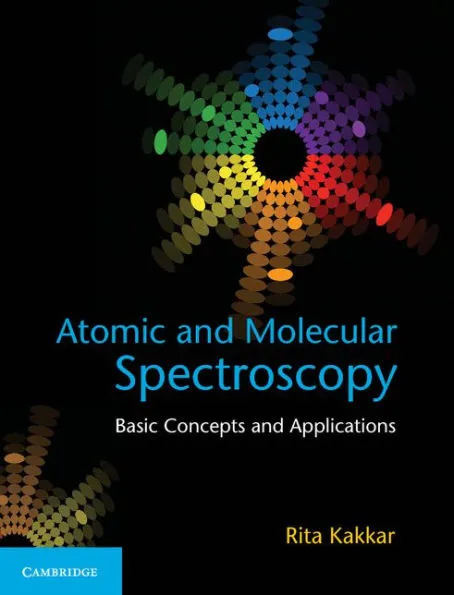
Introduction to Atomic and Molecular Spectroscopy: Basic Concepts and Applications Welcome to the fascinating world of spectroscopy, where science meets precision to uncover the mysteries of atoms and molecules. Atomic and Molecular Spectroscopy: Basic Concepts and Applica
Before you read
Welcome to the fascinating world of spectroscopy, where science meets precision to uncover the mysteries of atoms and molecules. Atomic and Molecular Spectroscopy: Basic Concepts and Applications serves as an essential guide for students, researchers, and professionals who aim to understand the principles of spectroscopy and its manifold applications in various scientific disciplines.
Spectroscopy, often referred to as the "eyes of science," plays a pivotal role in modern physics, chemistry, and material science. This book, written by Rita Kakkar, bridges the gap between fundamental theory and real-world applications, making it a vital resource for those seeking clarity and depth in this field.
The book is meticulously divided into sections that gradually unfold the concepts of atomic and molecular spectroscopy. Beginning with the basic principles of absorption and emission, readers are introduced to various types of spectra and the fundamental processes that give rise to these phenomena. The emphasis is placed on the quantum mechanical underpinnings of spectroscopy, enabling readers to derive equations and interpret results effectively.
Further chapters delve into specific techniques such as rotational, vibrational, Raman, and electronic spectroscopy. For each method, the book provides both theoretical foundations and practical details, ensuring a holistic understanding. A significant portion is also devoted to fluorescence and phosphorescence, allowing readers to grasp the nuances of light-emitting processes at the molecular level.
One of the book's remarkable features is its focus on applications. Real-world examples are included to demonstrate how spectroscopic methods contribute to diverse fields like environmental monitoring, material characterization, and biomedical diagnostics. By connecting theory with application, the book ensures that readers understand not just the 'how' but also the 'why' of spectroscopy.
"The interaction of light with matter is not just a scientific curiosity, but a fundamental truth that governs the universe around us."
"Spectroscopy is the key to unlocking the secrets hidden within atoms and molecules—a journey of exploration filled with light and wonder."
"From the breath we exhale to the light of distant stars, the principles of spectroscopy influence our understanding of life and the cosmos."
Spectroscopy is at the core of modern-day scientific inquiry. Without it, our ability to understand the structural and dynamic properties of matter would be severely constrained. This book fills a critical gap by offering a well-rounded explanation of spectroscopic principles in an accessible yet rigorous manner. Whether you are a chemistry student eager to explore molecular behavior or a physicist keen on investigating atomic spectra, this book serves as a versatile resource.
What sets this book apart is its dual focus on theory and application. While many textbooks emphasize either the physics behind spectroscopy or its experimental aspects, Atomic and Molecular Spectroscopy: Basic Concepts and Applications strikes a balance between the two. The inclusion of real-world examples further enhances its relevance, bridging the often-perceived gap between academic knowledge and practical utility.
Moreover, Rita Kakkar’s clear and concise writing ensures that even complex concepts are conveyed effectively, making it easy for readers to grasp and retain information. Whether you are a newcomer to the field or a seasoned researcher looking for a reference, this book is an invaluable asset.
Your question is answered in the context of this title and author. Each answer uses 2 points.
0 reviews, 4.5 average out of 5
Sign in to publish a review.
Ask a focused question and learn from the community.
Related references that continue this learning path.
Francois Grey,Simon C. Lin (auth.),Simon C. Lin,Eric Yen (eds.)
Ferd Williams (auth.),Baldassare Di Bartolo (eds.)