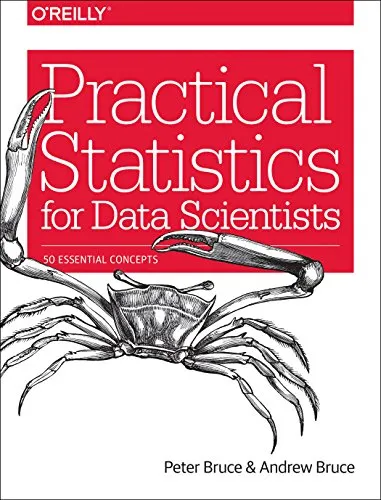
Practical Statistics for Data Scientists: 50 Essential Concepts
Peter Bruce,Andrew Bruce
2017
View book

Book guide and evaluation
Payne C. H.
0 reviews
Published
pages
views
Introduction to "Astrophysical Data Bearing on the Relative Abundance of the Elements" Welcome to the groundbreaking exploration of chemical abundances in the cosmos, where observations and principles of astrophysics converge to unravel the mysteries of the universe's composit
Before you read
Welcome to the groundbreaking exploration of chemical abundances in the cosmos, where observations and principles of astrophysics converge to unravel the mysteries of the universe's composition. "Astrophysical Data Bearing on the Relative Abundance of the Elements" combines meticulous data analysis and theoretical insights, offering a comprehensive perspective on the elemental makeup of stars, galaxies, and other celestial bodies.
In this book, I delve into the intricate details of how physical laws and observational data align to paint a vivid picture of the cosmos. Aimed at students, researchers, and enthusiasts of astronomy, astrophysics, and chemistry, this work methodically presents the historical discoveries, theoretical frameworks, and observational findings that support our understanding of the distribution of elements in the universe.
Each chapter is structured to flow seamlessly, progressing from foundational concepts to advanced discussions tailored for those keen on immersing themselves in this transformative field of study. Let’s walk you through some essential aspects of this book in greater detail.
The book presents a systematic investigation into the relative abundance of elements discovered within various celestial bodies and regions of the cosmos. Beginning with a historical overview, I explore how our understanding of the universe's chemical composition has evolved, from Earth-based experiments to astronomical spectroscopy.
Central to the discussion is the concept of stellar nucleosynthesis, through which elements are formed within stars via nuclear fusion and related processes. Observations of stellar spectra serve as the backbone of this field, with a focus on how specific spectral lines provide direct evidence of the elements present in stellar atmospheres, nebulae, and interstellar spaces.
Furthermore, the book evaluates key discrepancies and debates in the scientific community, providing a balanced view of unresolved challenges. From hydrogen and helium—the building blocks of the universe—to heavier species like carbon and iron, the book charts their relative abundances and explains why these findings matter for fields ranging from cosmology to planetary science.
With rigorous methods and analytic schematics, "Astrophysical Data Bearing on the Relative Abundance of the Elements" enables readers to appreciate the synergy between theoretical astrophysics and observational astronomy.
The book highlights several critical points that redefine our understanding of the universe:
These insights are not only central to astronomy but also resonate deeply across other scientific disciplines, showcasing the interconnectedness of natural phenomena.
"Astrophysical Data Bearing on the Relative Abundance of the Elements" holds a significant place in both scientific literature and the history of astrophysics for a variety of reasons:
First, it sheds light on the inherent simplicity and complexity of the universe by explaining how a small set of elements governs the behavior of everything we observe in nature. The book is not only pivotal for advancing astronomy but also bridges gaps between physics, chemistry, and cosmology.
Second, its emphasis on rigorous data collection and scientific inquiry sets a benchmark for future researchers in the field. By intertwining theoretical reasoning with empirical evidence, it inspires a rational appreciation for the cosmos.
Lastly, as an accessible resource for those seeking to understand the universe, this book exemplifies the spirit of curiosity and inquiry that has driven human progress through the ages.
So whether you are a budding scientist, an educator, or simply someone who stares at the night sky and wonders what it is made of, this book offers invaluable insights that intrigue, inform, and inspire.
Your question is answered in the context of this title and author. Each answer uses 2 points.
0 reviews, 4.5 average out of 5
Sign in to publish a review.
Ask a focused question and learn from the community.
Related references that continue this learning path.
Peter Bruce,Andrew Bruce
Alan Agresti,Christine Franklin
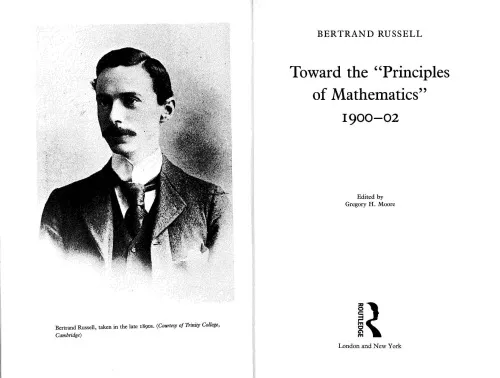
Bertrand Russell