Loading
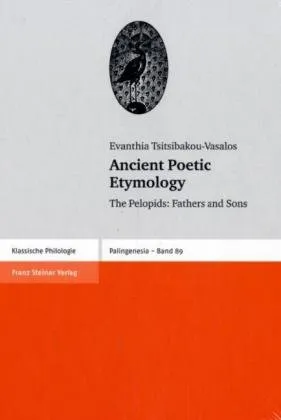
Cover of Ancient Poetic Etymology: The Pelopids: Fathers and Sons

Book guide and evaluation

Ancient Poetic Etymology: The Pelopids: Fathers and Sons

Evanthia Tsitsibakou-Vasalos

English Intermediate novel
4.2 / 5

0 reviews

2007

Published

257

pages

330

views

The potential of ancient Greek poetic etymologizing and its reception in antiquity are analyzed with new interpretive models. The author studies poetic etymology in a holistic and integrative manner, as a tool of thematic and narrative unification. Select passages from Homer and

Before you read

What will you get from this book?

The potential of ancient Greek poetic etymologizing and its reception in antiquity are analyzed with new interpretive models. The author studies poetic etymology in a holistic and integrative manner, as a tool of thematic and narrative unification. Select passages from Homer and archaic lyric poetry provide the matrix for etymological patterns; their validity is examined in an intertextual study of the names of Pelops and his kin. This family exhibits a consistent naming system: the signifiers and signifieds of its male members manifest a lexical and semantic affinity; fathers and sons are linked with inherited linguistic and behavioral bonds. Pelops is given a focal position on account of his preeminence at Olympia and his polyvalent and polysemous name, in which the ambiguities and polarities of his mythic and cultic identity are embedded.

Ask this book

Your question is answered in the context of this title and author. Each answer uses 2 points.

Sign in to ask the book assistant.

Reader reviews

0 reviews, 4.2 average out of 5

No reviews yet

If you have read this book, help the next reader with your experience.

Write a review

Sign in to publish a review.

Reader questions and answers

Ask a focused question and learn from the community.

Sign in to ask or answer a question.

No questions yet

Be the first to ask a clear, useful question.