Fooled by Randomness: The Hidden Role of Chance in Life and in the Markets
Nassim Nicholas Taleb
2005
View book
Book guide and evaluation
Adam Smith
0 reviews
Published
pages
views
Welcome to a detailed exploration of one of the most influential works in economic thought: "An Inquiry into the Nature and Causes of the Wealth of Nations" by Adam Smith. This seminal piece laid the foundation for the study of economics as a discipline and introduced ideas t
Before you read
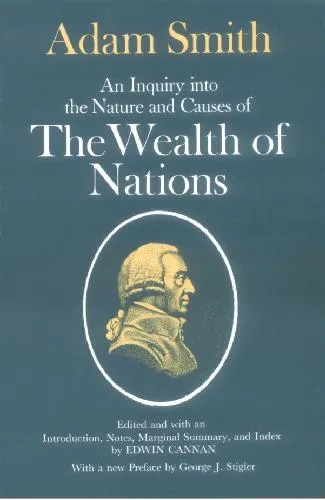
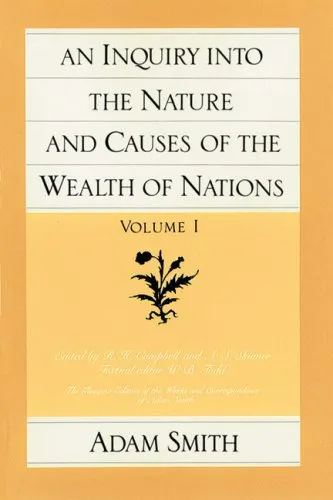
Welcome to a detailed exploration of one of the most influential works in economic thought: "An Inquiry into the Nature and Causes of the Wealth of Nations" by Adam Smith. This seminal piece laid the foundation for the study of economics as a discipline and introduced ideas that have shaped economic policies and systems globally.
The Wealth of Nations, published in 1776, is a critical text in understanding the principles of economic thought and the mechanisms of market dynamics. It is divided into five books, each addressing different facets of economic theory.
The book begins by examining the division of labor and its impact on productivity and efficiency. Smith illustrates how specialization can enhance production capabilities, fostering economic growth. In the second book, he discusses the nature of capital, accumulation of stock, and the relationship between labor and wealth. He posits that wealth is generated through productive labor and effective use of capital.
In subsequent sections, Smith delves into the problems of economic regulation and commercial policies. He critiques mercantilism and advocates for free trade, arguing that markets should be governed by the invisible hand—a metaphor for the self-regulating nature of the marketplace. He believes that individual self-interest often leads to favorable societal outcomes when regulated by competition.
The Wealth of Nations concludes with a detailed analysis of public finance and the role of government. Smith argues for limited government intervention, primarily to enforce justice, protect society, and provide public goods that cannot be efficiently managed by private enterprises.
"It is not from the benevolence of the butcher, the brewer, or the baker that we expect our dinner, but from their regard to their own interest."
"By pursuing his own interest he frequently promotes that of the society more effectually than when he really intends to promote it."
"The real tragedy of the poor is the poverty of their aspirations."
'The Wealth of Nations' remains a cornerstone text for understanding the foundations of economic theory and practice. Adam Smith's exploration of free markets, division of labor, and the role of self-interest in promoting societal benefits have provided the basis for modern economic systems. This book not only challenges the prevailing mercantile thought of its time but also lays the groundwork for classical economics and future economic ideas.
The insights in this book continue to resonate today, influencing policymakers, economists, and thinkers across the globe. Beyond its economic impact, 'The Wealth of Nations' offers philosophical reflections on human nature and societal organization, making it a timeless read for those interested in the intersection between economics, policy, and society.
Your question is answered in the context of this title and author. Each answer uses 2 points.
0 reviews, 4.5 average out of 5
Sign in to publish a review.
Ask a focused question and learn from the community.
Related references that continue this learning path.
Nassim Nicholas Taleb