
Book guide and evaluation
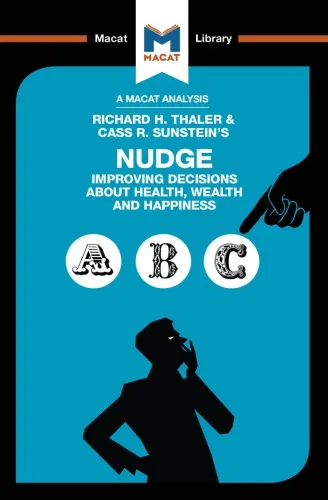
An Analysis of Richard H. Thaler & Cass R. Sunstein's Nudge: Improving Decisions About Health, Wealth and Happiness
Mark Egan
English
Intermediate
Art
4.3 / 5
0 reviews
2017
Published
96
pages
510
views
Welcome to an insightful journey through 'An Analysis of Richard H. Thaler & Cass R. Sunstein's Nudge: Improving Decisions About Health, Wealth and Happiness'. This book provides a comprehensive exploration of the influential work by Thaler and Sunstein, offering a de
Before you read
What will you get from this book?
Welcome to an insightful journey through 'An Analysis of Richard H. Thaler & Cass R. Sunstein's Nudge: Improving Decisions About Health, Wealth and Happiness'. This book provides a comprehensive exploration of the influential work by Thaler and Sunstein, offering a detailed overview, key takeaways, some of the most impactful quotes, and a discussion on the significance of Nudge in today's world.
Detailed Summary of the Book
In 'Nudge: Improving Decisions About Health, Wealth, and Happiness', Richard H. Thaler and Cass R. Sunstein delve into the concept of "choice architecture" and how small interventions, or "nudges", can significantly influence people's decisions. Unlike mandates or directives, a nudge gently steers individuals towards better choices without restricting their freedom of choice. The authors employ behavioral economics and psychology to show how these small tweaks can help people make better decisions in various aspects of life, such as health, personal finance, and public policy.
The book introduces several compelling ideas, such as "libertarian paternalism," which suggests that it is both possible and desirable for private and public institutions to influence behavior while also respecting personal freedom of choice. Thaler and Sunstein provide numerous real-world examples and case studies where nudges have been effectively implemented, from increasing participation rates in retirement savings plans to promoting healthier eating habits. The authors argue that by understanding how people think and make decisions, we can design environments in a way that guides them towards more beneficial outcomes.
Key Takeaways
- Choice Architecture: The way choices are presented significantly impacts decision-making. By structuring choices thoughtfully, better outcomes can be encouraged.
- Behavioral Economics: This field is crucial in understanding the irrationality and biases in human decision-making, which can be harnessed to create positive nudges.
- Libertarian Paternalism: It's possible to steer decisions positively while preserving freedom. This principle is at the heart of designing effective nudges.
- Impact on Policy: Nudging offers a powerful tool for policy-makers to create laws and regulations that facilitate improved public welfare without strict regulations.
Famous Quotes from the Book
“The false assumption is that almost all people, almost all of the time, make choices that are in their best interest or at the very least better than the choices someone else would make for them.”
“In many cases, individuals make pretty bad decisions. We know this because sensible people sometimes change their minds. And even if they do not change their minds, they might explain, if asked, that they have made a mistake. ‘It seemed like a good idea at the time’ is a familiar explanation.”
Why This Book Matters
'Nudge: Improving Decisions About Health, Wealth, and Happiness' stands out as a pivotal work that has reshaped how we think about decision-making and policy. Its influence extends beyond academia into the realms of business and government, offering a novel framework for understanding human behavior. The concepts in 'Nudge' have been applied in numerous fields, affecting practices and policies worldwide. This analysis of Thaler and Sunstein's work highlights the enduring relevance of their ideas and underscores the need for continued exploration of behaviorally informed strategies to improve individual and collective well-being.
Ask this book
Your question is answered in the context of this title and author. Each answer uses 2 points.
Sign in to ask the book assistant.
Reader reviews
0 reviews, 4.3 average out of 5
No reviews yet
If you have read this book, help the next reader with your experience.
Write a review
Sign in to publish a review.
Reader questions and answers
Ask a focused question and learn from the community.
Sign in to ask or answer a question.
No questions yet
Be the first to ask a clear, useful question.
What to read next
Related references that continue this learning path.

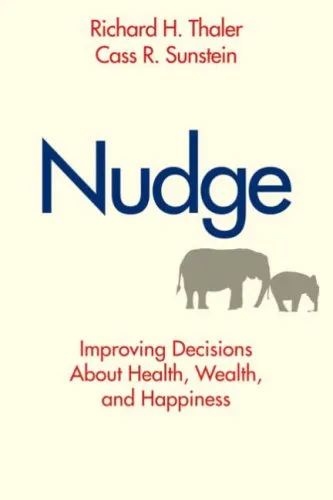
Nudge: Improving Decisions About Health, Wealth, and Happiness
Richard H. Thaler,Prof. Cass R. Sunstein
2008
View book