Book guide and evaluation
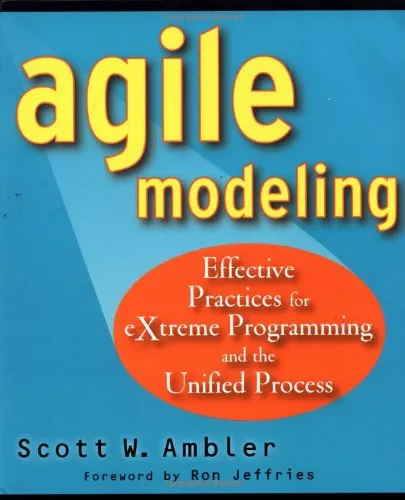
Agile Modeling: Effective Practices for eXtreme Programming and the Unified Process
Scott Ambler
English
Unordered
Software Development
4.2 / 5
0 reviews
2002
Published
402
pages
639
views
Introduction to "Agile Modeling: Effective Practices for eXtreme Programming and the Unified Process" Scott Ambler's book, "Agile Modeling: Effective Practices for eXtreme Programming and the Unified Process," provides an intellectually stimulating and practical exploration of
Before you read
What will you get from this book?
Introduction to "Agile Modeling: Effective Practices for eXtreme Programming and the Unified Process"
Scott Ambler's book, "Agile Modeling: Effective Practices for eXtreme Programming and the Unified Process," provides an intellectually stimulating and practical exploration of Agile modeling techniques, integrating key Agile methodologies to enhance software development practices effectively.
Detailed Summary of the Book
"Agile Modeling" is a comprehensive guide for software developers and project managers who are keen on improving their development processes by adopting Agile methodologies. The book intricately combines fundamental practices of eXtreme Programming (XP) and the Unified Process (UP) into the Agile modeling framework. Scott Ambler elaborates on how Agile modeling can significantly streamline communication, collaboration, and documentation processes in any project lifecycle.
Throughout the book, readers will find a plethora of real-world examples and succinct advice on integrating Agile modeling into their work routines, regardless of the specific methodologies or frameworks they currently employ. By stressing the importance of adapting Agile principles to suit specific project needs, the book provides flexibility and adaptability in the approach to software design and development.
Key Takeaways
- Understanding and applying Agile modeling techniques efficiently in various software project environments.
- Bridging the gap between eXtreme Programming and the Unified Process to create a cohesive modeling strategy.
- Adapting Agile principles to enhance communication and collaboration among team members.
- Emphasizing practical implementation over theoretical concepts for real-world applicability.
- Encouraging continuous improvement and iterative development processes to meet client requirements effectively.
Famous Quotes from the Book
“Modeling is a critical aspect of software development, but it is only as valuable as it is effective.”
“The best models are those that are mined from experience, collaboratively created, and easily adaptable to change.”
Why This Book Matters
The significance of "Agile Modeling" lies in its ability to demystify the often complex and daunting processes of software modeling and development. Scott Ambler brings forth a pragmatic approach to integrating Agile methodologies that are not only accessible but also highly adaptable to various project requirements. This book is crucial for anyone seeking to enhance their software development practices in an era where the Agile framework is increasingly adopted around the globe.
Ultimately, this book equips readers with the tools necessary to execute successful software projects through iterative processes and enhanced team collaboration. Its insights into Agile methodologies and their interspersing with other developmental frameworks render it a vital resource not only for current practitioners but also for those aspiring to embrace Agile principles.
Ask this book
Your question is answered in the context of this title and author. Each answer uses 2 points.
Sign in to ask the book assistant.
Reader reviews
0 reviews, 4.2 average out of 5
No reviews yet
If you have read this book, help the next reader with your experience.
Write a review
Sign in to publish a review.
Reader questions and answers
Ask a focused question and learn from the community.
Sign in to ask or answer a question.
No questions yet
Be the first to ask a clear, useful question.
What to read next
Related references that continue this learning path.
UML 2 and the Unified Process: Practical Object-Oriented Analysis and Design (2nd Edition)
Jim Arlow,Ila Neustadt
2005
View book
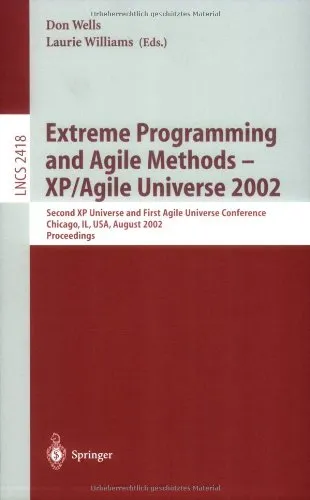
Extreme Programming and Agile Methods - XP-Agile Universe 2003: Third XP Agile Universe Conference, New Orleans, LA, USA, August 10-13, 2003. Proceedings
Barry Boehm,Richard Turner (auth.),Frank Maurer,Don Wells (eds.)
2003
View book