
Book guide and evaluation
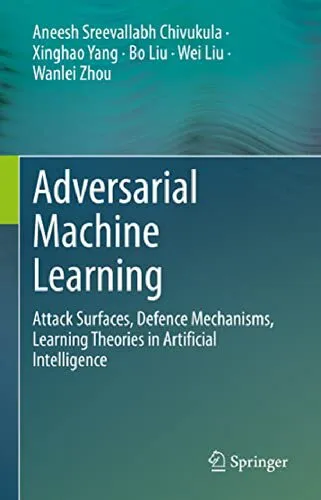
Adversarial Machine Learning: Attack Surfaces, Defence Mechanisms, Learning Theories in Artificial Intelligence
Aneesh Sreevallabh Chivukula,Xinghao Yang,Bo Liu,Wei Liu,Wanlei Zhou
English
Beginner
Machine Learning
4.0 / 5
0 reviews
2023
Published
314
pages
655
views
Introduction The field of machine learning has revolutionized diverse sectors worldwide, from healthcare and finance to transportation and natural language processing. But as the reliance on machine learning grows, so does the understanding that these systems are vulnerabl
Before you read
What will you get from this book?
Introduction
The field of machine learning has revolutionized diverse sectors worldwide, from healthcare and finance to transportation and natural language processing. But as the reliance on machine learning grows, so does the understanding that these systems are vulnerable to adversarial attacks. "Adversarial Machine Learning: Attack Surfaces, Defence Mechanisms, Learning Theories in Artificial Intelligence" serves as a definitive guide to understanding, assessing, and countering adversarial threats in artificial intelligence systems. This comprehensive book is designed for researchers, practitioners, and students, offering a deep dive into the evolving landscape of adversarial machine learning (AML).
The authors—Aneesh Sreevallabh Chivukula, Xinghao Yang, Bo Liu, Wei Liu, and Wanlei Zhou—collaboratively present an engaging narrative filled with cutting-edge insights and thoroughly researched methodologies. With a unique blend of theoretical foundations, practical applications, and future directions, this book not only enhances one's understanding of AML but also motivates the development of robust AI systems.
Detailed Summary of the Book
The book begins with an overview of adversarial machine learning, contextualizing the prevalence and severity of adversarial attacks. It explores the unique vulnerabilities within modern AI systems, including image recognition models, speech synthesis frameworks, and reinforcement learning environments. The authors categorize attack surfaces into various dimensions, such as evasion, poisoning, and inference attacks.
Moving forward, the book provides a systematic explanation of defence mechanisms across multiple domains, guided by the latest state-of-the-art research. Techniques such as adversarial training, robust optimization, defensive distillation, and input transformation are detailed through practical explanations and mathematical formulations. Readers are also introduced to real-world scenarios where adversarial attacks have led to critical system failures, emphasizing the high stakes of AML vulnerabilities.
One of the most standout sections is the emphasis on learning theories in AI, which underpin both defensive and offensive strategies in AML. The authors analyze the interplay between deep learning architectures and adversarial robustness, offering valuable insights into the limitations of modern AI systems. Through in-depth case studies, readers glean lessons that link academic research to industry applications.
The narrative concludes with a forward-looking discussion of the ethical, social, and technological implications of adversarial machine learning. The authors highlight open challenges, call for collaboration across disciplines, and envision the future trajectory of robust AI systems.
Key Takeaways
- A clear understanding of the attack surfaces that adversaries exploit in AI systems, with examples from various industries.
- Comprehensive coverage of defensive mechanisms and tools available today, explained with practical examples and applications.
- Insight into the theoretical underpinnings of adversarial behavior in AI, linking fundamental principles to applicable strategies.
- Exposure to ethical and societal considerations, inspiring a balanced approach to technology development and deployment.
- A call to action for AI researchers, practitioners, and policymakers to actively engage with the challenges of adversarial machine learning.
Famous Quotes from the Book
"Adversarial machine learning is not merely a challenge; it is an opportunity to fortify AI systems and ensure they truly serve humanity." - Aneesh Sreevallabh Chivukula
"Every vulnerability in AI is not just a crack but a mirror reflecting the unfinished journey of artificial intelligence." - Xinghao Yang
"Striking a balance between innovation and robustness is the cornerstone of building trustworthy AI systems." - Bo Liu
Why This Book Matters
The importance of this book cannot be overstated in the current AI landscape. As artificial intelligence applications continue to integrate into every facet of modern life, the threats posed by adversarial attacks have become one of the most critical challenges in computing today. Without proper understanding and safeguards, the promise of AI could be undermined by malicious actors.
What sets "Adversarial Machine Learning: Attack Surfaces, Defence Mechanisms, Learning Theories in Artificial Intelligence" apart is its holistic approach. It doesn't just focus on the technical aspects but contextualizes the broader implications of adversarial vulnerabilities. By bridging the gap between academia and industry, the book fosters collaboration and inspires innovation.
Whether you're an AI researcher, an industry practitioner, or a policymaker, this book equips you with the knowledge and tools to address the pressing challenges of adversarial machine learning. It's not just a guide—it's a call to action for safeguarding the future of AI and its role in society.
Ask this book
Your question is answered in the context of this title and author. Each answer uses 2 points.
Sign in to ask the book assistant.
Reader reviews
0 reviews, 4.0 average out of 5
No reviews yet
If you have read this book, help the next reader with your experience.
Write a review
Sign in to publish a review.
Reader questions and answers
Ask a focused question and learn from the community.
Sign in to ask or answer a question.
No questions yet
Be the first to ask a clear, useful question.
What to read next
Related references that continue this learning path.
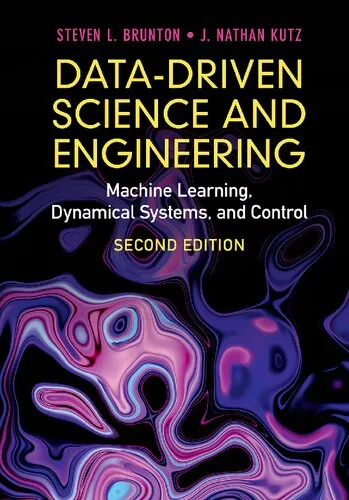
Data-Driven Science and Engineering: Machine Learning, Dynamical Systems, and Control 2nd Edition, Kindle Edition
Steven L. Brunton,J. Nathan Kutz
2022
View book

AI for a Safe Earth: Private Probabilistic Search and Predictive Threat Analytics
Sumit Chakraborty
2014
View book