
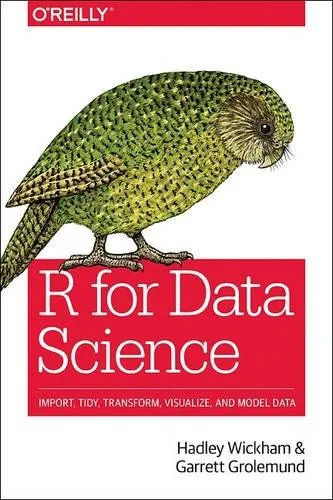
R for Data Science: Import, Tidy, Transform, Visualize, and Model Data
Hadley Wickham,Garrett Grolemund
2017
View book

Book guide and evaluation
Carol Peters (auth.),Carol Peters,Valentin Jijkoun,Thomas Mandl,Henning Müller,Douglas W. Oard,Anselmo Peñas,Vivien Petras,Diana Santos (eds.)
0 reviews
Published
pages
views
Introduction to "Advances in Multilingual and Multimodal Information Retrieval" The book, Advances in Multilingual and Multimodal Information Retrieval, presents a rich collection of research and developments from the 8th Workshop of the Cross-Language Evaluati
Before you read
The book, Advances in Multilingual and Multimodal Information Retrieval, presents a rich collection of research and developments from the 8th Workshop of the Cross-Language Evaluation Forum (CLEF) held in Budapest, Hungary, in September 2007. This volume not only reflects the rapid advancements in multilingual and multimodal information retrieval but also highlights emerging trends and unresolved challenges in the field. By compiling revised and selected papers from experts worldwide, the book serves as a valuable resource for scholars, researchers, and industry professionals interested in improving information retrieval systems and enabling seamless access to data across diverse languages and modalities.
Every year, CLEF workshops bring together interdisciplinary researchers working on benchmarking and evaluation methodologies for information retrieval systems. In 2007, the workshop uniquely emphasized bridging language barriers, interpreting diverse media types, and fostering innovation in cross-language and multimodal information access. The content of this book reflects the creative and diligent efforts of the research community, showcasing outcomes that push the boundaries of technological capabilities and address practical information retrieval issues encountered in real-life scenarios.
This volume captures the growing complexity of multilingual and multimodal problems in information retrieval research. It demonstrates how academic inquiry and system evaluation methodologies evolve alongside increasingly globalized data and communication platforms. Divided into well-organized sections, the book explores topics such as:
The book also delves into detailed analysis from CLEF 2007’s specific benchmarking experiments, such as document retrieval in specific languages, multimedia analysis challenges, and the use of semantic resources to enhance retrieval accuracy. Each chapter is a self-contained unit, providing both theoretical insights and practical findings.
By studying this book, readers can anticipate technological advancements in search engines, digital assistants, and content recommendation systems while also gaining an appreciation for the intricacies of globalizing information access.
"The boundaries of language may be final for humans, but for machines, they are simply another challenge to overcome."
"Information retrieval is no longer about just finding a document—it is about delivering meaningful, personalized, and actionable insights in any language or media."
"CLEF serves as a bridge between academic curiosity and real-world application, inspiring solutions that tackle the growing demands of the information age."
This book is more than a collection of academic papers; it is a reflection of a field that underpins modern information society. As people continue to create and consume data in countless languages and forms, the need for sophisticated information retrieval techniques becomes ever more pressing. This volume provides:
By addressing linguistic diversity and integrating multimodal data, the works presented in this book pave the way for systems that can truly serve the needs of a global audience. It emphasizes that inclusive and accessible information retrieval is not just a technical challenge but a societal imperative.
Your question is answered in the context of this title and author. Each answer uses 2 points.
0 reviews, 4.3 average out of 5
Sign in to publish a review.
Ask a focused question and learn from the community.
Related references that continue this learning path.
Hadley Wickham,Garrett Grolemund
Mihai Surdeanu,Marco Antonio Valenzuela-Escarcega