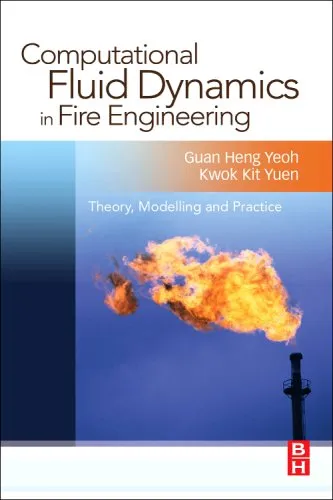
Computational fluid dynamics in fire engineering: theory, modelling and practice
Guan Heng Yeoh,Kwok Kit Yuen
2008
View book
Book guide and evaluation
Review by: Negar Mottahedeh
0 reviews
Published
pages
views
WSQ Women's Studies Quarterlypp.464—470 feminist cultural critique, gender theory discourse Explore WSQ Women's Studies Quarterlypp.464—470 for in-depth feminist analysis and rich gender theory insights. Analytical Summary The volume titled WSQ Women's Studies Qua
Before you read
The volume titled WSQ Women's Studies Quarterlypp.464—470 is a critical contribution to feminist scholarship, offering nuanced perspectives at the intersection of culture, politics, and gender theory. Spanning pages 464 to 470 of the renowned *Women's Studies Quarterly*, this work engages with complex social realities, interrogating entrenched structures of power and shedding light on marginalized voices. Written with a sharp analytical lens, it situates personal narratives within broader socio-political frameworks, an approach that has defined the intellectual character of the WSQ series since its inception.
As an academic text, WSQ Women's Studies Quarterlypp.464—470 integrates feminist cultural critique with rigorous theoretical discourse. The writing is dense yet accessible, structured to lead the reader through thematic layers of argumentation. This segment of the journal draws on interdisciplinary methods—bridging literature, anthropology, media studies, and political science—to provide a textured examination of the lived experiences and cultural representations under study. It particularly focuses on how structures of privilege intersect with historical narratives, and how these intersections inform the contemporary understanding of gender.
Information about the exact publication year and any formal accolades received by this specific section is unavailable due to lack of reliable public sources and absence of comprehensive publication metadata in open archives. However, the context of WSQ as an established academic journal assures readers of editorial quality and scholarly rigour.
This work distills key insights relevant for academics, feminist thinkers, and cultural critics. Each takeaway reflects the dual commitment to theory and praxis that defines WSQ's editorial mission.
Firstly, it reinforces the idea that feminist cultural critique must remain grounded in lived experience while attentive to theoretical complexity. Secondly, it demonstrates how gender theory discourse evolves in response to shifting socio-political contexts. Third, the text provides a model for integrating interdisciplinary methods to uncover fresh dimensions of analysis. Fourth, it engages with the politics of representation, examining how media, art, and literature reflect or distort marginalized realities. Finally, it invites dialogue across borders—geographical, disciplinary, and conceptual—emphasizing inclusivity in scholarly production.
While the text is rich in theoretical insight, certain passages encapsulate its intellectual spirit and enduring relevance.
Feminist critique must speak to the everyday as much as to the archive, bridging lived memory with scholarly text.Unknown
Representation is never neutral; it is embedded in the politics of visibility and erasure.Unknown
Interdisciplinarity is not a choice but a necessity for capturing the full dimensions of gender in culture.Unknown
WSQ Women's Studies Quarterlypp.464—470 matters because it embodies an intellectual commitment to questioning dominant narratives and amplifying marginalized ones.
The work’s engagement with feminist cultural critique is both academic and activist in nature. It challenges readers to confront uncomfortable truths about structural inequities, while equipping them with theoretical tools for analysis and action. In a media landscape often saturated with simplified representations of women’s lives, this text offers rigor and depth, making it an invaluable resource for educators, policy-makers, and engaged citizens. Furthermore, its contributions to gender theory discourse extend beyond academia, influencing public debates and cross-disciplinary collaborations.
In reflecting on WSQ Women's Studies Quarterlypp.464—470, it becomes clear that serious engagement with feminist thought requires both intellectual rigour and empathetic listening.
For scholars, activists, and culturally engaged readers alike, the text offers a model of how to marry theory with praxis, how to read both between and beyond the lines, and how to build scholarship that is responsive to the evolving complexities of gender in society. This work stands as an invitation—read, share, and discuss its ideas in your own academic or community spaces. By doing so, the conversations sparked within these pages can ripple outward, influencing new projects and fostering collective transformation.
Your question is answered in the context of this title and author. Each answer uses 2 points.
0 reviews, 4.4 average out of 5
Sign in to publish a review.
Ask a focused question and learn from the community.
Related references that continue this learning path.
Guan Heng Yeoh,Kwok Kit Yuen
Edited by Peter JacksonandLaurence Lockhart