Book guide and evaluation
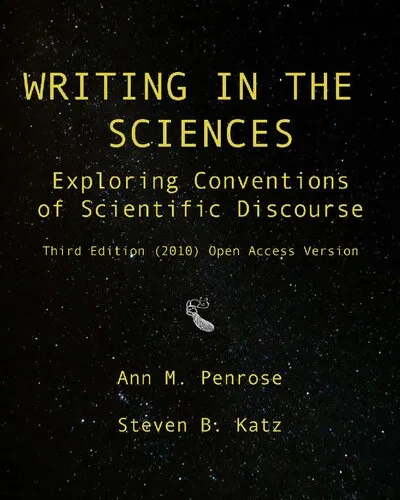
Writing in the Sciences: Exploring Conventions of Scientific Discourse
Ann M. Penrose,Steven B. Katz
English
Beginner
writing
4.7 / 5
0 reviews
2009
Published
326
pages
512
views
Welcome to a comprehensive guide on scientific writing with "Writing in the Sciences: Exploring Conventions of Scientific Discourse". This book stands as an essential resource for scientists, researchers, students, and educators who aspire to communicate their scientific insigh
Before you read
What will you get from this book?
Welcome to a comprehensive guide on scientific writing with "Writing in the Sciences: Exploring Conventions of Scientific Discourse". This book stands as an essential resource for scientists, researchers, students, and educators who aspire to communicate their scientific insights with clarity and precision.
Detailed Summary of the Book
In "Writing in the Sciences: Exploring Conventions of Scientific Discourse", authors Ann M. Penrose and Steven B. Katz embark on a journey to unravel the complexities of scientific writing. The book delves into the importance of understanding and mastering the conventions that govern scientific discourse. It begins by introducing readers to the foundational principles of writing in scientific contexts, including the significance of clarity, coherence, and conciseness. It then explores various scientific genres, such as research articles, reviews, and reports, providing insights into their unique structural and stylistic requirements.
Throughout its chapters, the book pays particular attention to the rhetorical strategies that scientists use to construct arguments and present data effectively. Penrose and Katz guide readers through the nuances of language that can either enhance or detract from the clarity of scientific communication. Additionally, they emphasize the role of the writer's voice and how it adapts to different scientific audiences to achieve the desired impact.
By incorporating plenty of real-world examples and practical exercises, "Writing in the Sciences" offers readers opportunities to apply principles and refine their writing skills. Thus, the book serves not only as a theoretical framework but also as a practical tool for those looking to elevate their scientific writing capabilities.
Key Takeaways
- Understanding the conventions of scientific writing is crucial for effective communication within the scientific community.
- Scientific writers must balance clarity, precision, and engagement to communicate complex ideas effectively.
- The book provides insights into various scientific genres and their unique writing requirements.
- Rhetorical strategies and audience adaptation are key components of successful scientific discourse.
- Practical exercises in the book help readers implement theoretical concepts in their own writing.
Famous Quotes from the Book
"Scientific writing is not just about reporting results; it is about convincing readers to accept the significance of these results."
"The conventions of scientific discourse are like the rules of a complex game — mastering them is essential to succeed."
Why This Book Matters
"Writing in the Sciences: Exploring Conventions of Scientific Discourse" matters because it empowers scientists and aspiring researchers to bridge the gap between scientific inquiry and communication. In an era where the dissemination of scientific knowledge is crucial for innovation and societal advancement, the ability to convey findings clearly and persuasively is more important than ever.
By offering a deeper understanding of the conventions that underpin scientific discourse, this book equips readers with the tools to become more effective communicators. It not only enhances individual writing skills but also contributes to the broader scientific dialogue by promoting clarity and coherence in the sharing of scientific knowledge.
Whether you are a seasoned scientist or an emerging scholar, "Writing in the Sciences" provides invaluable insights and guidance for mastering the art and science of writing in the scientific domain.
Ask this book
Your question is answered in the context of this title and author. Each answer uses 2 points.
Sign in to ask the book assistant.
Reader reviews
0 reviews, 4.7 average out of 5
No reviews yet
If you have read this book, help the next reader with your experience.
Write a review
Sign in to publish a review.
Reader questions and answers
Ask a focused question and learn from the community.
Sign in to ask or answer a question.
No questions yet
Be the first to ask a clear, useful question.
What to read next
Related references that continue this learning path.
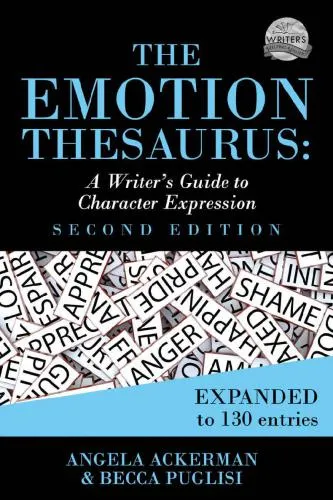
The Emotion Thesaurus: A Writer’s Guide to Character Expression
Angela Ackerman,Becca Puglisi
2019
View book