Microsoft windows internals, fourth edition : Microsoft Windows Server 2003, Windows XP, and Windows 2000
Mark E Russinovich;David A Solomon;Jim Allchin
2004
View book
Book guide and evaluation
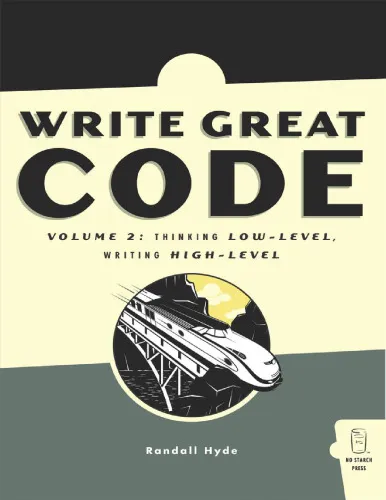
Randall Hyde
0 reviews
Published
pages
views
Write Great Code, Volume 2 software optimization, low-level programming Write Great Code, Volume 2 explores advanced software optimization with practical low-level programming insights. Analytical Summary Write Great Code, Volume 2 is an authoritative guide for pr
Before you read
Write Great Code, Volume 2 is an authoritative guide for programmers, engineers, and computer scientists who are committed to mastering the art and science of software optimization. Building upon the foundational principles introduced in Volume 1, this installment shifts focus towards understanding how code interacts with hardware, and how efficient low-level programming techniques can dramatically improve performance.
The book offers deep analytical insight into the boundaries between high-level languages and the machine-level operations that ultimately execute the instructions. It aims to give the reader a clear mental model of how compilers, memory hierarchies, CPUs, and other components work together — and how subtle changes can result in significant performance shifts.
From detailed explanations of instruction sets to discussions on cache behavior and branch prediction, Write Great Code, Volume 2 embraces the complexity of modern computing while keeping the explanations accessible to disciplined learners. Information on publication year and any awards is unavailable due to no reliable public source, but the text remains highly respected in the software engineering community.
Readers will emerge with a refined understanding of how software optimization and low-level programming intersect to influence execution speed and resource usage. The book emphasizes that coding excellence requires not only algorithmic design but also a nuanced grasp of hardware behavior.
You will gain practical knowledge on identifying bottlenecks, measuring performance accurately, and applying optimization strategies without sacrificing code maintainability. This dual focus — theory and pragmatic application — ensures that concepts can be implemented effectively in real-world projects.
The text encourages adopting a principled approach to optimization: knowing when to invest in low-level improvements and when algorithmic enhancements will yield greater return on effort.
High-level code is for humans; low-level code is for machines — and great programmers respect both worlds.Unknown
Optimization without measurement is just guesswork — always measure before and after.Unknown
Understanding the hardware is half the battle in software performance engineering.Unknown
In a technology landscape where efficiency often determines success, Write Great Code, Volume 2 stands as a critical resource for anyone seeking mastery over both code and hardware. It bridges the knowledge gap between theoretical computer science principles and hands-on programming practice.
For academics, it provides material rich enough for advanced coursework and research. For professionals, it offers a reference that can be applied directly to performance-sensitive applications. And for serious hobbyists, it lays out a structured path to elevate coding from functional to exceptional through targeted optimization.
Few books succeed at both educating and inspiring — this volume does so by cultivating not just technical skill, but also a disciplined engineering mindset.
Write Great Code, Volume 2 is more than a manual on software optimization — it is an invitation to refine and elevate your craft as a programmer. By combining rigorous analysis with practical examples, it empowers readers to engage with code at its most fundamental level.
Whether you are tuning algorithms, exploring low-level programming, or striving to align software design with hardware capabilities, this book offers both the knowledge and the confidence to make informed, impactful decisions. Share its insights with colleagues, discuss them in study groups, and let them shape the way you approach every programming challenge.
The next step is yours: read, absorb, and apply the lessons from Write Great Code, Volume 2 to push your technical boundaries and deliver truly exceptional software.
Your question is answered in the context of this title and author. Each answer uses 2 points.
0 reviews, 4.6 average out of 5
Sign in to publish a review.
Ask a focused question and learn from the community.
Related references that continue this learning path.
Mark E Russinovich;David A Solomon;Jim Allchin
David A. Patterson,John L. Hennessy