

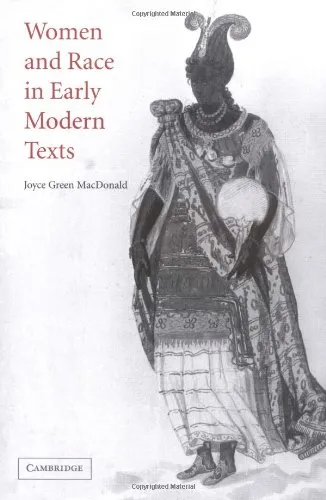
Book guide and evaluation
Women and Race in Early Modern Texts
Joyce Green MacDonald
English
Intermediate
novel
4.9 / 5
0 reviews
2002
Published
200
pages
381
views
Women and Race in Early Modern Texts gender in Renaissance literature, racial identity in early modern England Women and Race in Early Modern Texts explores intersections of gender and race in literature from the early modern era. Analytical Summary In Women and Race in Ear
Before you read
What will you get from this book?
Analytical Summary
In Women and Race in Early Modern Texts, readers encounter a meticulously researched examination of how gender, race, and culture intersect within the texts of the Renaissance and early modern England. The book probes into theatrical works, poetry, and prose to reveal patterns of representation, the silences around certain identities, and the cultural attitudes toward difference during a formative period of Western literature.
Drawing from canonical authors and lesser-known writings, this work confronts how women of varied racial backgrounds were imagined, symbolized, or excluded from narratives that shaped societal perspectives. It situates these literary portrayals within wider historical contexts, bringing in perspectives from social history, postcolonial theory, and feminist criticism. By threading these different disciplines together, the analysis disrupts simplified readings of race and gender in early modern texts, showing instead a nuanced terrain of cultural negotiations.
The text does not reduce the complexity of racial identity to a singular model but demonstrates how divergent and often contradictory ideas about race filtered into depictions of women. This makes the study relevant both to literary scholars and to those working in cultural studies, history, and gender theory. Through detailed readings, the book reveals how the imagination of racial difference intersects with constructions of femininity, social order, and personal agency.
Key Takeaways
This work offers critical insights into the portrayal of women and race across a vital period in English literary history and provides a foundation for deeper interdisciplinary investigation.
One key takeaway is how racialized imagery interacts with gender roles to produce layered stereotypes that can persist even beyond the early modern era.
It also emphasizes the role of performance—particularly theatre—in shaping audience perceptions and reinforcing or challenging societal norms regarding race and femininity.
Another significant point is the methodical approach to textual analysis that combines historical detail with theoretical rigor, enabling readers to appreciate the complexity of early modern cultural discourses.
Finally, the book serves as a reminder that literature, far from being merely aesthetic, is a potent vehicle for ideas that shape social realities and collective consciousness.
Memorable Quotes
“The figure of the racialized woman operates both inside and outside the boundaries of early modern cultural imagination.” Unknown
“To read these texts with full attention to race and gender is to uncover a lattice of meaning that conventional criticism often overlooks.” Unknown
“Representation is never neutral; early modern depictions of women of color are charged with the politics of their time.” Unknown
Why This Book Matters
For academics, researchers, and engaged readers, Women and Race in Early Modern Texts offers more than literary commentary—it is a significant interpretive framework.
At a time when debates on racial and gender representation are urgent, understanding the historical roots of these dynamics becomes essential. This book bridges literary scholarship with contemporary discourse on identity, showing how the seeds of modern ideas about race and gender can be traced back to the narratives and performances of the early modern period.
It reminds us that cultural products from centuries past continue to inform and reflect conversations on diversity, equity, and inclusion today. Particularly for those engaged in Renaissance studies, postcolonial analysis, or gender theory, this book is invaluable as both a teaching resource and a source of scholarly provocation.
Inspiring Conclusion
By delving into the multifaceted representations of race and gender, Women and Race in Early Modern Texts invites its readers to expand their understanding of literary history and its ongoing relevance.
This is a text that asks readers not only to absorb its findings but also to engage with them—debating interpretations, sharing insights, and applying its analytical models to other periods and genres. For scholars, students, and professionals committed to exploring the intricate weave of cultural narratives, it serves as both a mirror reflecting past constructs and a lens for examining present-day issues.
The invitation is clear: read Women and Race in Early Modern Texts with an eye toward transformation. Let its pages challenge, inform, and inspire you to participate actively in the conversations that continue to shape our collective understanding of gender and race in literature and beyond.
Ask this book
Your question is answered in the context of this title and author. Each answer uses 2 points.
Sign in to ask the book assistant.
Reader reviews
0 reviews, 4.9 average out of 5
No reviews yet
If you have read this book, help the next reader with your experience.
Write a review
Sign in to publish a review.
Reader questions and answers
Ask a focused question and learn from the community.
Sign in to ask or answer a question.
No questions yet
Be the first to ask a clear, useful question.
What to read next
Related references that continue this learning path.
The Politics of Being a Woman: Feminism, Media and 21st Century Popular Culture
Heather Savigny,Helen Warner
2015
View book