Book guide and evaluation
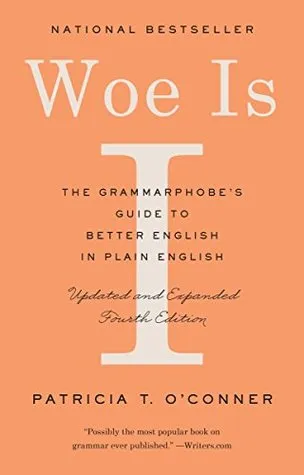
Woe Is I: The Grammarphobe’s Guide to Better English in Plain English
Patricia T. O’Conner
English
Beginner
Language Learning
4.5 / 5
0 reviews
5 Feb 2019
Published
320
pages
350
views
A revised and updated edition of the iconic grammar guide for the 21st century. In this expanded and updated edition of Woe Is I, former editor at The New York Times Book Review Patricia T. O'Conner unties the knottiest grammar tangles with the same insight and humor that have
Before you read
What will you get from this book?
A revised and updated edition of the iconic grammar guide for the 21st century.
In this expanded and updated edition of Woe Is I, former editor at The New York Times Book Review Patricia T. O'Conner unties the knottiest grammar tangles with the same insight and humor that have charmed and enlightened readers of previous editions for years. With fresh insights into the rights, wrongs, and maybes of English grammar and usage, O'Conner offers in Woe Is I down-to-earth explanations and plain-English solutions to the language mysteries that bedevil all of us.
"Books about English grammar and usage are... never content with the status quo," O'Conner writes. "That's because English is not a stay-put language. It's always changing--expanding here, shrinking there, trying on new things, casting off old ones... Time doesn't stand still and neither does language."
In this fourth edition, O'Conner explains how the usage of an array of words has evolved. For example, the once-shunned "they," "them," and "their" for an unknown somebody is now acceptable. And the battle between "who" and "whom" has just about been won, O'Conner says (hint: It wasn't by "whom"). Then there's the use of "taller than me" in simple comparisons, instead of the ramrod-stiff "taller than I." "May" and "might," "use to" and "used to," abbreviations that use periods and those that don't, and the evolving definition of "unique" are all explained here by O'Conner. The result is an engaging, up-to-date and jargon-free guide to every reader's questions about grammar, style, and usage for the 21st century.
Ask this book
Your question is answered in the context of this title and author. Each answer uses 2 points.
Sign in to ask the book assistant.
Reader reviews
0 reviews, 4.5 average out of 5
No reviews yet
If you have read this book, help the next reader with your experience.
Write a review
Sign in to publish a review.
Reader questions and answers
Ask a focused question and learn from the community.
Sign in to ask or answer a question.
No questions yet
Be the first to ask a clear, useful question.
What to read next
Related references that continue this learning path.