Book guide and evaluation
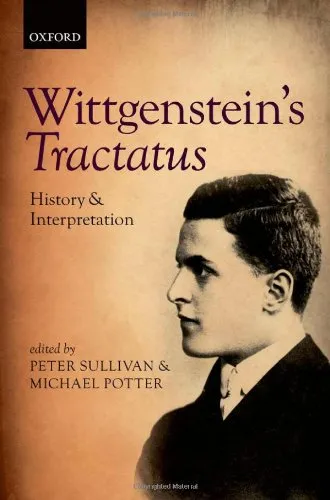
Wittgenstein’s Tractatus. History and Interpretation
Peter Sullivan,Michael Potter (eds.)
English
Unordered
Essays
4.3 / 5
0 reviews
2013
Published
282
pages
452
views
This volume of newly written chapters on the history and interpretation of Wittgenstein's Tractatus represents a significant step beyond the polemical debate between broad interpretive approaches that has recently characterized the field. Some of the contributors might count the
Before you read
What will you get from this book?
This volume of newly written chapters on the history and interpretation of Wittgenstein's Tractatus represents a significant step beyond the polemical debate between broad interpretive approaches that has recently characterized the field. Some of the contributors might count their approach as "new" or "resolute," while others are more 'traditional', but all are here concerned primarily with understanding in detail the structure of argument that Wittgenstein presents within the Tractatus, rather than with its final self-renunciation, or with the character of the understanding that renunciation might leave behind. The volume makes a strong case that close investigation, both biographical and textual, into the composition of the Tractatus, and into the various influences on it, still has much to yield in revealing the complexity and fertility of Wittgenstein's early thought. Amongst these influences Kant and Kierkegaard are considered alongside Wittgenstein's immediate predecessors in the analytic tradition. The themes explored range across the breadth of Wittgenstein's book, and include his accounts of ethics and aesthetics, as well as issues in metaphysics and the philosophy of mind, and aspects of the logical framework of his account of representation. The contrast of saying and showing, and Wittgenstein's attitude to the inexpressible, is of central importance to many of the contributions. By approaching this concern through the various first-level issues that give rise to it, rather than from entrenched schematic positions, the contributors demonstrate the possibility of a more inclusive, constructive and fruitful mode of engagement with Wittgenstein's text and with each other.
Ask this book
Your question is answered in the context of this title and author. Each answer uses 2 points.
Sign in to ask the book assistant.
Reader reviews
0 reviews, 4.3 average out of 5
No reviews yet
If you have read this book, help the next reader with your experience.
Write a review
Sign in to publish a review.
Reader questions and answers
Ask a focused question and learn from the community.
Sign in to ask or answer a question.
No questions yet
Be the first to ask a clear, useful question.
What to read next
Related references that continue this learning path.
Computational fluid dynamics in fire engineering: theory, modelling and practice
Guan Heng Yeoh,Kwok Kit Yuen
2008
View book