
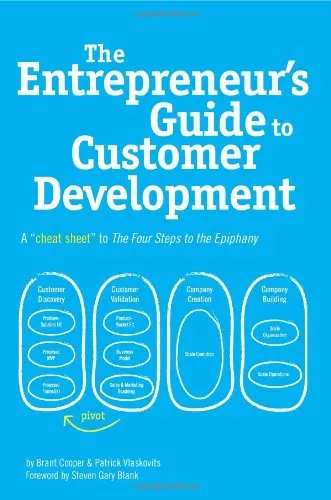
The Entrepreneur's Guide to Customer Development: A cheat sheet to The Four Steps to the Epiphany
Brant Cooper,Patrick Vlaskovits
2010
View book
Book guide and evaluation
John J. Mearsheimer
0 reviews
Published
pages
views
Introduction to "Why Leaders Lie: The Truth about Lying in International Politics" Written by renowned international relations scholar John J. Mearsheimer, "Why Leaders Lie: The Truth about Lying in International Politics" is a groundbreaking exploration of why leaders engage
Before you read
Written by renowned international relations scholar John J. Mearsheimer, "Why Leaders Lie: The Truth about Lying in International Politics" is a groundbreaking exploration of why leaders engage in deception on the global stage. This insightful book delves into the motivations, methods, and implications of political lies, providing readers with a nuanced understanding of a subject often shrouded in misunderstanding. Through meticulous research and incisive analysis, this work sheds light on how deception serves as a tactical tool in the complex and high-stakes realm of international politics.
While lying is often considered a moral failing, Mearsheimer encourages readers to consider it in the context of realpolitik, where national interest and survival frequently trump ethical considerations. By breaking down the types of political lies and examining their intended purposes, the book challenges readers to reevaluate their assumptions about truth and morality in statecraft.
At its core, "Why Leaders Lie" is an exposition of why and how international leaders use deception as a tool in their political arsenal. Mearsheimer categorizes lies into different types, including inter-state lies, fear-mongering, strategic cover-ups, and national mythmaking. Each type serves a distinct purpose, whether it is manipulating rival states, securing domestic support, or upholding a version of history that serves the state’s long-term interest.
Using real-world examples, Mearsheimer demonstrates the circumstances under which lying becomes not only a viable but also an effective strategy. From the United States’ deception during the Cold War to the use of fear-mongering during the Iraq War, the book examines historical precedents that illustrate the impact of lying on global politics. The book also debates what happens when these lies are exposed, weighing their long-term consequences against their short-term benefits.
Importantly, Mearsheimer argues that while lying is prevalent in domestic politics, it is somewhat less common in international politics due to the nature of the global arena where states operate. The risk of exposure often outweighs the benefits of attempting to deceive other nations—making the instances of lying particularly significant and deliberate.
"The pursuit of the national interest often creates strong incentives for leaders to lie."
"Lying is a form of statecraft frequently employed to manage the inherent messiness of international relations."
"Lies told for the well-being of the state are not the same as those told for personal ambition or enrichment."
"Why Leaders Lie" is a significant contribution to the field of international relations and political science. At a time when misinformation and propaganda dominate the global discourse, this book offers a structured framework to understand the role lying plays in diplomacy and decision-making. By presenting a balanced perspective, it helps readers navigate the ethical dilemmas inherent in political leadership.
The book is not just for academics or political analysts—it speaks to anyone interested in understanding how governments work behind the scenes and how foreign policy is shaped. As Mearsheimer points out, lying is often a calculated act with strategic motivations, making it essential for citizens and policymakers alike to discern the truth in an increasingly interconnected and multipolar world.
Your question is answered in the context of this title and author. Each answer uses 2 points.
0 reviews, 4.3 average out of 5
Sign in to publish a review.
Ask a focused question and learn from the community.
Related references that continue this learning path.
Brant Cooper,Patrick Vlaskovits
Saurabh Shrivastava,Neelanjali Srivastav
Saurabh Shrivastava,Neelanjali Srivastav