React Interact: Situations for Communication, Third Edition
Donald R. H. Byrd,Isis C. Clemente
2001
View book
Book guide and evaluation
Richard D. Lewis
0 reviews
Published
pages
views
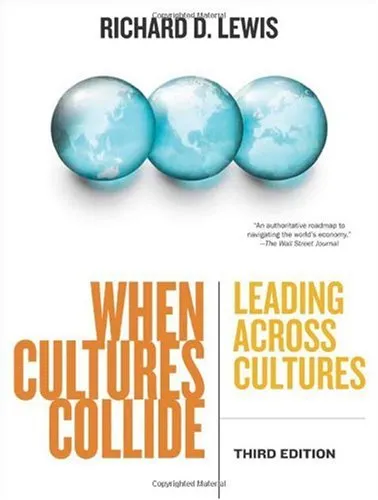
Introduction to "When Cultures Collide: Leading Across Cultures" Communication and collaboration in a globalized world require an understanding of cultural differences. In "When Cultures Collide: Leading Across Cultures," Richard D. Lewis provides an insightful e
Before you read
Communication and collaboration in a globalized world require an understanding of cultural differences. In "When Cultures Collide: Leading Across Cultures," Richard D. Lewis provides an insightful exploration into how cultural dynamics shape behaviors, mindsets, and leadership styles. This book is an essential guide for managers, leaders, and individuals who interact regularly with people from diverse cultures, offering practical strategies to succeed in cross-cultural professional and social settings.
First published in 1996 and repeatedly updated to reflect the evolving global landscape, the book distills decades of experience from Richard D. Lewis as a cross-cultural expert. With expertise grounded in both theory and real-world application, Lewis equips readers with the tools they need to navigate cultural differences effectively, whether they're conducting international business or managing multicultural teams.
The book delves into how culture impacts the way people think, communicate, and act, especially in business and professional contexts.
The first part of the book introduces the foundation of cross-cultural analysis. Lewis highlights differences in national cultures, often through humor and anecdotes, and explains how people from various regions perceive key values like time, trust, and authority. Central to this section is the "Lewis Model," a unique framework that classifies cultures into three categories: Linear-Active, Multi-Active, and Reactive. By understanding where different countries lie on this spectrum, readers gain clarity on why certain cultural practices or communication styles might clash or complement one another.
The second part focuses on practical applications of cultural understanding. Lewis provides insights into managing cross-cultural teams, leading negotiations, and resolving conflicts. Each chapter addresses specific cultural challenges, with solutions tailored to allow for adaptability and respect between diverse stakeholders. The book empowers readers to see cultural differences not as barriers but as opportunities for growth.
In the final part, the book dives deeply into individual country profiles, offering specific dos and don'ts for doing business with people from over 60 cultures. This section is immensely practical for professionals working in international environments.
"Cultural differences are not something to be fought or ignored; they are to be understood and celebrated."
"When cultures collide, boundaries are tested, but new perspectives emerge."
"In a multi-cultural world, the measure of a true leader lies in their ability to connect, adapt, and inspire across the divides."
The relevance of "When Cultures Collide: Leading Across Cultures" has only increased as globalization accelerates and workplaces become more diverse. It serves as a critical resource for:
In a world filled with cultural complexities, Lewis provides the tools to turn these complexities into strengths. The book is a reminder that understanding begins with awareness, and progress starts with communication.
Your question is answered in the context of this title and author. Each answer uses 2 points.
0 reviews, 4.5 average out of 5
Sign in to publish a review.
Ask a focused question and learn from the community.
Related references that continue this learning path.
Donald R. H. Byrd,Isis C. Clemente