Book guide and evaluation
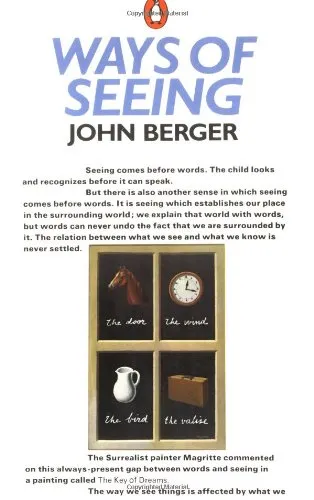
Ways of Seeing: Based on the BBC Television Series
John Berger
English
Advanced
Art
4.7 / 5
0 reviews
1990
Published
79
pages
663
views
Introduction to 'Ways of Seeing: Based on the BBC Television Series' 'Ways of Seeing', authored by John Berger, is a seminal text that challenges traditional perceptions of art and visual culture. Based on the BBC television series of the same name, aired in 1972, the bo
Before you read
What will you get from this book?
Introduction to 'Ways of Seeing: Based on the BBC Television Series'
'Ways of Seeing', authored by John Berger, is a seminal text that challenges traditional perceptions of art and visual culture. Based on the BBC television series of the same name, aired in 1972, the book explores the notion of seeing as an active process that should be questioned and investigated. Recognized for its critical inquiry into art and imagery, 'Ways of Seeing' urges readers to understand the contexts, meanings, and interpretations that come with viewing images, especially in Western art. It remains an influential guide for students, artists, and critics seeking to deepen their understanding of visual communication and visual culture.
Detailed Summary of the Book
The book's critical exploration is divided into seven essays, alternating between text-based and image-based ones, creating a dynamic conversation between seeing and interpreting. The text essays articulate theories and observations about art, culture, and society's way of viewing images. These essays are interspersed with photographic essays that invite the reader to engage directly with images without the mediation of text, underscoring the book's emphasis on personal interpretation and control over visual messages.
John Berger’s approach is both provocative and enlightening. He begins by deconstructing the concepts of conventional European oil painting, framing them as historical artifacts serving to reinforce social hierarchies. Berger then critiques the way nakedness and nudity are depicted in art, especially the objectification of women. His commentary extends to modern advertising, comparing it to historical depictions, suggesting that modern media manipulates similar techniques to oil paintings of the past, aiming to shape desires and identity.
Key Takeaways
- The way we look at art can be influenced by our cultural conditioning and should be critically analyzed.
- The context in which an artwork is seen significantly alters its meaning and interpretation.
- Nudity in art is not merely an expression of form but is often loaded with deeper social and political meanings.
- Modern advertising co-opts classical art techniques to influence societal values and desires.
- Art should be democratized; its analysis and appreciation should be accessible to all, not just experts.
Famous Quotes from the Book
"The relation between what we see and what we know is never settled."
"Men look at women. Women watch themselves being looked at."
"Publicity is the process of manufacturing glamour."
Why This Book Matters
'Ways of Seeing' remains a pivotal work in art criticism and media studies, acclaimed for its accessible yet thought-provoking content. Berger’s text dismantles highbrow perspectives on art appreciation, asserting that all viewers have the authority to interpret and judge art independently of established academic and cultural constraints.
The book's contributions to discussions about the male gaze, consumer culture, and the impact of media have rendered it essential reading in various fields including art history, communication studies, and cultural theory. Enabling individuals to challenge and critique the images saturating their lives, 'Ways of Seeing' empowers readers to become more conscientious consumers and participants in the modern visual landscape.
Ask this book
Your question is answered in the context of this title and author. Each answer uses 2 points.
Sign in to ask the book assistant.
Reader reviews
0 reviews, 4.7 average out of 5
No reviews yet
If you have read this book, help the next reader with your experience.
Write a review
Sign in to publish a review.
Reader questions and answers
Ask a focused question and learn from the community.
Sign in to ask or answer a question.
No questions yet
Be the first to ask a clear, useful question.
What to read next
Related references that continue this learning path.
Ways Of Seeing In The Neoliberal State: A Controversial Play And Its Contexts
Asbjørn Skarsvåg Grønstad
2021
View book