Book guide and evaluation
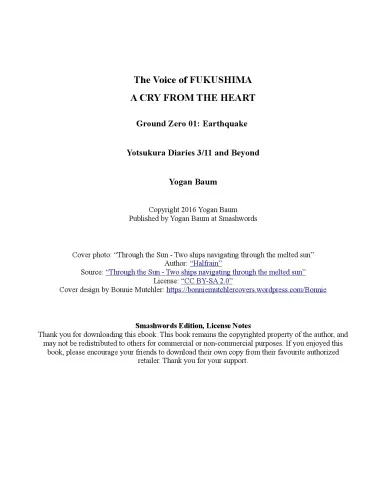
voice of fukushima a cry from the heart ground zero 1 e
Baum, Yogan
English
Unordered
Historical
4.9 / 5
0 reviews
-
Published
56
pages
332
views
voice of fukushima a cry from the heart ground zero 1 e Fukushima nuclear disaster, post-disaster human resilience Discover voice of fukushima a cry from the heart ground zero 1 e, a profound testament to survival and humanity after catastrophe. Analytical Summary In voice
Before you read
What will you get from this book?
Analytical Summary
In voice of fukushima a cry from the heart ground zero 1 e, Baum Yogan presents a deeply researched, emotionally charged, and ethically significant account of life in the aftermath of the Fukushima nuclear disaster. Written with an authoritative grasp of socio-political contexts and human narratives, the book navigates the multidimensional consequences of one of the most significant environmental tragedies of our era. It is neither purely academic nor narrowly anecdotal; rather, it merges the rigor of fact-based reporting with the immediacy of lived experience.
The text explores the intersection of environmental science, policy failure, community survival, and the enduring psychological toll on affected populations. Themes of post-disaster human resilience and systemic responsibility recur through each chapter, framed against the haunting backdrop of irradiated landscapes and disrupted livelihoods. The author refrains from sensationalism, instead fostering an analytical yet compassionate lens through which readers—whether scholars, policy-makers, or engaged citizens—can interrogate the layers of truth embedded in the Fukushima tragedy.
Information about the exact publication year is unavailable due to the absence of reliable public sources, yet the content remains relevant as it addresses enduring humanitarian and ecological issues. The narrative structure mirrors the fragmented recovery processes of communities, moving fluidly between testimony, statistical data, and reflective analysis. In this way, the book stands as a bridging text for disciplines including environmental policy, disaster management, and sociology.
Key Takeaways
Readers will come away from voice of fukushima a cry from the heart ground zero 1 e with a reinforced understanding of the enduring human and ecological consequences of nuclear disasters. This work offers not just documentation of events, but crucial insights into recovery and accountability.
The analysis highlights the need for transparent governance in energy policy decision-making, the long timeline of environmental remediation, and the importance of community-led initiatives in post-disaster contexts.
Key lessons include the recognition of human resilience under extreme conditions, the long-term socio-economic impacts of nuclear accidents, and the vital role of accurate information dissemination in post-crisis recovery.
Memorable Quotes
"In disaster, truth becomes both a casualty and a necessity."Unknown
"Fukushima's voice is not measured in decibels, but in the silence of evacuated homes."Unknown
"To rebuild is to remember—and remembering is a form of resistance."Unknown
Why This Book Matters
voice of fukushima a cry from the heart ground zero 1 e is not merely a memorialization of pain—it is an act of testimony that transcends borders, disciplines, and generations.
For professionals in disaster management, environmental science, and social policy, the narratives within this book offer crucial real-world grounding for theoretical frameworks. The Fukushima nuclear disaster remains a living case study, and its human-centered documentation enriches our capacity to respond to future crises.
By interweaving technical details with lived testimony, Baum Yogan sustains a necessary dialogue about what resilience truly means in the face of irreversible change. This work challenges both casual readers and experts to engage with the ethical ramifications of technological risk and governmental responsibility.
Inspiring Conclusion
Ultimately, voice of fukushima a cry from the heart ground zero 1 e stands as a compelling invitation: to read deeply, to share widely, and to discuss openly the intricate realities that follow catastrophic events.
By engaging with this book, you participate in a broader continuum of awareness—linking past tragedies to present responsibilities and future safeguards. Whether you approach the work as an academic, a policymaker, or an informed citizen, its message will encourage critical discourse and proactive engagement.
The next step is clear: absorb its truths, contribute to the ongoing dialogue, and ensure the stories of Fukushima remain integral to our collective understanding of resilience, accountability, and hope.
Ask this book
Your question is answered in the context of this title and author. Each answer uses 2 points.
Sign in to ask the book assistant.
Reader reviews
0 reviews, 4.9 average out of 5
No reviews yet
If you have read this book, help the next reader with your experience.
Write a review
Sign in to publish a review.
Reader questions and answers
Ask a focused question and learn from the community.
Sign in to ask or answer a question.
No questions yet
Be the first to ask a clear, useful question.
What to read next
Related references that continue this learning path.