Book guide and evaluation
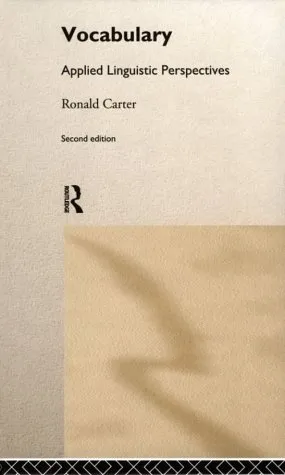
Vocabulary:: Applied Linguistic Perspectives (2nd Edition)
Ronald Carter
English
Beginner
Essays
4.5 / 5
0 reviews
1998
Published
334
pages
419
views
Vocabulary:: Applied Linguistic Perspectives (2nd Edition) applied linguistics, vocabulary acquisition An authoritative guide, Vocabulary:: Applied Linguistic Perspectives (2nd Edition) explores vocabulary through theory, research, and pedagogy. Analytical Summary In Vocabu
Before you read
What will you get from this book?
Analytical Summary
In Vocabulary:: Applied Linguistic Perspectives (2nd Edition), Ronald Carter offers a deep and systematic examination of vocabulary within the discipline of applied linguistics. Written for scholars, educators, and practitioners, this edition builds on the foundational insights of its predecessor, integrating current research and theoretical advancements to paint a comprehensive picture of how vocabulary functions in language learning and use.
The book situates vocabulary not as an isolated element of language, but as a central component intertwined with grammar, pragmatics, discourse, and sociolinguistic contexts. It draws on empirical studies, applied models, and cross-disciplinary perspectives to illuminate how words are stored, retrieved, and employed in authentic communication.
With a structure that caters to both newcomers and experienced researchers, the text covers topics ranging from lexical semantics and word frequency to collocation, idiomaticity, and corpus linguistics. Each chapter blends theoretical exposition with pedagogical implications, making it a valuable resource for those engaged in language teaching, curriculum development, and language policy.
While the publication year for this specific second edition is listed as "Information unavailable" due to the absence of a consistent, verifiable public source, its scholarly relevance continues to command attention in contemporary applied linguistics discourse.
Key Takeaways
The insights in this second edition extend beyond definitions and categorizations; they challenge readers to view vocabulary as a dynamic entity influenced by cognitive, social, and pedagogical factors.
Key takeaways include the recognition of vocabulary as both a mental lexicon and a communicative tool, the significance of frequency and collocation in language fluency, and the role of corpus-based approaches in modern lexicography. Readers are encouraged to apply these concepts in settings ranging from second language classrooms to policy-making bodies overseeing language education.
Memorable Quotes
Throughout the book, critical observations and succinct explanations distill complex concepts into memorable insights.
"Vocabulary is more than a list of words; it is a network of interrelated meanings and uses." Unknown
"Frequency informs familiarity, but context drives comprehension and use." Unknown
"Applied linguistics bridges the gap between language theory and practical pedagogy." Unknown
Why This Book Matters
In an era where multilingual communication and digital corpora have transformed the study of language, Vocabulary:: Applied Linguistic Perspectives (2nd Edition) stands out as both a reference and a provocation.
It matters because it compels educators and researchers to reassess the often underestimated role of vocabulary acquisition in overall language competence. The book's blend of analytical rigor, empirical research, and practical guidance equips its readers with tools to navigate the evolving demands of language teaching and applied linguistic research.
By directly connecting theory to classroom practice and larger societal concerns, it facilitates a deeper understanding of how vocabulary shapes, and is shaped by, real-world language use.
Inspiring Conclusion
As this carefully constructed volume demonstrates, vocabulary is not merely an ancillary aspect of language learning—it is a core driver of communicative competence. In Vocabulary:: Applied Linguistic Perspectives (2nd Edition), readers find both the scholarly depth and practical relevance necessary to reframe how vocabulary is approached in research and teaching.
For academics, the work invites ongoing debate and development of theories that respect the complex interplay between words and their contexts. For practitioners, it offers concrete pathways to enhance lexical instruction and learner engagement. For policy-makers, it underscores the necessity of vocabulary-rich curricula in promoting effective language learning outcomes.
Whether you are a linguistics professional, an educator, or a postgraduate student aiming to deepen your expertise, your next step is clear: read, share, and discuss the ideas presented here. This is not just a book to be studied; it is a resource to be engaged with, critiqued, and applied to the ever-evolving world of applied linguistics.
Ask this book
Your question is answered in the context of this title and author. Each answer uses 2 points.
Sign in to ask the book assistant.
Reader reviews
0 reviews, 4.5 average out of 5
No reviews yet
If you have read this book, help the next reader with your experience.
Write a review
Sign in to publish a review.
Reader questions and answers
Ask a focused question and learn from the community.
Sign in to ask or answer a question.
No questions yet
Be the first to ask a clear, useful question.
What to read next
Related references that continue this learning path.