Sharing Caring
2025/04/25
5 / 5
very useful and helpful
Book guide and evaluation
Edward R. Tufte
1 reviews
Published
pages
views
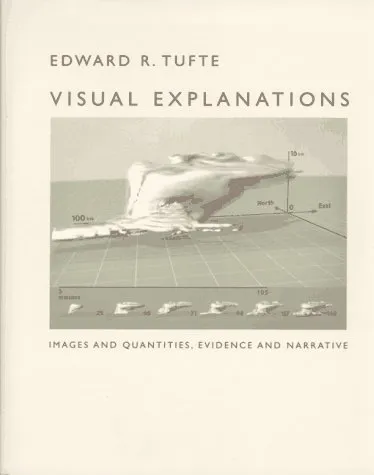
Introduction to "Visual Explanations: Images and Quantities, Evidence and Narrative" In a world where clarity and precision of communication are vital, Edward R. Tufte's "Visual Explanations: Images and Quantities, Evidence and Narrative" serves as an essential guide to
Before you read
In a world where clarity and precision of communication are vital, Edward R. Tufte's "Visual Explanations: Images and Quantities, Evidence and Narrative" serves as an essential guide to understanding the interplay of visual storytelling, analytical reasoning, and design excellence. This book, part of a celebrated series by Tufte on the art and science of data visualization, delves deeply into how information is communicated through graphics, maps, diagrams, and illustrations. It makes a compelling case for the power of visual design to enhance understanding and to ensure truthfulness when presenting evidence in visual form.
Thoughtfully written and richly designed, the book bridges the gap between art, science, and narrative by walking readers through the principles of creating truthful, beautiful, and insightful visual representations. With real-world examples ranging from medical visualizations to flight disaster reconstructions, the book underscores how crucial it is to present truthful visual evidence—especially when decisions and lives are on the line.
Whether you're a data analyst, designer, scientist, or anyone interested in the art of communication, this book challenges you to think critically about how information is conveyed visually and reminds us of the responsibility inherent in clear communication.
"Visual Explanations" continues where Tufte's earlier works left off, addressing the intersection of design and information clarity. The central thesis of this book revolves around how the thoughtful design of visuals can illuminate complex ideas, provide evidence, and tell compelling stories.
In the book, Tufte examines a variety of real-world examples to uncover what makes some visual explanations succeed while others fail. From the field of medicine, the book explores the history of design in presenting medical symptoms and potential treatments. In navigation and aviation, it dissects how poor visuals have contributed to disastrous errors, such as the miscommunication in the Challenger explosion.
Through meticulous exploration, "Visual Explanations" not only highlights the best practices in visualizing quantities and dynamics but also exposes the tragic consequences of failing to adhere to these principles. The work showcases Tufte's distinctive approach: melding disciplines like art history, cognitive science, statistics, and ethics to create a thought-provoking narrative of how visual design shapes our understanding of the world and decisions we make within it.
The book is structured around case studies and examples, with detailed commentary and principles to guide readers in evaluating and designing visual explanations themselves.
Through "Visual Explanations," readers uncover transformative insights about the role of visual storytelling in conveying information. Here are the key takeaways:
These takeaways resonate with anyone tasked with presenting complex ideas in clear, understandable, and ethical ways.
Tufte's work, known for its intellectual rigor and eloquence, is studded with memorable lines that capture the essence of visual storytelling. Here are a few key quotes:
"Excellence in statistical graphics consists of complex ideas communicated with clarity, precision, and efficiency."
"The principles of visual explanations apply universally—across science, design, and art—whenever we seek to communicate ideas with evidence."
"What gets shown is as important as what gets left out; failure to do justice to either can distort perception and understanding."
These quotes underscore the book's emphasis on design ethics and precision in visual storytelling.
In an age of information overload, "Visual Explanations" stands as a timeless resource that educates and inspires anyone involved in creating or consuming visual information. With the massive influence of data visualization on decision-making—impacting everything from public policy to personal health—the stakes have never been higher for ensuring the integrity and effectiveness of visual storytelling.
This book matters because it bridges critical gaps: between art and science, between data and narrative, and between evidence and ethics. It reminds us of the responsibility we bear as creators and interpreters of information, encouraging deliberate design choices and critical thinking. Whether you're tackling scientific charts or constructing narratives with data, "Visual Explanations" pushes you to rise to the challenge of creating dense, rich, and truthful visual content.
Ultimately, Tufte's book is not just about how to present information, but about how to think about it—shaping a world where visuals serve as powerful tools for understanding rather than sources of confusion or misinformation.
Your question is answered in the context of this title and author. Each answer uses 2 points.
1 reviews, 5.0 average out of 5
2025/04/25
5 / 5
very useful and helpful
Sign in to publish a review.
Ask a focused question and learn from the community.
Related references that continue this learning path.
Cole Nussbaumer Knaflic