

Designing Data-Intensive Web Applications
Stefano Ceri,Piero Fraternali,Aldo Bongio,Marco Brambilla,Sara Comai,Maristella Matera
2002
View book
Book guide and evaluation
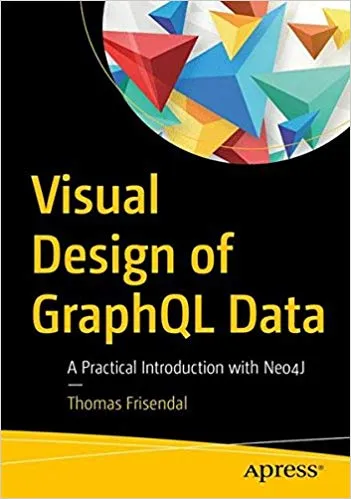
Thomas Frisendal
0 reviews
Published
pages
views
Welcome to an in-depth exploration of the book "Visual Design of GraphQL Data: A Practical Introduction with Legacy Data and Neo4j". This guide is designed to help you navigate and master the principles outlined in the book, offering a unique perspective on integrating visual
Before you read
Welcome to an in-depth exploration of the book "Visual Design of GraphQL Data: A Practical Introduction with Legacy Data and Neo4j". This guide is designed to help you navigate and master the principles outlined in the book, offering a unique perspective on integrating visual data design methods with the flexibility of GraphQL, while leveraging Neo4j's graph database capabilities.
The book "Visual Design of GraphQL Data" is a comprehensive resource for developers and data architects aiming to modernize their data interactions. It skillfully merges the world of graph databases with the dynamic querying capabilities of GraphQL. By focusing on visual design, the author, Thomas Frisendal, offers a methodology that enhances clarity, facilitates communication among stakeholders, and improves the overall data handling and querying processes.
Understanding that many organizations are dealing with legacy data, the book provides strategic insights on transitioning from older data models to more agile, graph-based structures without losing the essence of existing data. It extensively covers practical applications using Neo4j, a leading graph database platform, to illustrate how data relationships can be efficiently managed and queried.
The book is designed for both technical and non-technical readers, utilizing visual tools to bridge the gap between complex data modeling concepts and their practical applications. Throughout its chapters, the book comprehensively addresses how to design, structure, and optimize GraphQL schemas visually, ensuring they align with real-world data requirements and business logic.
"Visual design is not just about aesthetics; it's about creating a shared understanding of data structures and how they serve business needs."
"Combining GraphQL with a graph database like Neo4j is akin to unlocking new dimensions in data relationships."
"Legacy data is not a burden; it's the foundation upon which innovative data solutions are built."
In the fast-evolving landscape of data technology, "Visual Design of GraphQL Data" emerges as a crucial resource for teams looking to modernize their data processes. With the proliferation of microservices and dynamic web applications, the demand for flexible and scalable data-querying languages like GraphQL has never been higher. This book addresses the pressing need for clear and efficient data interfacing methods that both improve performance and facilitate better communication across teams.
By introducing readers to the power of visual data design, Thomas Frisendal champions a new way of thinking about data architecture — one that prioritizes visual comprehension and strategic alignment with business goals. This approach not only enhances the efficiency of data handling but also bridges technical and non-technical discussions, paving the way for innovative solutions that are firmly grounded in a comprehensive understanding of data intricacies.
In essence, this book is more than just a guide to using GraphQL and Neo4j; it is a manifesto for a visual approach to data design, one that empowers organizations to harness the full potential of their data assets.
Persian Summary
Your question is answered in the context of this title and author. Each answer uses 2 points.
0 reviews, 3.1 average out of 5
Sign in to publish a review.
Ask a focused question and learn from the community.
Related references that continue this learning path.
Stefano Ceri,Piero Fraternali,Aldo Bongio,Marco Brambilla,Sara Comai,Maristella Matera


Banks, Alex;Porcello, Eve