
Goran Jančić
2025/12/20
3 / 5
Not a bad read at all, was very cheap on my book sale, but I have to be honest, as a massive gaming fan, I was not overly impressed, or should I say it did not trigger emotions in my I was hoping it would.
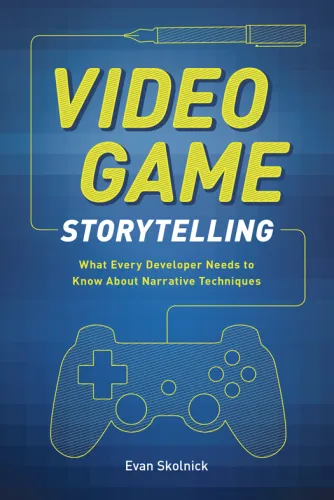
Book guide and evaluation
Evan Skolnick
1 reviews
Published
pages
views
Introduction to "Video Game Storytelling" In the rapidly evolving world of video games, the importance of storytelling has taken center stage. "Video Game Storytelling: What Every Developer Needs to Know about Narrative Techniques" by Evan Skolnick is an essential guide fo
Before you read
In the rapidly evolving world of video games, the importance of storytelling has taken center stage. "Video Game Storytelling: What Every Developer Needs to Know about Narrative Techniques" by Evan Skolnick is an essential guide for developers, writers, and designers looking to craft compelling and memorable narratives in games. Unlike other storytelling mediums such as novels, graphic novels, or movies, video games are interactive experiences, demanding a unique approach to narrative design. Skolnick's book bridges the gap between game design and storytelling, delivering practical advice illustrated with real-world examples and insights gained from his extensive career in both comic books and game development.
The book is crafted to be both accessible and insightful, whether you’re an experienced developer or new to the gaming industry. Skolnick establishes the major principles of effective game storytelling while underscoring the balance between gameplay and narrative. The crux of the book lies in simplifying complex storytelling concepts into actionable steps so that developers and writers can harmonize narrative and mechanics rather than let one overpower the other.
Skolnick layers his guidance into digestible sections, covering topics such as understanding the player experience, integrating narrative within gameplay loops, and the importance of character development and world-building. Beyond theoretical concepts, the author peppers in anecdotes, lessons learned, and examples of successes and failures from games he’s worked on, like "X-Men Legends" and "Star Wars: Battlefront."
By the end, the reader walks away with a deeper appreciation of how narrative is not just an add-on to a game but one of its fundamental pillars. The book is especially mindful of the collaborative nature of game development, teaching developers to communicate effectively across disciplines to ensure the storyline, mechanics, and design seamlessly align.
Skolnick’s writing is sprinkled with sharp observations and memorable insights. Here are a few quotes that encapsulate the book's core ideas:
"To craft a great video game story, you need to think of yourself as part of a team, not the auteur in the room. Story serves the game, not the other way around."
"Players are the heroes of their own gaming journey. Your story must give them meaningful decisions and challenges, not just force them to follow a predefined narrative."
"A truly immersive narrative is one that the player feels they had a hand in creating. Even the illusion of agency can go a long way in engaging your audience."
"Video Game Storytelling" is more than just a book for writers; it’s a blueprint for crafting cohesive, emotionally engaging experiences within the interactive space. As games increasingly rival movies and books in cultural influence and artistic merit, understanding how to tell an effective story within this unique medium is critical.
Evan Skolnick draws from his decades of experience to highlight not only what works in game storytelling but also the frequent pitfalls to avoid. The book matters because it empowers developers to view narrative design not as an isolated discipline but as an integral part of the development process.
Whether you’re working on AAA blockbusters, indie gems, or mobile games, "Video Game Storytelling" equips you with the tools to create stories that resonate deeply with players. It reminds us all that video games, at their best, are immersive worlds that tell stories in ways no other medium can.
Your question is answered in the context of this title and author. Each answer uses 2 points.
1 reviews, 3.0 average out of 5
2025/12/20
3 / 5
Not a bad read at all, was very cheap on my book sale, but I have to be honest, as a massive gaming fan, I was not overly impressed, or should I say it did not trigger emotions in my I was hoping it would.
Sign in to publish a review.
Ask a focused question and learn from the community.
Related references that continue this learning path.


V Kishore Ayyadevara,Yeshwanth Reddy