The Art of War for Writers: Fiction Writing Strategies, Tactics, and Exercises
James Scott Bell
2009
View book
Book guide and evaluation
Philippa M. Steele (editor),Philip J. Boyes (editor)
0 reviews
Published
pages
views
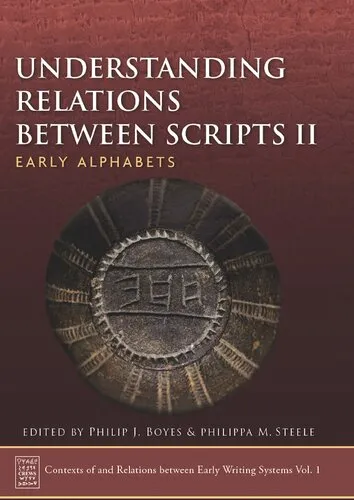
Introduction to Understanding Relations Between Scripts II: Early Alphabets Understanding the development and relationships between early writing systems is a critical field of study for those interested in linguistics, archaeology, and ancient history. Understanding Relations
Before you read
Understanding the development and relationships between early writing systems is a critical field of study for those interested in linguistics, archaeology, and ancient history. Understanding Relations Between Scripts II: Early Alphabets, the second volume in the Contexts of and Relations between Early Writing Systems (CREWS) series, delves into the fascinating world of early alphabets, offering a comprehensive examination of how these scripts emerged, evolved, and connected with one another across cultures and regions.
Edited by Philippa M. Steele and Philip J. Boyes, this book explores a broad range of alphabets from their inception through their critical developmental stages, covering historical, linguistic, and cultural influences that shaped these remarkable systems. This scholarly work showcases the collaborative efforts of leading researchers and experts, making it an essential resource for understanding the deeper contexts of writing and its role in human communication and intellectual progress.
This volume focuses on the origins and interconnectedness of early alphabetical scripts. It addresses key questions about how alphabetic systems were adapted, standardized, and transmitted across different ancient civilizations. By exploring case studies from the ancient Near East, Mediterranean, and surrounding regions, the book demonstrates how the development of alphabets was influenced by cultural contact, trade, and innovation.
Key chapters analyze early Semitic scripts, Greek alphabets, the Etruscan writing system, and other significant early alphabets, identifying shared characteristics and unique features that help scholars trace the evolution of writing systems. The book highlights the role of innovation and interaction, showing that no script developed in isolation. Instead, alphabets were shaped by a dynamic interplay of shared knowledge, usage patterns, and external pressures.
By combining traditional philological analysis with archaeological and sociocultural approaches, the contributors in this book weave a holistic narrative of ancient writing. They examine physical writing materials, inscription techniques, and the broader societal contexts in which scripts were used, offering detailed insights for readers from various academic backgrounds.
"The alphabet is not merely a means of communication; it is a bridge between cultures, connecting communities across time and space."
"Writing is as much a material act as it is a linguistic one, shaped by the tools of the scribe and the needs of society."
The study of early alphabets provides a vital window into the intellectual and cultural history of humanity. This book is not only a meticulous contribution to academic knowledge but also a reminder of how interconnected human civilizations have been throughout history. By tracing the origins and connections of early scripts, it challenges the outdated view of writing as a cultural singularity and instead presents it as a shared human endeavor that enriches our understanding of ancient societies.
This volume matters to scholars, linguists, archaeologists, and history enthusiasts alike, offering a foundation for further studies into writing systems. It also serves as a testament to the adaptability and creativity of humankind, showing how ancient communities turned the abstract need for communication into tangible systems that still influence our modern world.
Whether you are a professional academic or simply curious about the history of writing, Understanding Relations Between Scripts II is an invaluable resource for exploring one of humanity's most profound inventions.
Your question is answered in the context of this title and author. Each answer uses 2 points.
0 reviews, 4.5 average out of 5
Sign in to publish a review.
Ask a focused question and learn from the community.
Related references that continue this learning path.
James Scott Bell