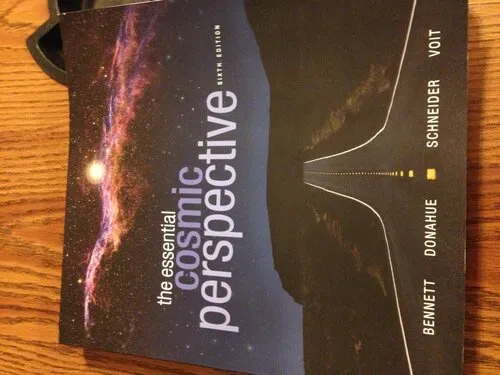
The Essential Cosmic Perspective, 6th Edition
Jeffrey O. Bennett,Megan Donahue,Nicholas O Schneider,Mark Voit
2010
View book
RefHub featured
Book guide and evaluation
Guy Consolmagno,Dan M. Davis
0 reviews
Published
pages
views
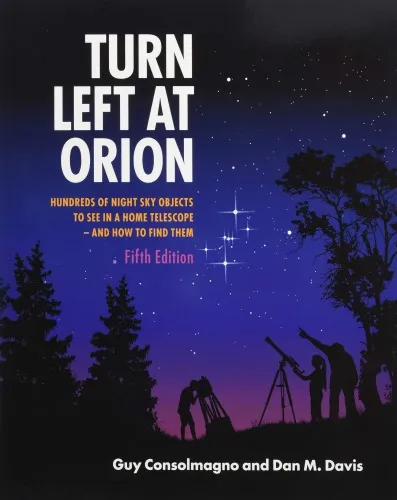
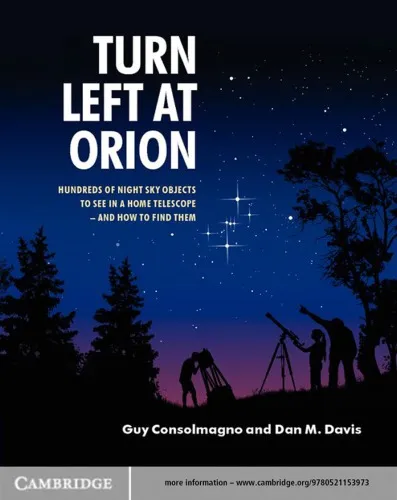
Introduction to "Turn Left at Orion" Discover the universe like never before with "Turn Left at Orion," a practical handbook for amateur astronomers. Written by Guy Consolmagno and Dan M. Davis, this book offers a gateway to the stars, bringing the wonders of the night sky wit
Before you read
Discover the universe like never before with "Turn Left at Orion," a practical handbook for amateur astronomers. Written by Guy Consolmagno and Dan M. Davis, this book offers a gateway to the stars, bringing the wonders of the night sky within reach of every reader, regardless of their level of experience. Whether you're using a small telescope, binoculars, or your unaided eyes, this invaluable guide simplifies the process of identifying celestial targets and makes astronomy an engaging and accessible pursuit.
Now in its latest edition, "Turn Left at Orion" has grown into a trusted companion for stargazers worldwide. Its engaging style, coupled with easy-to-follow instructions, renders the often overwhelming task of navigating the cosmos both manageable and enjoyable. This richly informative guide is tailored not only to teach but also to inspire, making it essential reading for those who wish to explore the night sky as Galileo once did—armed with curiosity and a sense of wonder. Let’s delve deeper into what makes this book unique and why it continues to captivate readers across generations.
"Turn Left at Orion" is designed with the beginning stargazer in mind. The authors take readers through the basics of astronomy and provide a structured guide to observing the most prominent celestial objects visible from Earth. The book covers everything from the Moon and planets to deep-sky wonders like nebulae, galaxies, and star clusters. The central theme is to make astronomy accessible, providing users with all the tools they need to navigate the night sky without feeling overwhelmed by technical jargon or complex equipment.
One of the standout features of the book is its step-by-step instructions for locating more than 100 celestial objects. These are accompanied by realistic sketches of what you will actually see through a small telescope—a welcome contrast to the often misleading high-resolution images found in many other astronomy books. Alongside these visuals are practical observing tips, advice on telescope use, and suggestions for the best times of year to view specific targets. The book is also updated to account for current astronomical conditions and emerging technologies, ensuring its relevance to modern readers.
What truly sets this book apart is its focus on making the stargazing experience enjoyable and achievable. Consolmagno and Davis combine scientific rigor with an approachable, conversational writing style, creating a guide that feels more like an invitation to explore than a technical manual.
“Astronomy is not just looking at the night sky; it’s learning to see your place in the cosmos.”
“There's nothing magical about the telescope itself; the real magic lies in learning how to use it to navigate the heavens.”
“Each star is like a different voice in an infinite cosmic symphony, waiting for someone to listen.”
"Turn Left at Orion" is more than an instruction manual—it is a gateway to discovery, sparking a lifelong passion for observing the heavens. At its core, the book fosters a deep, personal connection with the cosmos. In a world dominated by fast-paced technology and artificial experiences, taking the time to look up at the night sky provides an opportunity for reflection, wonder, and science.
For beginners, the book removes the barriers of inexperience and intimidation that often accompany new hobbies. Its user-friendly approach builds confidence and ensures success right from the first nights of stargazing. For seasoned hobbyists, the detailed suggestions and up-to-date celestial insights make it a valuable reference guide.
Moreover, "Turn Left at Orion" exemplifies the timeless human desire to explore and understand the universe. It stands as a testament to the idea that science, when presented with clarity and enthusiasm, can captivate and inspire people of all backgrounds. The book matters because it transforms astronomy into a shared journey of curiosity and wonder—and, in doing so, it connects us more deeply to the sky above and to each other.
Your question is answered in the context of this title and author. Each answer uses 2 points.
0 reviews, 4.7 average out of 5
Sign in to publish a review.
Ask a focused question and learn from the community.
Related references that continue this learning path.
Jeffrey O. Bennett,Megan Donahue,Nicholas O Schneider,Mark Voit
Jeffrey O. Bennett,Megan O. Donahue,Nicholas Schneider,Mark Voit
Consolmagno, Guy;Davis, Dan Michael