
Book guide and evaluation
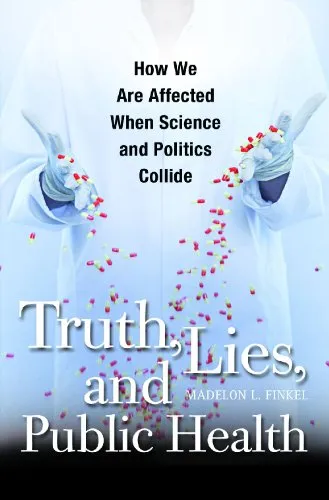
Truth, Lies, and Public Health: How We Are Affected When Science and Politics Collide
Madelon L. Finkel
English
Beginner
Art
4.6 / 5
0 reviews
2007
Published
257
pages
173
views
Introduction to "Truth, Lies, and Public Health" The intersection of science and politics has always been a delicate balance, but nowhere is this collision more impactful than in the realm of public health. In my book, "Truth, Lies, and Public Health: How We Are Af
Before you read
What will you get from this book?
Introduction to "Truth, Lies, and Public Health"
The intersection of science and politics has always been a delicate balance, but nowhere is this collision more impactful than in the realm of public health. In my book, "Truth, Lies, and Public Health: How We Are Affected When Science and Politics Collide," I delve deeply into how political agendas, misinformation, and manipulation of science can undermine public health initiatives and put lives at risk. This book does not just explore theoretical musings; it reveals real-world examples where science was overshadowed by political, economic, or ideological motives, resulting in consequences that profoundly affect society.
Over the years, we have witnessed multiple instances where public health—ranging from access to clean water and safe vaccines to responses to global pandemics—has been politicized. These moments serve as cautionary tales that reinforce the central theme of this book: Public health must remain independent of partisan interests for it to serve the well-being of all. By shedding light on these dynamics, the book seeks to arm readers with the knowledge needed to push for changes that prioritize science and humanity over self-serving political goals.
A Detailed Summary of the Book
"Truth, Lies, and Public Health" is structured around a series of case studies and analyses that highlight the interplay between science and politics. The book opens by discussing the foundational principles of public health—how it is meant to be an evidence-based discipline that seeks to prevent disease and promote well-being for all members of society. Against this backdrop, I explore how those principles can become distorted when political ideology takes precedence over scientific truth.
Examples covered include the denial of climate change despite overwhelming scientific evidence, the framing of tobacco as a harmless product for decades before the health risks were acknowledged, and the rise of vaccine hesitancy fueled by misinformation campaigns. Each chapter underscores the importance of recognizing and resisting the forces that aim to trivialize science for political or financial gain.
Using historical lessons, contemporary controversies, and expert opinions, the book illustrates the long-term effects of allowing politics to dictate public health strategies. It challenges readers to understand that public health cannot be viewed in isolation—it is intricately linked to social justice, global equity, and economic development.
Key Takeaways
- Science is inherently neutral, but its interpretation can be twisted by political agendas.
- Historical failures in public health often stem from a disregard for evidence-based science.
- Transparency, accountability, and informed advocacy are essential for bridging the divide between science and policy.
- Misinformation is a powerful weapon that can derail public health efforts, making media literacy essential.
- Society has the power to demand that science, not politics, drives public health decision-making.
Famous Quotes from the Book
"Public health is not a privilege for the few; it is a right for all. But when politics interferes with science, that fundamental right is compromised."
"The greatest threat to progress in public health is not disease, but misinformation and the deliberate obfuscation of science."
"The politicization of science creates cracks in the foundation of public trust, and rebuilding that trust takes far more effort than defending it in the first place."
Why This Book Matters
The COVID-19 pandemic has reminded the world of the vital role public health plays in ensuring the safety and sustainability of societies. However, it has also laid bare the dangers of politicizing science and disseminating misinformation. This book matters because it equips readers with the tools to identify and challenge these breaches of scientific integrity.
From healthcare professionals and policymakers to educators and everyday citizens, everyone has a role to play in preserving the integrity of public health. Understanding how science and politics collide—and the consequences of these collisions—enables us to advocate for a system in which evidence-based decision-making prevails over partisanship. "Truth, Lies, and Public Health" is not just a critique; it is a call to action for everyone who believes in the transformative power of science and the fundamental importance of health as a human right.
Ask this book
Your question is answered in the context of this title and author. Each answer uses 2 points.
Sign in to ask the book assistant.
Reader reviews
0 reviews, 4.6 average out of 5
No reviews yet
If you have read this book, help the next reader with your experience.
Write a review
Sign in to publish a review.
Reader questions and answers
Ask a focused question and learn from the community.
Sign in to ask or answer a question.
No questions yet
Be the first to ask a clear, useful question.
What to read next
Related references that continue this learning path.


Modern Computer Vision with PyTorch: A Practical Roadmap From Deep Learning Fundamentals to Advanced Applications and Generative AI, 2nd Edition
V Kishore Ayyadevara,Yeshwanth Reddy
2023
View book