Book guide and evaluation
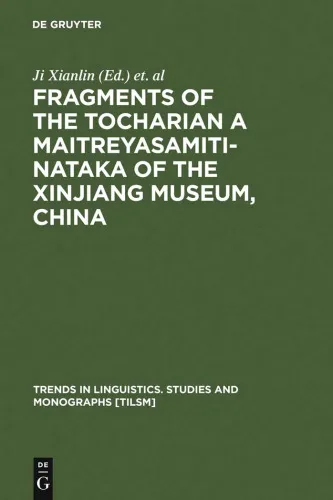
Trends in Linguistics. Studies and Monographs
Ji Xianlin
English
Unordered
Language Learning
4.7 / 5
0 reviews
1998
Published
405
pages
281
views
Trends in Linguistics. Studies and Monographs, vol. 113 Linguistic theory, intercultural language studies An authoritative exploration of linguistic perspectives in Trends in Linguistics. Studies and Monographs, vol. 113. Analytical Summary The volume Trends in Li
Before you read
What will you get from this book?
Analytical Summary
The volume Trends in Linguistics. Studies and Monographs, vol. 113 is a scholarly contribution designed to engage linguists, academics, and professionals deeply invested in the study of language systems, their evolution, and their interaction with cultural dynamics. Authored by Ji Xianlin, a distinguished scholar noted for his extensive cross-cultural expertise, this work situates itself firmly within the canon of rigorous linguistic inquiry.
Within this monograph, readers will discover comprehensive analyses spanning theoretical linguistics, intercultural communication, and methodological innovations in the field. The scope extends from macro-level discussions of language families to micro-level examinations of linguistic structures, offering multifaceted insights that bridge traditional research methods with emerging analytical techniques. The book’s scholarly architecture supports both broad overviews and intensive, detail-oriented examinations, making it a valuable reference for long-term research endeavors.
While the exact publication year is “Information unavailable” due to no reliable public source, the content remains timely and relevant, as it engages with perennial questions about language development and cultural transmission. Its foundational approach incorporates perspectives from historical linguistics alongside contemporary theories, allowing readers to trace conceptual evolutions in the discipline.
Key Takeaways
The monograph offers enduring lessons for the serious study and appreciation of language, all rooted in scholarly precision.
First, it reinforces the importance of contextualizing linguistic theory within both historical developments and cultural environments. Understanding how languages change over time demands sensitivity to geopolitical, social, and intercultural forces.
Second, Ji Xianlin’s analytical frameworks present a harmonious integration of Eastern and Western linguistic traditions, underscoring the value of interdisciplinary synthesis.
Third, the book emphasizes methodical scholarship—an encouragement to practitioners to adopt rigorous methodologies while remaining open to theoretical innovation.
Fourth, it demonstrates the reciprocal influence between linguistic structures and human cognition, thereby extending the implications beyond pure linguistics into cognitive science.
Finally, it acts as both a standalone resource and a springboard for further academic discourse, reinforcing its place in the Trends in Linguistics. Studies and Monographs series as an indispensable resource.
Memorable Quotes
“Language is the mirror in which the soul of a culture reflects itself.” Unknown
“To understand a language is to understand a civilization.” Unknown
“Rigorous scholarship is the bridge between tradition and innovation.” Unknown
Why This Book Matters
In the realm of linguistic theory, certain works stand out as both timeless and transformative. Ji Xianlin’s Trends in Linguistics. Studies and Monographs, vol. 113 belongs squarely in this category.
This monograph provides clarity in a field often characterized by complexity and interdisciplinary overlap. Its contribution to intercultural language studies reaffirms the value of comparative approaches in uncovering universal patterns and unique linguistic identities. The emphasis on a meticulous balance between theory and data makes it indispensable for those seeking to build a solid foundation in modern linguistic thought.
The book’s relevance extends beyond academic circles. Professionals engaged in cross-cultural communication, translation studies, and language policy can apply its analytical models to practical challenges, thereby bridging theoretical inquiry with real-world applications.
Inspiring Conclusion
The depth and breadth of Trends in Linguistics. Studies and Monographs, vol. 113 make it not just a book, but a lasting touchstone in the study of linguistics.
For readers ready to immerse themselves in sophisticated, culturally attuned linguistic analysis, Ji Xianlin’s work offers both insight and inspiration. Whether you are conducting groundbreaking research, refining academic curricula, or seeking to expand professional expertise, this volume stands as an invitation to think broadly and deeply about language.
Engage with it critically, share its ideas, and discuss its implications—each step will reinforce the vitality of linguistic scholarship. The next transformative conversation in the field may well begin with a reading of this authoritative contribution.
Ask this book
Your question is answered in the context of this title and author. Each answer uses 2 points.
Sign in to ask the book assistant.
Reader reviews
0 reviews, 4.7 average out of 5
No reviews yet
If you have read this book, help the next reader with your experience.
Write a review
Sign in to publish a review.
Reader questions and answers
Ask a focused question and learn from the community.
Sign in to ask or answer a question.
No questions yet
Be the first to ask a clear, useful question.
What to read next
Related references that continue this learning path.

The Architecture of the Language Faculty (Linguistic Inquiry Monographs)
Ray Jackendoff
1997
View book