
![Cover of Unleashing the Power of UX Analytics: Proven techniques and strategies for uncovering user insights [Team-IRA] [True PDF]](https://s3.refhub.ir/images/thumb/Unleashing_the_Power_of_UX_Analytics__Proven__9372.webp)
Book guide and evaluation
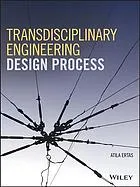
Transdisciplinary engineering design process
Ertas,Atila
English
Beginner
User Research
4.9 / 5
0 reviews
2018
Published
822
pages
453
views
Introduction to Transdisciplinary Engineering Design Process The art and science of engineering design have evolved significantly over the years, crossing traditional disciplinary boundaries and embracing a holistic approach. "Transdisciplinary Engineering Design Process"
Before you read
What will you get from this book?
Introduction to Transdisciplinary Engineering Design Process
The art and science of engineering design have evolved significantly over the years, crossing traditional disciplinary boundaries and embracing a holistic approach. "Transdisciplinary Engineering Design Process" is a comprehensive guide that delves into the intricate and nuanced process of engineering design within a transdisciplinary framework.
Detailed Summary of the Book
This book provides an in-depth exploration of the transdisciplinary approach to engineering design, which integrates knowledge from multiple disciplines, fostering innovation and creativity. It addresses the complexities of modern engineering challenges, which often require solutions that one discipline alone cannot provide. The book serves as both an academic resource and a practical guide, making it ideal for students, educators, and professionals in the field of engineering.
The content is structured to offer insight into the collaborative and iterative nature of the design process. It emphasizes the importance of stakeholder involvement, system thinking, and sustainable practices in creating designs that meet societal needs. The transdisciplinary engineering design process recognizes the interconnectedness of problems and stakeholders, urging designers to look beyond the immediate technical requirements and consider broader societal impacts.
The book is divided into several key sections, each focusing on different aspects of the transdisciplinary process, such as concept generation, problem framing, prototyping, and implementation. Case studies are included throughout to illustrate the application of concepts in real-world scenarios, providing readers with a concrete understanding of how transdisciplinary principles are applied in practice.
Key Takeaways
- The book emphasizes the importance of integrating diverse disciplinary perspectives to foster innovation in engineering design.
- It promotes an understanding of design as a holistic process that involves stakeholders, sustainability, and societal needs.
- Readers are encouraged to adopt systems thinking to approach engineering challenges.
- Practical strategies for implementing transdisciplinary practices in various stages of engineering design are provided.
- Through case studies, the book demonstrates the tangible benefits of the transdisciplinary approach, including more adaptable and efficient design solutions.
Famous Quotes from the Book
“Transdisciplinary engineering design is not merely an added layer to existing methodologies; it is a paradigm shift towards integrative and collaborative thinking.”
“In an interconnected world, isolated problem-solving is obsolete. Embrace the complexity, harness the synergy of disciplines.”
Why This Book Matters
In today’s fast-paced and complex world, the challenges faced by engineers require more than just technical skills. They demand a comprehensive understanding that transcends traditional boundaries and considers multiple perspectives and systems. "Transdisciplinary Engineering Design Process" provides the framework necessary for addressing these multifaceted issues.
The book equips the reader with the tools to engage in transdisciplinary collaboration, an essential skill for driving innovation and achieving sustainable solutions. It is of paramount importance for educators and practitioners who wish to stay ahead in their fields by fostering creative and inclusive problem-solving environments.
By reading this book, one can expect to gain a nuanced understanding of the ways in which engineering design can be innovatively approached, ensuring that future solutions are robust, adaptable, and beneficial to society at large. It not only enriches the reader's knowledge but also inspires transformational thinking in the engineering domain.
Ask this book
Your question is answered in the context of this title and author. Each answer uses 2 points.
Sign in to ask the book assistant.
Reader reviews
0 reviews, 4.9 average out of 5
No reviews yet
If you have read this book, help the next reader with your experience.
Write a review
Sign in to publish a review.
Reader questions and answers
Ask a focused question and learn from the community.
Sign in to ask or answer a question.
No questions yet
Be the first to ask a clear, useful question.
What to read next
Related references that continue this learning path.

Virtual and Remote Control Tower: Research, Design, Development and Validation
Norbert Fürstenau (eds.)
2016
View book

Remote and Rural Dementia Care: Policy, Research and Practice
Anthea Innes (editor);Debra Morgan (editor);Jane Farmer (editor)
2020
View book