
dead Pool
2025/12/25
5 / 5
Nice and useful reference
Book guide and evaluation
Gunnar Carlsson,Mikael Vejdemo-Johansson
1 reviews
Published
pages
views
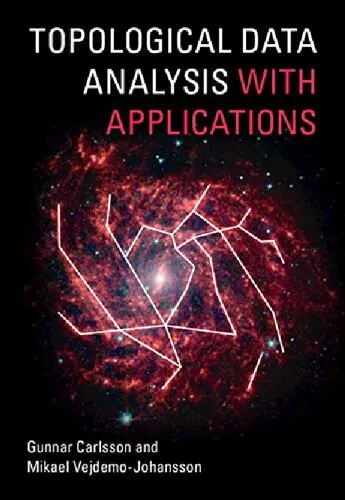
Introduction to "Topological Data Analysis with Applications" "Topological Data Analysis with Applications" is a comprehensive guide to understanding and implementing the powerful tools of topological data analysis (TDA). Written by leading experts Gunnar Carlsson
Before you read
"Topological Data Analysis with Applications" is a comprehensive guide to understanding and implementing the powerful tools of topological data analysis (TDA). Written by leading experts Gunnar Carlsson and Mikael Vejdemo-Johansson, this book bridges the gap between theoretical mathematical foundations and practical applications in real-world data analysis. TDA has emerged as one of the most cutting-edge methodologies in handling complex, high-dimensional data, making this book particularly valuable for data scientists, mathematicians, and engineers.
The book combines rigorous mathematical explanations with practical examples to provide readers with a deep understanding of TDA concepts like persistence homology, simplicial complexes, and topological invariants. It also delves into diverse applications of TDA across various domains, including biology, finance, medicine, and social network analysis, making it an invaluable resource for practitioners and researchers alike. The structured approach presented in this book ensures that even readers with minimal background in algebraic topology can quickly grasp the essentials and start utilizing these tools for their data-driven challenges.
The book begins by introducing the theoretical roots of topology and its transformation into a computational tool for analyzing large data sets. Part I focuses on foundational concepts, such as simplicial complexes, topological spaces, and their relevance in data science. Nonlinear structures that often arise in data are detailed, highlighting why traditional linear statistical methods can fail and where TDA can offer a more nuanced approach.
A significant portion of the book is dedicated to persistence homology, the cornerstone of TDA. Readers are guided step-by-step through the processes of building filtrations from data, computing persistent diagrams, and interpreting these diagrams to derive valuable insights. The text ensures inclusion of both computational elements and visual representations that play a critical role in understanding geometric features in data.
In Part II, the book transitions to applications, showcasing the versatility of TDA across domains. Case studies feature clustering in noisy biological data, analyzing the structure of financial transactions, and detecting anomalies in time-series data. Practical exercises and Python code snippets are interspersed throughout, ensuring readers can apply TDA tools in real-world scenarios.
The final sections focus on advanced topics, including Reeb graphs, multidimensional persistence, and collaborations with other machine learning tools. These advanced insights make the book suitable even for seasoned data professionals who want to hone their expertise in TDA.
"Geometry gives us the shape of objects, but topology gives us the shape of data."
"Persistent homology is not just a mathematical abstraction; it is a lens through which we investigate the hidden structures of high-dimensional spaces."
In an era where data is growing more complex and high-dimensional, finding the right tools to extract meaningful patterns is critical. "Topological Data Analysis with Applications" addresses this demand by providing a robust framework that goes beyond traditional methods. By focusing on shape and structure rather than solely on numerical aggregates, TDA allows for a deeper understanding of data, regardless of its complexity.
This book matters because it equips readers with the knowledge and tools to tackle some of the most challenging problems in modern data analysis. Whether you're trying to study biological protein structures, model financial risk, or understand the dynamic properties of social networks, TDA offers novel pathways that are transformative in their insights. Gunnar Carlsson and Mikael Vejdemo-Johansson have created a resource that is both theoretical and practical, ensuring that researchers and practitioners alike will find value on every page.
Your question is answered in the context of this title and author. Each answer uses 2 points.
1 reviews, 5.0 average out of 5
2025/12/25
5 / 5
Nice and useful reference
Sign in to publish a review.
Ask a focused question and learn from the community.
Related references that continue this learning path.




V Kishore Ayyadevara,Yeshwanth Reddy