
Book guide and evaluation
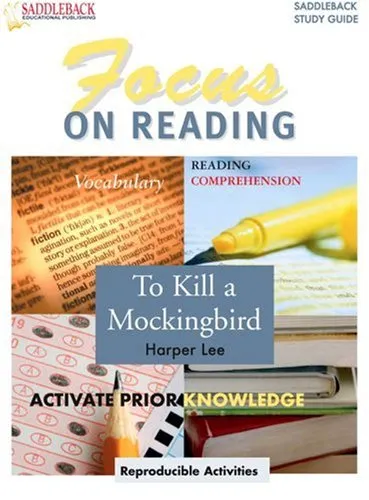
To Kill a Mockingbird
Lisa Mccarty
English
Intermediate
novel
4.3 / 5
0 reviews
2006
Published
50
pages
1020
views
Introduction Welcome to the world of Harper Lee's 'To Kill a Mockingbird,' a timeless classic that explores the depths of human morality, racial injustice, and the power of empathy. Although it's a work of fiction, the novel delves into themes that remain relevant today. T
Before you read
What will you get from this book?
Introduction
Welcome to the world of Harper Lee's 'To Kill a Mockingbird,' a timeless classic that explores the depths of human morality, racial injustice, and the power of empathy. Although it's a work of fiction, the novel delves into themes that remain relevant today. This introduction provides a comprehensive overview of the book's key elements, offering readers a deeper understanding of its enduring impact.
Detailed Summary of the Book
The story unfolds in the small town of Maycomb, Alabama, during the Great Depression. The novel's protagonist, Scout Finch, is a young girl who lives with her brother Jem and their widowed father, Atticus Finch, a compassionate lawyer. Through Scout's eyes, we observe the complexities of Southern life and social hierarchies, which are challenged when Atticus defends a black man, Tom Robinson, accused of raping a white woman, Mayella Ewell.
As the trial progresses, Scout and Jem are thrust into a world of racial prejudice and moral challenges. Their relationship with their mysterious neighbor Boo Radley evolves, adding depth to the narrative. Ultimately, Tom Robinson is wrongfully convicted, but the event becomes a significant learning experience for the Finch children. The novel concludes with Scout embracing growth, understanding, and empathy taught by her father's unwavering sense of justice and fairness.
Key Takeaways
- The novel underscores the significance of empathy and understanding others' perspectives, encapsulated in Atticus's advice to Scout about walking in someone else's shoes.
- The influence of societal prejudice and the need for individuals to stand against injustice are recurrent themes throughout the narrative.
- Family, community, and moral integrity are central to the characters' development, particularly seen in the Finch family's dynamics.
- 'To Kill a Mockingbird' serves as both a coming-of-age story and a critical commentary on the social issues of its time, such as racism and classism.
Famous Quotes from the Book
"You never really understand a person until you consider things from his point of view… Until you climb inside of his skin and walk around in it." - Atticus Finch
"The one thing that doesn't abide by majority rule is a person's conscience." - Atticus Finch
"Mockingbirds don’t do one thing but make music for us to enjoy. They don’t eat up people’s gardens, don’t nest in corncribs, they don’t do one thing but sing their hearts out for us. That’s why it’s a sin to kill a mockingbird." - Miss Maudie
Why This Book Matters
'To Kill a Mockingbird' holds a prominent place in American literature due to its exploration of human morality and ethics. Harper Lee's depiction of a deeply flawed society offers a sobering reminder of the consequences of unchecked prejudice and discrimination. Atticus Finch's character serves as a moral hero, embodying principles of justice and empathy that continue to inspire generations.
The novel's impact extends beyond its literary merit, serving as an educational tool for discussing complex social issues. It invites reflection and dialogue on the need for continued social progress and equality, making it a significant piece of cultural and educational literature.
Audio introductions
Persian Summary
Ask this book
Your question is answered in the context of this title and author. Each answer uses 2 points.
Sign in to ask the book assistant.
Reader reviews
0 reviews, 4.3 average out of 5
No reviews yet
If you have read this book, help the next reader with your experience.
Write a review
Sign in to publish a review.
Reader questions and answers
Ask a focused question and learn from the community.
Sign in to ask or answer a question.
No questions yet
Be the first to ask a clear, useful question.
What to read next
Related references that continue this learning path.

The Feynman lectures on physics. Volume I, Mainly mechanics, radiation and heat
Feynman, Richard Phillips;Sands, Matthew Linzee;Leighton, Robert B.
2013
View book