Book guide and evaluation
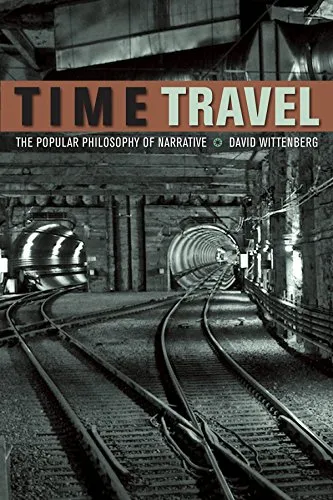
Time Travel: The Popular Philosophy of Narrative
David Wittenberg
English
Unordered
Art
4.0 / 5
0 reviews
2012
Published
319
pages
744
views
Introduction to "Time Travel: The Popular Philosophy of Narrative" "Time Travel: The Popular Philosophy of Narrative" by David Wittenberg delves into the evocative concept of time travel as a multifaceted narrative device. This book interweaves philosophy, literary analysi
Before you read
What will you get from this book?
Introduction to "Time Travel: The Popular Philosophy of Narrative"
"Time Travel: The Popular Philosophy of Narrative" by David Wittenberg delves into the evocative concept of time travel as a multifaceted narrative device. This book interweaves philosophy, literary analysis, and popular culture to explore how time travel serves as a metaphorical framework for understanding narrative structures, human consciousness, and the very essence of storytelling itself. An exploration of time travel narratives permits readers to examine and challenge conventional perceptions of time, causality, and individual agency.
Detailed Summary of the Book
At its heart, "Time Travel: The Popular Philosophy of Narrative" is an investigation into the narrative complexities introduced by time travel as a theme in literature and film. The book systematically examines the ways in which time travel is used to manipulate and interrogate standard temporal constructs, enhancing our comprehension of narrative strategies and their implications. The initial chapters outline the evolution of time travel scenarios from early literary classics to contemporary blockbusters, highlighting how each era's socio-cultural context shaped its portrayal of time travel.
Wittenberg employs an interdisciplinary approach, blending theories from philosophy, psychoanalysis, and cultural studies to dissect the temporal paradoxes inherent in time travel narratives. He considers time travel stories as more than just science fiction, positioning them as philosophical explorations of chance, destiny, and moral responsibility. By doing so, Wittenberg taps into the profound philosophical questions posed by time travel: What does it mean to relive or alter events? How is identity fashioned or refashioned through different pasts and potential futures?
As the book progresses, Wittenberg discusses specific examples from popular media, dissecting how time travel functions as a tool to resolve, complicate, or entirely subvert traditional narrative patterns. Engaging with works ranging from "H.G. Wells' The Time Machine" to "Doctor Who" and "Back to the Future," Wittenberg illustrates the universal appeal of time travel and its capacity to transform narrative perceptions and expectations.
Key Takeaways
- Time travel is a potent narrative device that transcends mere plot complexity to probe deeper existential questions.
- The interplay between time travel and narrative highlights the complexities of narrative causality and authorship.
- Time travel stories enable a critique of linear time and traditional historiography, offering alternative visions of temporality.
- By examining time travel narratives, readers gain insights into the human experience and the powers and limits of storytelling.
Famous Quotes from the Book
"In the labyrinth of time, narrative emerges as both a guide and a traveler, charting the hidden paths of temporal existence."
"Time travel transcends its speculative roots to become a profound inquiry into the paradoxes and possibilities of human consciousness."
Why This Book Matters
David Wittenberg's "Time Travel: The Popular Philosophy of Narrative" is a significant contribution to the study of narrative theory and philosophy. It provides an essential framework for understanding how time travel, as a narrative device, impacts cultural narratives and our comprehension of time. In a world increasingly fascinated by the manipulation and understanding of time, Wittenberg's work is a timely exploration of how fictional constructs influence real-world perceptions of temporal reality. This book appeals to a wide array of readers, from literary critics and philosophers to fans of science fiction, making it an essential read for anyone interested in the intersection of time, narrative, and popular culture.
Ask this book
Your question is answered in the context of this title and author. Each answer uses 2 points.
Sign in to ask the book assistant.
Reader reviews
0 reviews, 4.0 average out of 5
No reviews yet
If you have read this book, help the next reader with your experience.
Write a review
Sign in to publish a review.
Reader questions and answers
Ask a focused question and learn from the community.
Sign in to ask or answer a question.
No questions yet
Be the first to ask a clear, useful question.
What to read next
Related references that continue this learning path.

Solutions Architect's Handbook: Kick-start your career as a solutions architect by learning architecture design principles and strategies, 2nd Edition
Saurabh Shrivastava,Neelanjali Srivastav
2022
View book

Solutions Architect's Handbook - Third Edition: Kick-start your career with architecture design principles, strategies, and generative AI techniques
Saurabh Shrivastava,Neelanjali Srivastav
2024
View book