
Book guide and evaluation
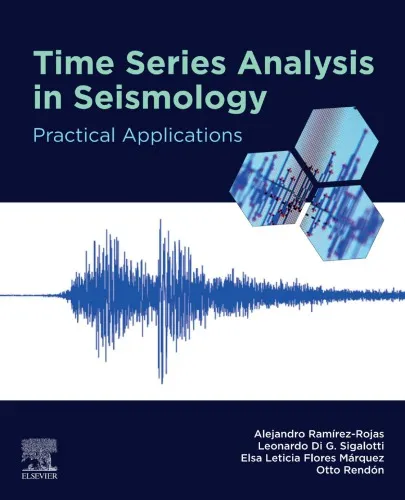
Time Series Analysis in Seismology: Practical Applications
Alejandro Ramírez-Rojas,Leonardo Di G. Sigalotti,Elsa Leticia Flores Márquez,Otto Rendón
English
Beginner
Physics
4.5 / 5
0 reviews
2019
Published
397
pages
144
views
Welcome to Time Series Analysis in Seismology: Practical Applications, a comprehensive exploration of the fundamental principles and methodologies of time series analysis applied to seismic data. In this book, we blend theoretical grounding with practical implementations, e
Before you read
What will you get from this book?
Welcome to Time Series Analysis in Seismology: Practical Applications, a comprehensive exploration of the fundamental principles and methodologies of time series analysis applied to seismic data. In this book, we blend theoretical grounding with practical implementations, equipping readers with essential tools to analyze, interpret, and understand seismic phenomena. Whether you are a seasoned professional, an academic researcher, or a newcomer to seismology, this resource is designed to meet your needs by combining clarity, depth, and practicality.
Detailed Summary of the Book
The book opens with an exploration of the cornerstone concepts of time series analysis, providing readers with a robust foundation in the mathematical and statistical techniques that underpin seismic research. We delve into topics such as signal processing, spectral analysis, and filtering techniques, all within the context of seismology. Real-world examples and case studies are presented to bridge the gap between theory and practical application, empowering readers to address the challenges of analyzing seismic data effectively.
Chapters go on to explore advanced topics such as machine learning integration in seismic time series analysis, nonlinear dynamics, and stochastic methods. We guide you through practical applications like earthquake prediction analysis, seismic hazard assessment, and monitoring of volcanic activity. Each topic is approached with attention to detail, ensuring that readers not only understand the methodologies but also gain insights into their real-world implications in seismological research and operations.
By integrating Python programming and open-source tools, the book emphasizes accessibility and flexibility, making complex techniques and software frameworks approachable. We also provide hands-on examples and step-by-step guidance, allowing readers to apply the concepts directly to their own datasets.
Key Takeaways
- An in-depth understanding of the role of time series analysis in seismology.
- Practical methods for analyzing seismic time series data, including spectral analysis, de-noising, and filtering.
- Knowledge of machine learning applications in seismic data interpretation.
- A solid grasp of advanced techniques like nonlinear time series and stochastic modeling.
- Hands-on experience using Python and open-source tools for seismic data analysis.
- Valuable insights into earthquake prediction, seismic hazard study, and volcanic monitoring.
Famous Quotes from the Book
"Seismic time series data encapsulate the hidden whispers of the Earth, waiting to be uncovered and understood."
"Time series analysis is not simply a tool; it is the lens through which we decipher the dynamic nature of our planet."
Why This Book Matters
As seismic activity becomes increasingly relevant, both for natural disaster preparedness and the broader understanding of geological processes, the need for effective time series analysis tools has never been greater. This book equips readers to contribute to one of the most impactful scientific areas by developing essential skills and expertise.
Furthermore, the book bridges a critical gap in the literature by combining accessible explanations of complex theories with practical, hands-on applications. By fostering an understanding of how time series analysis can address real-world challenges—like earthquake forecasting or hazard assessment—this resource becomes invaluable across academic, industrial, and governmental sectors related to geophysics and earthquake engineering.
Finally, the inclusion of Python as the primary tool for analysis ensures that readers are prepared to work in modern scientific environments that prioritize open-source and collaborative methods. By demystifying time series analysis, this book empowers professionals and students alike to address pressing questions in seismology with confidence.
Ask this book
Your question is answered in the context of this title and author. Each answer uses 2 points.
Sign in to ask the book assistant.
Reader reviews
0 reviews, 4.5 average out of 5
No reviews yet
If you have read this book, help the next reader with your experience.
Write a review
Sign in to publish a review.
Reader questions and answers
Ask a focused question and learn from the community.
Sign in to ask or answer a question.
No questions yet
Be the first to ask a clear, useful question.
What to read next
Related references that continue this learning path.

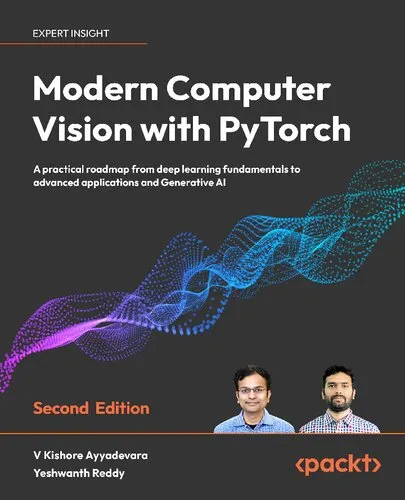
Modern Computer Vision with PyTorch: A Practical Roadmap From Deep Learning Fundamentals to Advanced Applications and Generative AI, 2nd Edition
V Kishore Ayyadevara,Yeshwanth Reddy
2023
View book