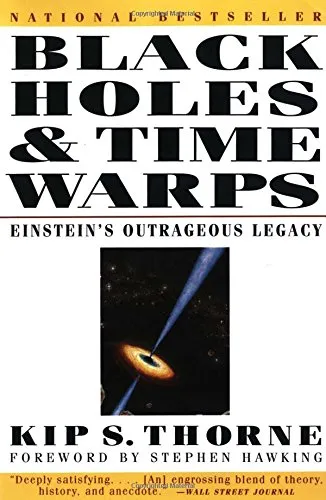
Black Holes and Time Warps: Einstein’s Outrageous Legacy
Kip S. Thorne,Stephen Hawking
1995
View book
Book guide and evaluation
Harold Bloom (Editor)
0 reviews
Published
pages
views
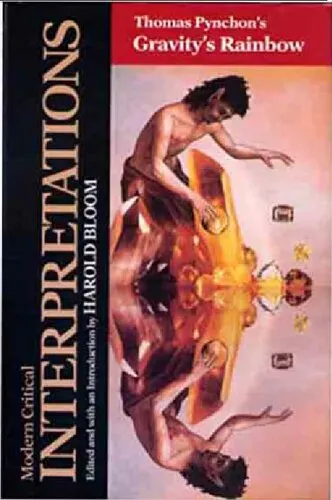
Introduction to Thomas Pynchon's Gravity's Rainbow Thomas Pynchon's Gravity's Rainbow is often considered one of the most complex and rewarding novels of the 20th century, offering readers an intricate exploration of science, history, and humanity set against the backdro
Before you read
Thomas Pynchon's Gravity's Rainbow is often considered one of the most complex and rewarding novels of the 20th century, offering readers an intricate exploration of science, history, and humanity set against the backdrop of World War II. Released in 1973, this seminal work won the National Book Award for fiction and has captivated generations of readers and scholars.
The narrative of Gravity's Rainbow is sprawling, weaving together the stories of more than 400 characters over the course of its 760 pages. Its central plotline follows the enigmatic Tyrone Slothrop, an American lieutenant stationed in England during the latter years of World War II. Slothrop becomes embroiled in a mysterious investigation involving the V-2 rocket, a real-life weapon deployed by Nazi Germany. His quest uncovers various patterns and conspiracies, including his peculiar connection to where these rockets are landing.
One of the hallmarks of Pynchon's storytelling is his use of multiple narrative threads, interwoven with unique, distinct timelines. The book traverses continents and epochs, moving from Europe to America, detailing events from the war to the anarchic days that followed. Throughout, Pynchon delves into themes of paranoia, control, and the impact of technology, particularly the destructive potential represented by the rocket.
"If they can get you asking the wrong questions, they don't have to worry about answers."
"Gravity's rainbow." It is a story whose promise, like the rainbow, is never quite fulfilled. But its brilliance remains.
"You never did the Kenosha Kid."
The importance of Gravity's Rainbow extends beyond its awards and critical acclaim. It represents a monumental effort to understand and depict the intertwined forces of reality and imagination, science and metaphysics, that govern human existence. Pynchon's novel is not only a reflection on the mid-20th century but also a prophetic examination of the future, one that continues to resonate in an age dominated by technological advancement and existential uncertainty.
The book's narrative style and experimental nature influenced the direction of postmodern literature, opening new pathways for writers seeking to push the boundaries of the genre. For readers, engaging with its intricate prose and symbolism offers not just the challenge of deciphering its meaning, but the opportunity to explore deep philosophical questions that remain relevant today.
Overall, Gravity’s Rainbow remains a cornerstone of American literature, a testament to Pynchon's genius, and an indispensable read for those wishing to understand the complexities of the human condition in the modern world.
Your question is answered in the context of this title and author. Each answer uses 2 points.
0 reviews, 4.3 average out of 5
Sign in to publish a review.
Ask a focused question and learn from the community.
Related references that continue this learning path.
Kip S. Thorne,Stephen Hawking