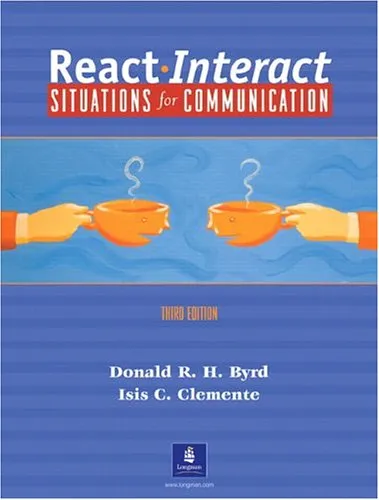
React Interact: Situations for Communication, Third Edition
Donald R. H. Byrd,Isis C. Clemente
2001
View book
Book guide and evaluation
Tim Hurson
0 reviews
Published
pages
views
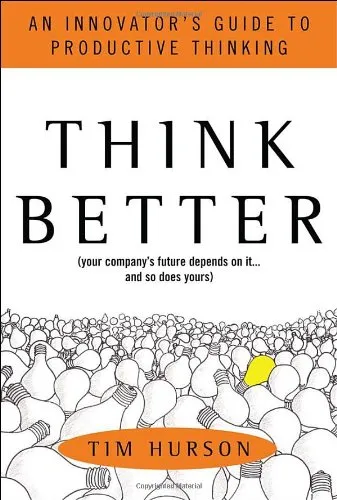
Introduction to 'Think Better: An Innovator's Guide to Productive Thinking' In a world that demands constant innovation, creative problem-solving, and critical thinking, "Think Better: An Innovator's Guide to Productive Thinking" emerges as a powerful guide to mastering
Before you read
In a world that demands constant innovation, creative problem-solving, and critical thinking, "Think Better: An Innovator's Guide to Productive Thinking" emerges as a powerful guide to mastering the art of productive thought. Written to inspire individuals, teams, and organizations, this book bridges the gap between how people typically think and how they could think to achieve far greater results. Its central premise? Productive thinking is a blend of creative imagination and practical logic, and it is something everyone can learn and apply in their lives.
This carefully crafted book takes readers on a journey, equipping them with actionable techniques and strategies to break free from conventional thinking traps and unlock their full problem-solving potential. From personal challenges to business dilemmas, "Think Better" offers a structured yet flexible approach to fostering innovation and achieving meaningful outcomes.
"Think Better" is built upon one key objective: to shift people from reactive thinking, which often relies on habits and assumptions, to productive thinking, which combines logical reasoning and creative exploration. The book introduces a six-step model known as P.R.O.D.U.C.T. (Pose, Research, Organize, Develop, Understand, Communicate, and Transform), designed to help individuals and teams systematically approach any problem or challenge.
The first part of the book identifies the common pitfalls of traditional thinking, such as relying solely on past experiences or reacting impulsively without fully understanding the issue. From there, it transitions into actionable instructions for implementing productive thinking. It uses relatable anecdotes, case studies, and exercises to make these concepts tangible. By encouraging readers to dig deeper into questions, consider alternative perspectives, and break down mental barriers, 'Think Better' fosters both personal growth and collective innovation.
Whether you are brainstorming your next big idea, running a business, or navigating personal decisions, the methodologies outlined in this book are easy to apply and highly effective. The carefully structured P.R.O.D.U.C.T. model ensures that thinking evolves from vague notions and assumptions into clear, actionable, and transformative steps.
"Think Better" isn't just another book about creative thinking. It calls attention to the very foundation of how we approach problems, make decisions, and imagine new possibilities. Its relevance resonates deeply in a fast-paced, ever-changing world where innovation is not a luxury but a necessity. The methodology presented transcends individual contexts—whether you're a student, an entrepreneur, a team leader, or a policymaker, this book equips you to think more effectively and produce better outcomes.
Furthermore, "Think Better" emphasizes that productive thinking is not a talent reserved for the few. Instead, it’s a learnable, hone-able skill that can revolutionize the way people tackle challenges in every aspect of life. This democratization of critical thinking and problem-solving makes it a crucial read for anyone seeking to make a meaningful impact in their personal or professional endeavors.
Ultimately, the book inspires its readers with the belief that thinking better is not just possible, but transformational. When we think better, we act better, and when we act better, we create outcomes that drive progress, innovation, and fulfillment. It’s a book that doesn't just talk about different ways of thinking—it provides the tools and motivation to actively change how we think and empower our best selves.
Your question is answered in the context of this title and author. Each answer uses 2 points.
0 reviews, 4.6 average out of 5
Sign in to publish a review.
Ask a focused question and learn from the community.
Related references that continue this learning path.
Donald R. H. Byrd,Isis C. Clemente