Loading
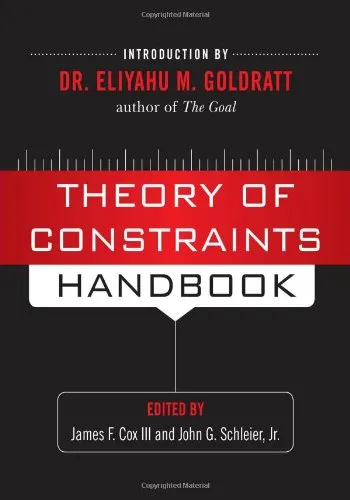
Cover of Theory of Constraints Handbook

Book guide and evaluation

Theory of Constraints Handbook

James Cox III,John Schleier

English Beginner Operations Management
4.5 / 5

0 reviews

2010

Published

1214

pages

684

views

Introduction to the 'Theory of Constraints Handbook' The "Theory of Constraints Handbook" is a comprehensive guide that offers invaluable insights into the Theory of Constraints (TOC), a powerful management philosophy that has transformed organizations worldwide.

Before you read

What will you get from this book?

Introduction to the 'Theory of Constraints Handbook'

The "Theory of Constraints Handbook" is a comprehensive guide that offers invaluable insights into the Theory of Constraints (TOC), a powerful management philosophy that has transformed organizations worldwide. This book serves as both an introduction to newcomers and a deep dive for seasoned practitioners seeking to enhance their understanding and application of TOC principles.

Detailed Summary of the Book

The "Theory of Constraints Handbook" begins by exploring the origins and fundamental concepts of the Theory of Constraints, introduced by Dr. Eliyahu M. Goldratt. It outlines the principle that every system, no matter how complex, has a limiting factor or constraint that determines its performance. By identifying and managing these constraints, organizations can achieve more significant results with fewer resources.

The book also covers a wide range of applications, extending from manufacturing to project management and even marketing. It provides practical tools such as the Five Focusing Steps, which include identifying, exploiting, subordinating, elevating, and repeating the process for ongoing improvement. The authors delve into various case studies, offering real-life examples to illustrate how these principles can be implemented successfully.

Furthermore, the book discusses the broader implications of TOC, highlighting its role in strategic development and as a tool for continuous improvement. It emphasizes the need for a shift in mindset towards systemic thinking, encouraging leaders to focus on the system as a whole rather than isolated symptoms.

Key Takeaways

  • The Theory of Constraints offers a powerful yet straightforward method for solving complex organizational challenges.
  • By focusing on the system's constraints, organizations can unlock significant improvements in efficiency and productivity.
  • TOC is applicable across a broad spectrum of industries and functions, from production to sales to research & development.
  • Continuous improvement is facilitated by the Five Focusing Steps, ensuring that progress is made without unnecessary resource expenditure.
  • A shift to systemic thinking is crucial for leaders aiming to achieve sustainable long-term success.

Famous Quotes from the Book

“The constraint is the factor that prevents a system from achieving its goals, and managing it effectively can lead to breakthrough improvements.”

“Throughput, inventory, and operational expense are the measures that determine an organization's success.”

Why This Book Matters

The "Theory of Constraints Handbook" is an essential read for anyone involved in organizational management and improvement. It is not merely a collection of theoretical frameworks; rather, it provides actionable strategies that can dramatically enhance productivity and performance. In an era where efficiency and optimization are pivotal to success, this handbook stands out as a crucial resource for managers, executives, and practitioners alike.

The book's emphasis on a holistic view of systems and its practical approach to constraint management makes it a unique tool for those looking to foster innovation and drive change within their organizations. By equipping readers with the knowledge and skills required to identify and manage constraints, the "Theory of Constraints Handbook" empowers them to create meaningful, lasting improvements that align with the dynamic needs of today's business environment.

Ask this book

Your question is answered in the context of this title and author. Each answer uses 2 points.

Sign in to ask the book assistant.

Reader reviews

0 reviews, 4.5 average out of 5

No reviews yet

If you have read this book, help the next reader with your experience.

Write a review

Sign in to publish a review.

Reader questions and answers

Ask a focused question and learn from the community.

Sign in to ask or answer a question.

No questions yet

Be the first to ask a clear, useful question.