

Book guide and evaluation
Theoretical Hydrodynamics, 4th Ed.
L.M. Milne-Thomson
English
Beginner
Art
4.5 / 5
0 reviews
-
Published
686
pages
503
views
Introduction to Theoretical Hydrodynamics, 4th Edition Written by L.M. Milne-Thomson, Theoretical Hydrodynamics has been a foundational text for students, scholars, and researchers in fluid mechanics for decades. The fourth edition of this classic work enhances its reputation
Before you read
What will you get from this book?
Introduction to Theoretical Hydrodynamics, 4th Edition
Written by L.M. Milne-Thomson, Theoretical Hydrodynamics has been a foundational text for students, scholars, and researchers in fluid mechanics for decades. The fourth edition of this classic work enhances its reputation as a must-read for those seeking a thorough understanding of hydrodynamics, its theoretical frameworks, and its practical applications. This book presents a comprehensive treatment of fluid motion, backed by rigorous mathematics and insightful explanations, making it an indispensable reference for professionals in engineering, physics, and applied mathematics.
In this introduction, we will explore the core elements that define this masterpiece — its detailed structure, critical takeaways, notable excerpts, and why it remains relevant in the field of fluid dynamics even today.
Detailed Summary of the Book
The fourth edition of Theoretical Hydrodynamics addresses fundamental topics in both classical and modern fluid mechanics. It starts with the basics, including kinematics of fluids and governing equations of motion, before advancing into more intricate topics like vortex motion, irrotational flows, and wave phenomena. The book also delves into specialized chapters on conformal mapping techniques and the application of complex variable theory to solve fluid mechanics problems.
The text is enriched with a substantive mathematical treatment of topics such as potential flow, boundary layers, and compressible fluids. Chapters are organized systematically to develop an intuitive and theoretical understanding of hydrodynamic principles, and they are supplemented by illustrative examples, derivations, and problem-solving strategies.
The fourth edition also includes updates to align with advancements in computational fluid dynamics and applied mathematics, ensuring its continued relevance to contemporary research. With clarity, precision, and depth, this book builds a solid foundation for understanding the physics and mathematics of fluid flow in both theoretical and practical contexts.
"The essence of theoretical hydrodynamics lies not just in the mastery of equations, but in the recognition of their physical significance."
"Clarity in mathematics is the foundation for clarity in understanding fluid motion."
"The study of hydrodynamics serves as a bridge between theoretical physics and practical engineering."
Ask this book
Your question is answered in the context of this title and author. Each answer uses 2 points.
Sign in to ask the book assistant.
Reader reviews
0 reviews, 4.5 average out of 5
No reviews yet
If you have read this book, help the next reader with your experience.Write a review
Sign in to publish a review.
Reader questions and answers
Ask a focused question and learn from the community.
Sign in to ask or answer a question.
No questions yet
Be the first to ask a clear, useful question.What to read next
Related references that continue this learning path.
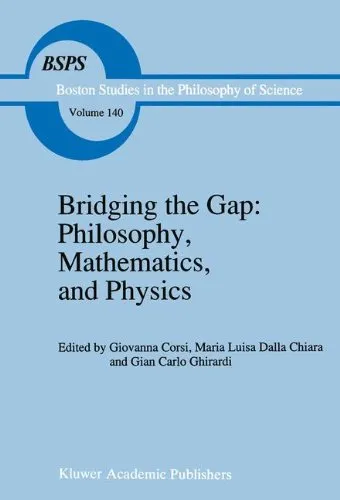
Bridging the Gap: Philosophy, Mathematics, and Physics: Lectures on the Foundations of Science
Giovanna Corsi,Maria Luisa Dalla Chiara,Gian Carlo Ghirardi (Editors)
1993
View book

Introduction to the Physics of Diluted Magnetic Semiconductors
Jan A. Gaj,Jacek Kossut (auth.),Jan A. Gaj,Jacek Kossut (eds.)
2010
View book
Ask this book
Your question is answered in the context of this title and author. Each answer uses 2 points.
Sign in to ask the book assistant.
Reader reviews
0 reviews, 4.5 average out of 5
No reviews yet
If you have read this book, help the next reader with your experience.
Write a review
Sign in to publish a review.
Reader questions and answers
Ask a focused question and learn from the community.
Sign in to ask or answer a question.
No questions yet
Be the first to ask a clear, useful question.
What to read next
Related references that continue this learning path.
Bridging the Gap: Philosophy, Mathematics, and Physics: Lectures on the Foundations of Science
Giovanna Corsi,Maria Luisa Dalla Chiara,Gian Carlo Ghirardi (Editors)
1993
View book
Introduction to the Physics of Diluted Magnetic Semiconductors
Jan A. Gaj,Jacek Kossut (auth.),Jan A. Gaj,Jacek Kossut (eds.)
2010
View book