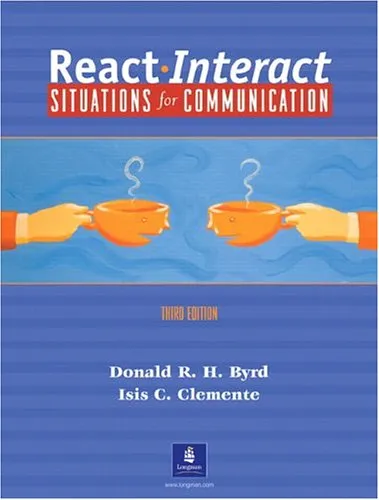
React Interact: Situations for Communication, Third Edition
Donald R. H. Byrd,Isis C. Clemente
2001
View book
Book guide and evaluation
Charles Radding,Francis Newton
0 reviews
Published
pages
views
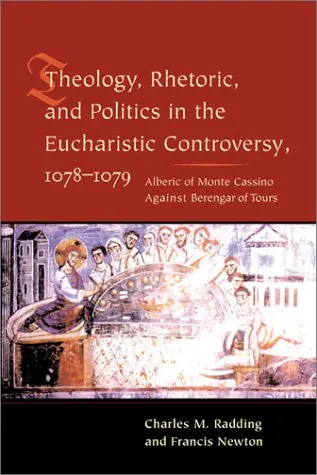
Introduction to "Theology, Rhetoric, and Politics in the Eucharistic Controversy, 1078-1079" "Theology, Rhetoric, and Politics in the Eucharistic Controversy, 1078-1079" is a profound exploration of one of the most pivotal moments in medieval intellectual history. Authored
Before you read
"Theology, Rhetoric, and Politics in the Eucharistic Controversy, 1078-1079" is a profound exploration of one of the most pivotal moments in medieval intellectual history. Authored with exceptional scholarly depth, this book examines the complex theological debate between Berengar of Tours and Lanfranc of Canterbury over the doctrine of the Eucharist—a debate that captivated the ecclesiastical and political landscape of the late 11th century. Through a meticulous study of the primary sources, the book investigates the interplay of theology, rhetorical strategies, and political dynamics that shaped this controversy, offering readers a nuanced understanding of its significance in both religious and secular contexts.
At the heart of this book lies an intricate analysis of the Eucharistic controversy that unfolded between 1078 and 1079. Berengar of Tours, a theologian known for his critical approach to Church doctrine, questioned the prevailing notion of transubstantiation—the transformation of bread and wine into the body and blood of Christ during the Eucharist. His views sparked intense objections from Lanfranc of Canterbury, a leading theologian and church leader, who adhered strictly to orthodoxy.
The book meticulously dissects the theological arguments from both sides, illustrating how Berengar's logical reasoning clashed with Lanfranc's dogmatic assertions. It delves deeply into medieval theological frameworks, highlighting how the debate was shaped not only by theological questions but also by rhetorical styles. Berengar's emphasis on dialectic reasoning is juxtaposed with Lanfranc's reliance on authority and scriptural interpretations, showcasing how arguments were crafted and contested.
Beyond theology, the book examines the political context surrounding the controversy. It uncovers the role of the papacy, which sought to assert its influence over theological disputes to unify Christendom. This backdrop reveals that the Eucharistic controversy was intertwined with broader struggles for control and hegemony within the Church. By contextualizing theology within the socio-political landscape of the time, "Theology, Rhetoric, and Politics in the Eucharistic Controversy, 1078-1079" adds a valuable dimension to our understanding of medieval intellectual history.
"The Eucharistic controversy of 1078-1079 was not merely a battle of abstract theology; it was a contest of power, interpretation, and authority woven into the fabric of the medieval Church."
"In Berengar’s questioning, we witness the essential tension between reason and tradition, a dynamic that has shaped theological discourse across centuries."
"Theology, Rhetoric, and Politics in the Eucharistic Controversy, 1078-1079" is not just a detailed historiographic account of a singular religious debate but a sweeping study that resonates across disciplines, from theology and philosophy to political science and cultural studies. By investigating how intellectual disputes were influenced by broader societal forces, the book offers invaluable insights into the functioning of medieval institutions and their enduring impact on Western thought.
For modern readers, the book serves as a reminder of the enduring importance of critical inquiry in the face of orthodoxy and the necessity of understanding intellectual challenges within their historical contexts. Aspiring theologians, medievalists, and scholars in related fields will find this text to be an indispensable resource that bridges historical scholarship with enduring questions of faith, reason, and power.
Your question is answered in the context of this title and author. Each answer uses 2 points.
0 reviews, 4.5 average out of 5
Sign in to publish a review.
Ask a focused question and learn from the community.
Related references that continue this learning path.
Donald R. H. Byrd,Isis C. Clemente