

AI Battle Royale: How to Protect Your Job from Disruption in the 4th Industrial Revolution
Ashley Marc Recanati
2023
View book
Book guide and evaluation
Jon-Arild Johannessen
0 reviews
Published
pages
views
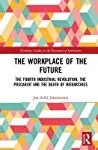
The Workplace of the Future Exploring the profound transformations ushered in by the Fourth Industrial Revolution, "The Workplace of the Future: The Fourth Industrial Revolution, the Precariat and the Death of Hierarchies" unravels the complexities and challenges shaping
Before you read
Exploring the profound transformations ushered in by the Fourth Industrial Revolution, "The Workplace of the Future: The Fourth Industrial Revolution, the Precariat and the Death of Hierarchies" unravels the complexities and challenges shaping tomorrow's work environments. As technology advances at an unprecedented rate, the implications for workers, employers, and societies are profound and far-reaching.
In "The Workplace of the Future," the book sets the stage by examining the forces behind the Fourth Industrial Revolution. Unlike its predecessors, this revolution is characterized by a fusion of technologies blurring the lines between the physical, digital, and biological spheres. The consequences of these advancements are pervasive, impacting all industries and economies.
The book delves into the emergence of the "precariat," a new social class precariously positioned in today's labor market due to temporary and unstable work conditions. This group serves as a stark indicator of shifting employment paradigms. With increasing automation, artificial intelligence, and gig economy platforms, traditional employment structures are rapidly becoming obsolete, prompting urgent questions about job security, social benefits, and the role of human labor.
Moreover, the book highlights the 'death of hierarchies' as organizations flatten to adapt to the fast-paced, technology-driven world. Hierarchical structures hinder flexibility and innovation. The book discusses how businesses must transition towards more agile, team-based models fostering collaboration and creativity. Emphasizing shared leadership and decentralized decision-making, it presents strategies for organizations to thrive in this new landscape.
“As technology evolves, so too must our understanding of what it means to work and lead in the modern world.”
“Hierarchies, long seen as the backbone of organizational stability, may now be the shackles impeding progress and innovation.”
“The precariat reflects the growing pains of a world transitioning into a new epoch of employment.”
This book is crucial for anyone interested in the future of work. Its examinations of technological advances and societal changes offer a blueprint for navigating the uncertainties of a rapidly evolving labor market. By addressing the decline of traditional employment models and organizational hierarchies, the book empowers readers to rethink and reshape their strategies for growth and adaptation.
Furthermore, by blending theoretical insights with practical guidance, "The Workplace of the Future" provides a comprehensive understanding of how to harness emerging opportunities while mitigating the risks inherent in change. It is a vital resource for professionals, academics, policymakers, and anyone committed to understanding the vast, complex web of factors defining our future.
Your question is answered in the context of this title and author. Each answer uses 2 points.
0 reviews, 4.3 average out of 5
Sign in to publish a review.
Ask a focused question and learn from the community.
Related references that continue this learning path.
Ashley Marc Recanati


Anandarup Mukherjee,Chandana Roy,Sudip Misra