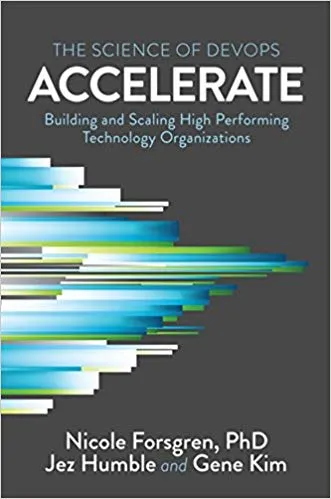
Accelerate: The Science of Lean Software and DevOps: Building and Scaling High Performing Technology Organizations
Nicole Forsgren;Jez Humble;Gene Kim
2018
View book
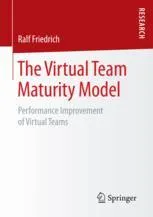
Book guide and evaluation
Ralf Friedrich (auth.)
0 reviews
Published
pages
views
Introduction to "The Virtual Team Maturity Model: Performance Improvement of Virtual Teams" In an era where globalization, digital transformation, and remote work trends have profoundly reshaped how organizations operate, the importance of virtual teams cannot be overstate
Before you read
In an era where globalization, digital transformation, and remote work trends have profoundly reshaped how organizations operate, the importance of virtual teams cannot be overstated. "The Virtual Team Maturity Model: Performance Improvement of Virtual Teams" serves as a comprehensive guide designed to empower leaders, managers, and team members to navigate the complexities of virtual collaboration while maximizing productivity and efficiency. Drawing on years of experience, research, and real-world insights, this book introduces the "Virtual Team Maturity Model" (VTMM) as a proven framework for diagnosing, assessing, and improving the performance of virtual teams at every stage of their journey.
This book provides readers with practical insights, actionable strategies, and a structured approach to help virtual teams achieve their full potential. By blending theoretical foundations with implementation-oriented practices, the VTMM fills a crucial gap for organizations looking to stay competitive in a world where remote work is increasingly the norm. Whether you're a team leader, project manager, or member of a global organization, this book promises to deepen your understanding of virtual team dynamics while equipping you with the tools to excel in collaborative settings.
"The Virtual Team Maturity Model" explores the intricate dynamics of virtual teams by breaking down the elements required for their success. The book is structured around a step-by-step maturity model, which categorizes virtual team performance into distinct levels of development. These levels range from foundational stages, where teams struggle with communication and coordination, to advanced stages, where virtual teams achieve seamless collaboration, cultural synergy, and optimal productivity.
Throughout the book, readers are guided through the factors that influence the effectiveness of virtual teams, including communication technologies, cultural diversity, leadership styles, trust-building, and change management. The model emphasizes continuous improvement by assessing current maturity, identifying gaps, and developing tailored strategies to enhance performance. Additionally, the book offers practical examples, case studies, and thought-provoking exercises, enabling readers to directly apply the concepts to their own teams.
The VTMM framework is not only relevant for newly formed virtual teams but also for well-established ones looking to adapt to evolving challenges. By framing team development as an iterative process, the model acknowledges the dynamic nature of virtual collaboration, making it adaptable for various industries and organizational contexts.
"Virtual teams are no longer an option but a necessity—how we manage them will determine the future of collaboration."
"The secret to success in a virtual world lies in structure and adaptability, not in the tools alone."
"Trust is the currency of effective virtual teams, and it is earned through consistency, clarity, and commitment."
The relevance of "The Virtual Team Maturity Model" extends beyond the immediate challenges of remote work; it paves the way for sustainable and scalable virtual collaboration. As organizations increasingly embrace hybrid and distributed work models, the need for a systematic approach to developing virtual teams has become indispensable. This book stands out because of its actionable and adaptable framework, tailored to meet the evolving demands of contemporary workplaces.
Unlike other guides that focus solely on technology or soft skills, this book balances technical, interpersonal, and organizational dimensions to present a holistic model. It responds to the pressing needs of today's professionals, empowering them to transform virtual teams into high-performing units capable of thriving in a rapidly changing world. For anyone involved in remote teamwork, "The Virtual Team Maturity Model" is more than a resource; it's an essential roadmap for future-ready collaboration.
Your question is answered in the context of this title and author. Each answer uses 2 points.
0 reviews, 4.0 average out of 5
Sign in to publish a review.
Ask a focused question and learn from the community.
Related references that continue this learning path.
Nicole Forsgren;Jez Humble;Gene Kim