
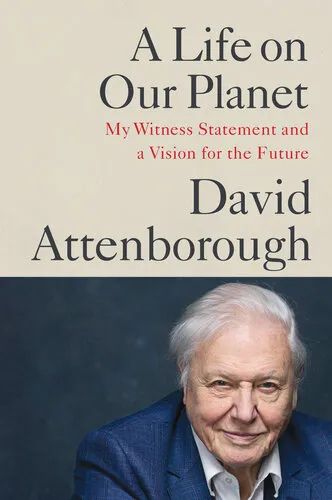
A Life on Our Planet: My Witness Statement and a Vision for the Future
Sir David Attenborough
2020
View book
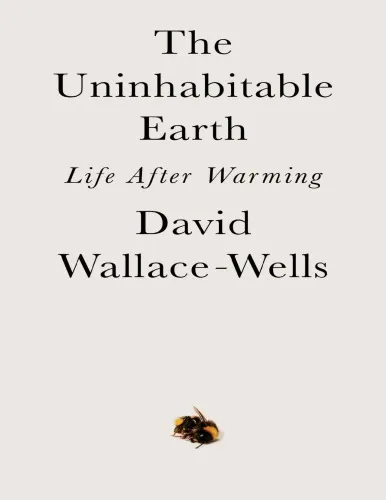
Book guide and evaluation
Wallace-Wells,David
0 reviews
Published
pages
views
Introduction to "The Uninhabitable Earth: Life After Warming" In "The Uninhabitable Earth: Life After Warming," Wallace-Wells delivers a chilling and eye-opening exploration of the catastrophic implications of climate change. This book doesn't just sound the alarm on globa
Before you read
In "The Uninhabitable Earth: Life After Warming," Wallace-Wells delivers a chilling and eye-opening exploration of the catastrophic implications of climate change. This book doesn't just sound the alarm on global warming; it provides a detailed analysis of how deeply climate change will affect every aspect of human life.
The book begins with a stark reminder: "It is worse, much worse, than you think." Wallace-Wells presents the startling reality of climate change with vivid descriptions and data-driven insights. He depicts a future that is not just about rising sea levels and extreme weather, but one in which every facet of life—from agriculture and politics to technology and culture—will be fundamentally transformed.
Wallace-Wells structures the book into several distinct elements, each examining different aspects of climate change’s impact on our planet. Part scientific analysis, part history, and part journalism, the narrative weaves together the latest research with on-the-ground observations and interviews with experts. He brings to light the interconnected crises triggered by climate change, such as plummeting biodiversity, public health emergencies, economic disruptions, and social instability.
This book is not limited to environmental concerns. Wallace-Wells explores how climate goes hand-in-hand with issues such as inequality, geopolitics, and even our psychological resilience. By dissecting a series of potential futures, he challenges the reader to consider the ethical and existential dilemmas posed by a warming planet.
"It is, I promise, worse than you think."
"If your anxiety about global warming is dominated by fears of sea-level rise, you are barely scratching the surface of what terrors are possible."
"No matter how well-informed you are, you are surely not alarmed enough."
"The Uninhabitable Earth" is a crucial text for understanding the magnitude and urgency of the climate crisis. Wallace-Wells effectively bridges the gap between scientific discourse and public understanding. By translating complex scientific findings into compelling narratives, he aims to awaken readers to the reality that the future of our planet hinges not only on policy changes but also on individual actions and societal willpower.
As one of the most urgent issues of our time, climate change demands an informed and engaged public. This book serves as an essential call to action for policymakers, educators, activists, and citizens worldwide. It propels the climate conversation beyond mere awareness, urging collective action to mitigate the possible futures it warns against.
Ultimately, Wallace-Wells' work is both a grim forecast and a hopeful petition. It seeks to instill not just knowledge, but emotional and moral impetus to confront the climate challenge head-on.
Your question is answered in the context of this title and author. Each answer uses 2 points.
0 reviews, 4.0 average out of 5
Sign in to publish a review.
Ask a focused question and learn from the community.
Related references that continue this learning path.
Sir David Attenborough

Theo Colborn,John Peterson Myers,Dianne Dumanoski